

in the chromatogram where the major component eluting at approximately 3.5–
5.5 mL is mainly EP copolymer.
For the 60
C fraction of 3V, two nearly baseline-separated peaks, in addition to
some iPP, are observed (see Fig. 3.50c). The order of elution of the fractions is such
that iPP with slightly higher molar mass elutes as the gradient starts
(at approximately 3 mL). The fraction eluting between 3.25 mL and 4.8 mL is
propylene-rich EP copolymer, followed by EP copolymer chains having longer
ethylene sequences, and PE homopolymer (from 5 mL to 6.25 mL). The 60
C
fraction of sample 3VA contained three chemically different components in addition to low and high molar mass iPP components. The fractions eluting between
3 mL and 3.5 mL were high molar mass iPP and propylene-rich EP copolymers.
The intense peak at 4.85 mL corresponds to the ethylene-rich EP copolymer while
the peak at an elution volume of 5.5 mL belongs to PE (see Fig. 3.50d). The semicrystalline TREF fractions that exhibit similar bimodal SEC profiles and two melt
endotherms in DSC were efficiently and precisely separated into individual
components by HT-HPLC. Sample 3VA contained a higher percentage of the late
eluting fractions, clearly indicating the higher amounts of ethylene units in the
fractions. The importance of the amounts and chemical compositions of the different components is clearly depicted by the results of the 60
C fractions of the two
IPC samples. The amount and chemical composition of this fraction plays an
important role in connecting the dispersed EPR phase with the iPP matrix for
enhancement of the interfacial interaction between the two phases, strongly
influencing the total impact performance of IPC.
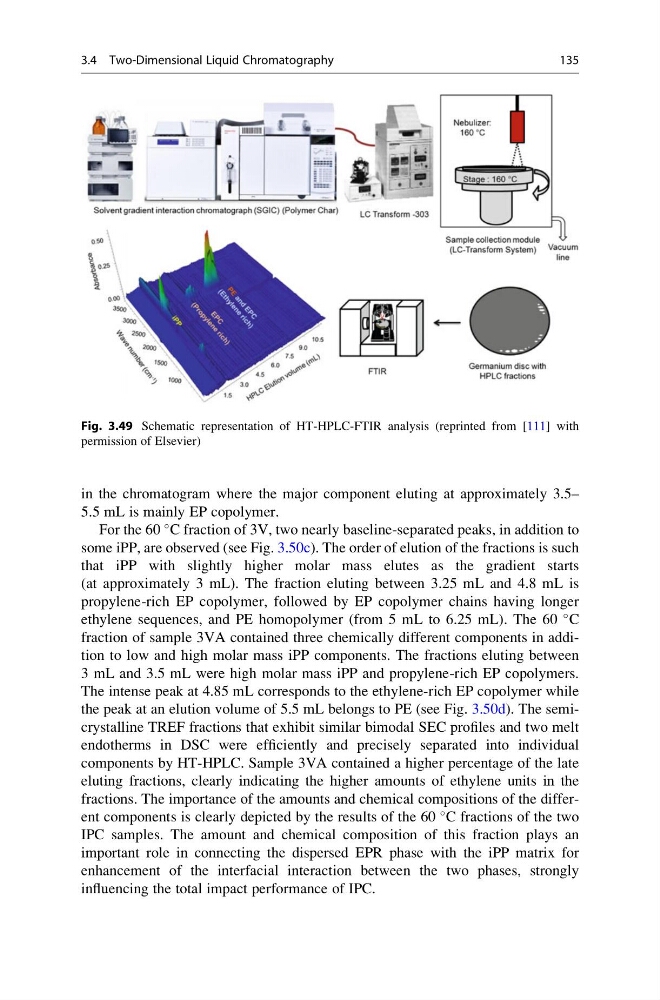
Fig. 3.49 Schematic representation of HT-HPLC-FTIR analysis (reprinted from [111] with
permission of Elsevier)
3.4 Two-Dimensional Liquid Chromatography
135
5.5 mL is mainly EP copolymer.
For the 60
C fraction of 3V, two nearly baseline-separated peaks, in addition to
some iPP, are observed (see Fig. 3.50c). The order of elution of the fractions is such
that iPP with slightly higher molar mass elutes as the gradient starts
(at approximately 3 mL). The fraction eluting between 3.25 mL and 4.8 mL is
propylene-rich EP copolymer, followed by EP copolymer chains having longer
ethylene sequences, and PE homopolymer (from 5 mL to 6.25 mL). The 60
C
fraction of sample 3VA contained three chemically different components in addition to low and high molar mass iPP components. The fractions eluting between
3 mL and 3.5 mL were high molar mass iPP and propylene-rich EP copolymers.
The intense peak at 4.85 mL corresponds to the ethylene-rich EP copolymer while
the peak at an elution volume of 5.5 mL belongs to PE (see Fig. 3.50d). The semicrystalline TREF fractions that exhibit similar bimodal SEC profiles and two melt
endotherms in DSC were efficiently and precisely separated into individual
components by HT-HPLC. Sample 3VA contained a higher percentage of the late
eluting fractions, clearly indicating the higher amounts of ethylene units in the
fractions. The importance of the amounts and chemical compositions of the different components is clearly depicted by the results of the 60
C fractions of the two
IPC samples. The amount and chemical composition of this fraction plays an
important role in connecting the dispersed EPR phase with the iPP matrix for
enhancement of the interfacial interaction between the two phases, strongly
influencing the total impact performance of IPC.
Fig. 3.49 Schematic representation of HT-HPLC-FTIR analysis (reprinted from [111] with
permission of Elsevier)
3.4 Two-Dimensional Liquid Chromatography
135