

(difficult-to-express proteins are often expressed as fusion proteins
to improve solubility). The phage population can be pre-panned
against the fusion tag alone, prior to incubating with the fusion
protein. Alternatively, the method can also be adapted to isolate
cross-reactive binders, for example, binders of highly homologous
proteins or isoforms of proteins from different species. To do this,
the target protein is alternated between panning rounds.
2 Materials
2.1 Affimer Selection
by Phage Display
1. Affimer phage library (phagemid display on pIII).
2. Biotinylated target protein (1 μg required for each panning
round).
3. Deselection target (optional)—biotinylated/non-biotinylated.
4. ER2738 strain of Escherichia coli cells (Lucigen).
5. M13KO7 helper phage (New England BioLabs).
6. Pierce Streptavidin-coated, high binding capacity, eight-well
strips (ThermoFisher Scientific, catalog no. 15501).
1. Immobilisationof
biotinylated target
2. Incubation with
phage
3. Phage elution
4. Infection of ER2738 cells,
plating and phage propagation
Pan 2
Wash
Wash
Pre-pan
(negative
selection)
x2
Wash
Wash
x4
Pre-pan
x4
Control
Control
Pan 3
Phage ELISA
Streptavidin
coated well
NeutrAvidin
coated well
Streptavidin coated
magnetic beads
Phage
Target
protein
Deselection
target
Pan 1
Wash
Wash
Phage
library
Pre-pan
x3
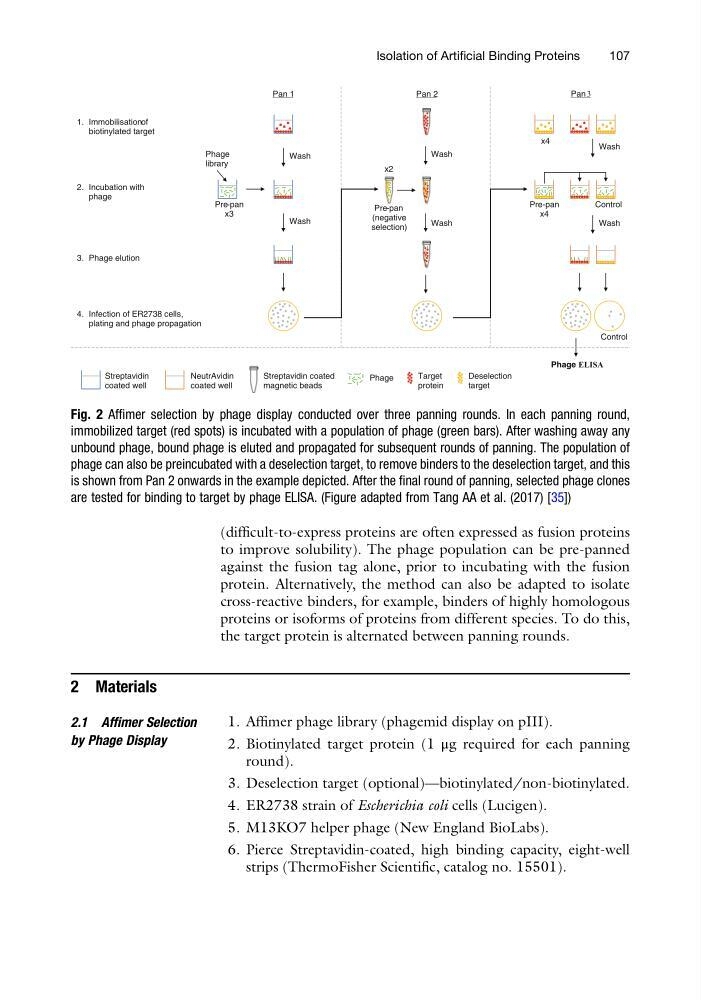
Fig. 2 Affimer selection by phage display conducted over three panning rounds. In each panning round,
immobilized target (red spots) is incubated with a population of phage (green bars). After washing away any
unbound phage, bound phage is eluted and propagated for subsequent rounds of panning. The population of
phage can also be preincubated with a deselection target, to remove binders to the deselection target, and this
is shown from Pan 2 onwards in the example depicted. After the final round of panning, selected phage clones
are tested for binding to target by phage ELISA. (Figure adapted from Tang AA et al. (2017) [35])
Isolation of Artificial Binding Proteins
107
to improve solubility). The phage population can be pre-panned
against the fusion tag alone, prior to incubating with the fusion
protein. Alternatively, the method can also be adapted to isolate
cross-reactive binders, for example, binders of highly homologous
proteins or isoforms of proteins from different species. To do this,
the target protein is alternated between panning rounds.
2 Materials
2.1 Affimer Selection
by Phage Display
1. Affimer phage library (phagemid display on pIII).
2. Biotinylated target protein (1 μg required for each panning
round).
3. Deselection target (optional)—biotinylated/non-biotinylated.
4. ER2738 strain of Escherichia coli cells (Lucigen).
5. M13KO7 helper phage (New England BioLabs).
6. Pierce Streptavidin-coated, high binding capacity, eight-well
strips (ThermoFisher Scientific, catalog no. 15501).
1. Immobilisationof
biotinylated target
2. Incubation with
phage
3. Phage elution
4. Infection of ER2738 cells,
plating and phage propagation
Pan 2
Wash
Wash
Pre-pan
(negative
selection)
x2
Wash
Wash
x4
Pre-pan
x4
Control
Control
Pan 3
Phage ELISA
Streptavidin
coated well
NeutrAvidin
coated well
Streptavidin coated
magnetic beads
Phage
Target
protein
Deselection
target
Pan 1
Wash
Wash
Phage
library
Pre-pan
x3
Fig. 2 Affimer selection by phage display conducted over three panning rounds. In each panning round,
immobilized target (red spots) is incubated with a population of phage (green bars). After washing away any
unbound phage, bound phage is eluted and propagated for subsequent rounds of panning. The population of
phage can also be preincubated with a deselection target, to remove binders to the deselection target, and this
is shown from Pan 2 onwards in the example depicted. After the final round of panning, selected phage clones
are tested for binding to target by phage ELISA. (Figure adapted from Tang AA et al. (2017) [35])
Isolation of Artificial Binding Proteins
107