

84
B. Venema
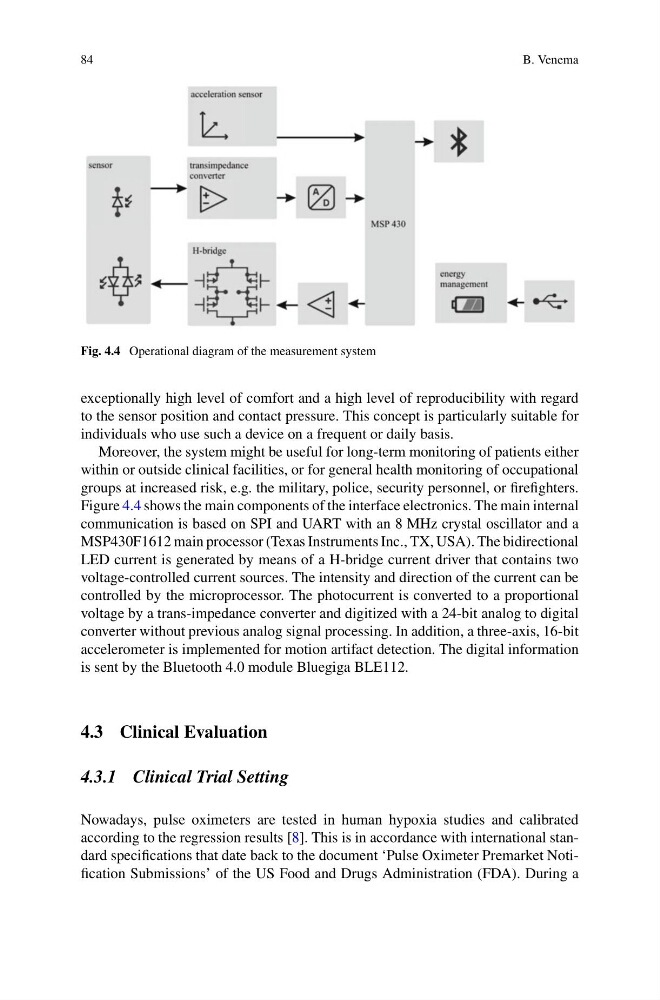
Fig. 4.4 Operational diagram of the measurement system
exceptionally high level of comfort and a high level of reproducibility with regard
to the sensor position and contact pressure. This concept is particularly suitable for
individuals who use such a device on a frequent or daily basis.
Moreover, the system might be useful for long-term monitoring of patients either
within or outside clinical facilities, or for general health monitoring of occupational
groups at increased risk, e.g. the military, police, security personnel, or firefighters.
Figure 4.4 shows the main components of the interface electronics. The main internal
communication is based on SPI and UART with an 8 MHz crystal oscillator and a
MSP430F1612 main processor (Texas Instruments Inc., TX, USA). The bidirectional
LED current is generated by means of a H-bridge current driver that contains two
voltage-controlled current sources. The intensity and direction of the current can be
controlled by the microprocessor. The photocurrent is converted to a proportional
voltage by a trans-impedance converter and digitized with a 24-bit analog to digital
converter without previous analog signal processing. In addition, a three-axis, 16-bit
accelerometer is implemented for motion artifact detection. The digital information
is sent by the Bluetooth 4.0 module Bluegiga BLE112.
4.3 Clinical Evaluation
4.3.1 Clinical Trial Setting
Nowadays, pulse oximeters are tested in human hypoxia studies and calibrated
according to the regression results [8]. This is in accordance with international standard specifications that date back to the document ‘Pulse Oximeter Premarket Notification Submissions’ of the US Food and Drugs Administration (FDA). During a
B. Venema
Fig. 4.4 Operational diagram of the measurement system
exceptionally high level of comfort and a high level of reproducibility with regard
to the sensor position and contact pressure. This concept is particularly suitable for
individuals who use such a device on a frequent or daily basis.
Moreover, the system might be useful for long-term monitoring of patients either
within or outside clinical facilities, or for general health monitoring of occupational
groups at increased risk, e.g. the military, police, security personnel, or firefighters.
Figure 4.4 shows the main components of the interface electronics. The main internal
communication is based on SPI and UART with an 8 MHz crystal oscillator and a
MSP430F1612 main processor (Texas Instruments Inc., TX, USA). The bidirectional
LED current is generated by means of a H-bridge current driver that contains two
voltage-controlled current sources. The intensity and direction of the current can be
controlled by the microprocessor. The photocurrent is converted to a proportional
voltage by a trans-impedance converter and digitized with a 24-bit analog to digital
converter without previous analog signal processing. In addition, a three-axis, 16-bit
accelerometer is implemented for motion artifact detection. The digital information
is sent by the Bluetooth 4.0 module Bluegiga BLE112.
4.3 Clinical Evaluation
4.3.1 Clinical Trial Setting
Nowadays, pulse oximeters are tested in human hypoxia studies and calibrated
according to the regression results [8]. This is in accordance with international standard specifications that date back to the document ‘Pulse Oximeter Premarket Notification Submissions’ of the US Food and Drugs Administration (FDA). During a