

82
B. Venema
4.2.2 In-Ear PPG from the User’s Viewpoint
Thus, wearable devices for the ear have a high level of consumer acceptance. In
general, wearable ear-related devices do not represent a handicap for daily activity.
In addition, devices like wireless or in-ear headphones have become everyday articles, mainly due to the extensive use of mobile telephones. Therefore, a high level
of acceptance is also expected for ear-related vital parameter monitoring, e.g., for
sports, or the life sciences. The combination of vital parameter assessment, headset,
and headphones would be beneficial, since various useful systems can be combined
without restriction or additional effort of the user. For the elderly or for patients at
risk, a combination with a hearing aid could also be useful.
4.2.3 The MedIT in-Ear PPG Sensor System
There is increasing interest in Personal Healthcare. Applications and wearable
sensors have found their place in biomedical technology research. PPG still plays
an important role in various sensor technologies. International research groups are
working on an adaption of PPG to the ear channel. Details on in-ear PPG sensor
concepts have already been published [3–7]. Besides conceptional design, and
studying the feasibility and limitations of perfusion rhythm measurement, a few
research groups have also demonstrated the feasibility of pulse oximetric measurement of SaO 2 in the ear channel [3–6]. These results, based on experimental human
trials including only a few volunteers or patients, show a correlation of the R-values
with SaO 2 during fluctuations at physiological blood oxygen saturation. However,
no human studies have been performed to demonstrate the feasibility of SpO 2
measurement over a wide SpO 2 range.
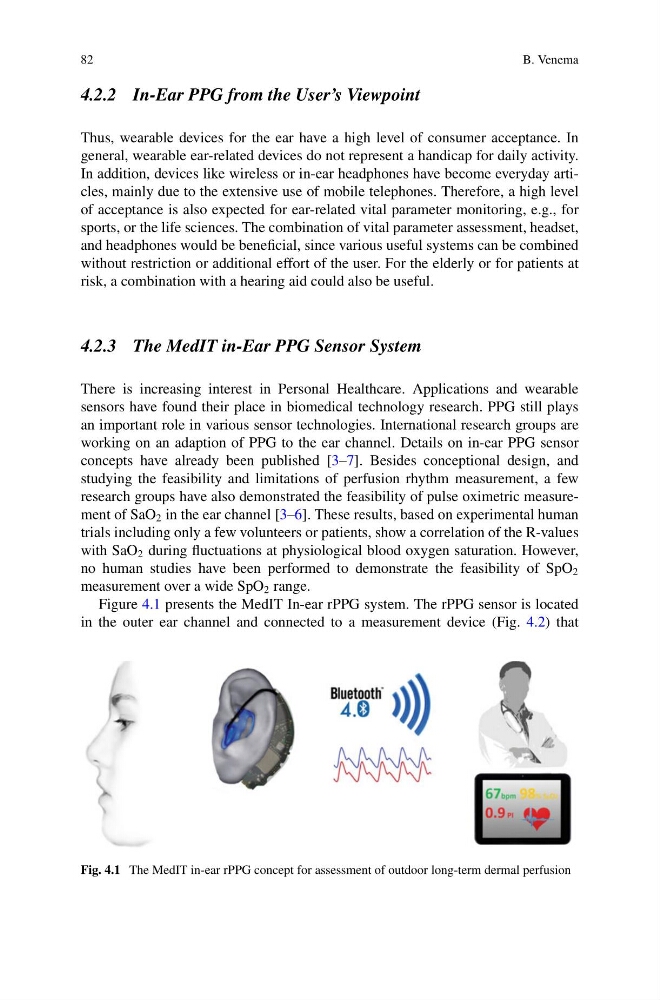
Figure 4.1 presents the MedIT In-ear rPPG system. The rPPG sensor is located
in the outer ear channel and connected to a measurement device (Fig. 4.2) that
Fig. 4.1 The MedIT in-ear rPPG concept for assessment of outdoor long-term dermal perfusion
B. Venema
4.2.2 In-Ear PPG from the User’s Viewpoint
Thus, wearable devices for the ear have a high level of consumer acceptance. In
general, wearable ear-related devices do not represent a handicap for daily activity.
In addition, devices like wireless or in-ear headphones have become everyday articles, mainly due to the extensive use of mobile telephones. Therefore, a high level
of acceptance is also expected for ear-related vital parameter monitoring, e.g., for
sports, or the life sciences. The combination of vital parameter assessment, headset,
and headphones would be beneficial, since various useful systems can be combined
without restriction or additional effort of the user. For the elderly or for patients at
risk, a combination with a hearing aid could also be useful.
4.2.3 The MedIT in-Ear PPG Sensor System
There is increasing interest in Personal Healthcare. Applications and wearable
sensors have found their place in biomedical technology research. PPG still plays
an important role in various sensor technologies. International research groups are
working on an adaption of PPG to the ear channel. Details on in-ear PPG sensor
concepts have already been published [3–7]. Besides conceptional design, and
studying the feasibility and limitations of perfusion rhythm measurement, a few
research groups have also demonstrated the feasibility of pulse oximetric measurement of SaO 2 in the ear channel [3–6]. These results, based on experimental human
trials including only a few volunteers or patients, show a correlation of the R-values
with SaO 2 during fluctuations at physiological blood oxygen saturation. However,
no human studies have been performed to demonstrate the feasibility of SpO 2
measurement over a wide SpO 2 range.
Figure 4.1 presents the MedIT In-ear rPPG system. The rPPG sensor is located
in the outer ear channel and connected to a measurement device (Fig. 4.2) that
Fig. 4.1 The MedIT in-ear rPPG concept for assessment of outdoor long-term dermal perfusion