

12 Selected Clinical Applications of Functional PPGI Perfusion Mapping …
215
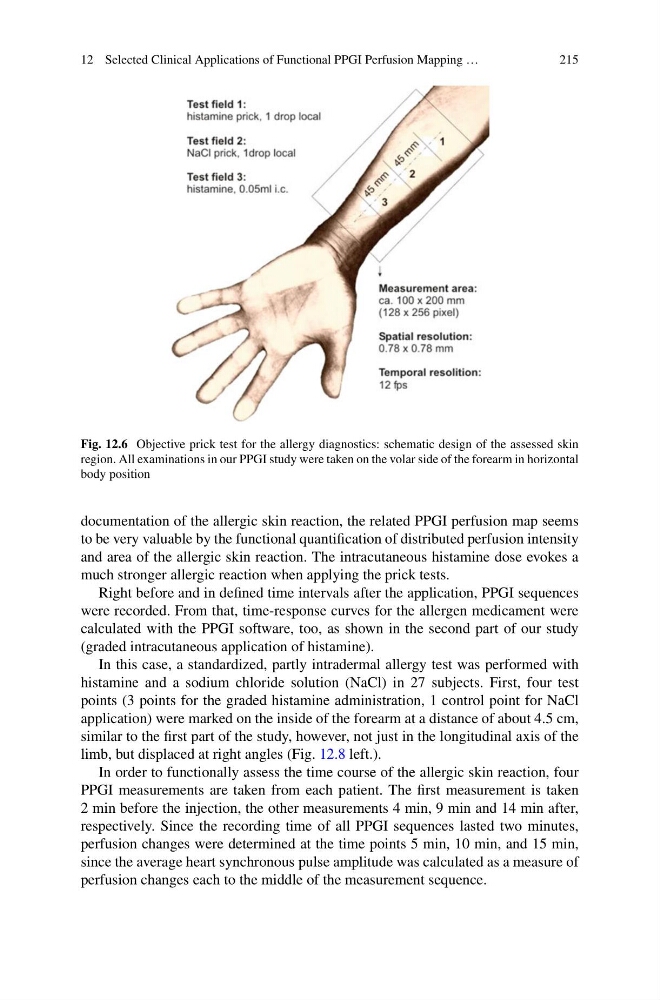
Fig. 12.6 Objective prick test for the allergy diagnostics: schematic design of the assessed skin
region. All examinations in our PPGI study were taken on the volar side of the forearm in horizontal
body position
documentation of the allergic skin reaction, the related PPGI perfusion map seems
to be very valuable by the functional quantification of distributed perfusion intensity
and area of the allergic skin reaction. The intracutaneous histamine dose evokes a
much stronger allergic reaction when applying the prick tests.
Right before and in defined time intervals after the application, PPGI sequences
were recorded. From that, time-response curves for the allergen medicament were
calculated with the PPGI software, too, as shown in the second part of our study
(graded intracutaneous application of histamine).
In this case, a standardized, partly intradermal allergy test was performed with
histamine and a sodium chloride solution (NaCl) in 27 subjects. First, four test
points (3 points for the graded histamine administration, 1 control point for NaCl
application) were marked on the inside of the forearm at a distance of about 4.5 cm,
similar to the first part of the study, however, not just in the longitudinal axis of the
limb, but displaced at right angles (Fig. 12.8 left.).
In order to functionally assess the time course of the allergic skin reaction, four
PPGI measurements are taken from each patient. The first measurement is taken
2 min before the injection, the other measurements 4 min, 9 min and 14 min after,
respectively. Since the recording time of all PPGI sequences lasted two minutes,
perfusion changes were determined at the time points 5 min, 10 min, and 15 min,
since the average heart synchronous pulse amplitude was calculated as a measure of
perfusion changes each to the middle of the measurement sequence.
215
Fig. 12.6 Objective prick test for the allergy diagnostics: schematic design of the assessed skin
region. All examinations in our PPGI study were taken on the volar side of the forearm in horizontal
body position
documentation of the allergic skin reaction, the related PPGI perfusion map seems
to be very valuable by the functional quantification of distributed perfusion intensity
and area of the allergic skin reaction. The intracutaneous histamine dose evokes a
much stronger allergic reaction when applying the prick tests.
Right before and in defined time intervals after the application, PPGI sequences
were recorded. From that, time-response curves for the allergen medicament were
calculated with the PPGI software, too, as shown in the second part of our study
(graded intracutaneous application of histamine).
In this case, a standardized, partly intradermal allergy test was performed with
histamine and a sodium chloride solution (NaCl) in 27 subjects. First, four test
points (3 points for the graded histamine administration, 1 control point for NaCl
application) were marked on the inside of the forearm at a distance of about 4.5 cm,
similar to the first part of the study, however, not just in the longitudinal axis of the
limb, but displaced at right angles (Fig. 12.8 left.).
In order to functionally assess the time course of the allergic skin reaction, four
PPGI measurements are taken from each patient. The first measurement is taken
2 min before the injection, the other measurements 4 min, 9 min and 14 min after,
respectively. Since the recording time of all PPGI sequences lasted two minutes,
perfusion changes were determined at the time points 5 min, 10 min, and 15 min,
since the average heart synchronous pulse amplitude was calculated as a measure of
perfusion changes each to the middle of the measurement sequence.