

11 Remote Space- and Time-Resolved Skin Perfusion Detection …
195
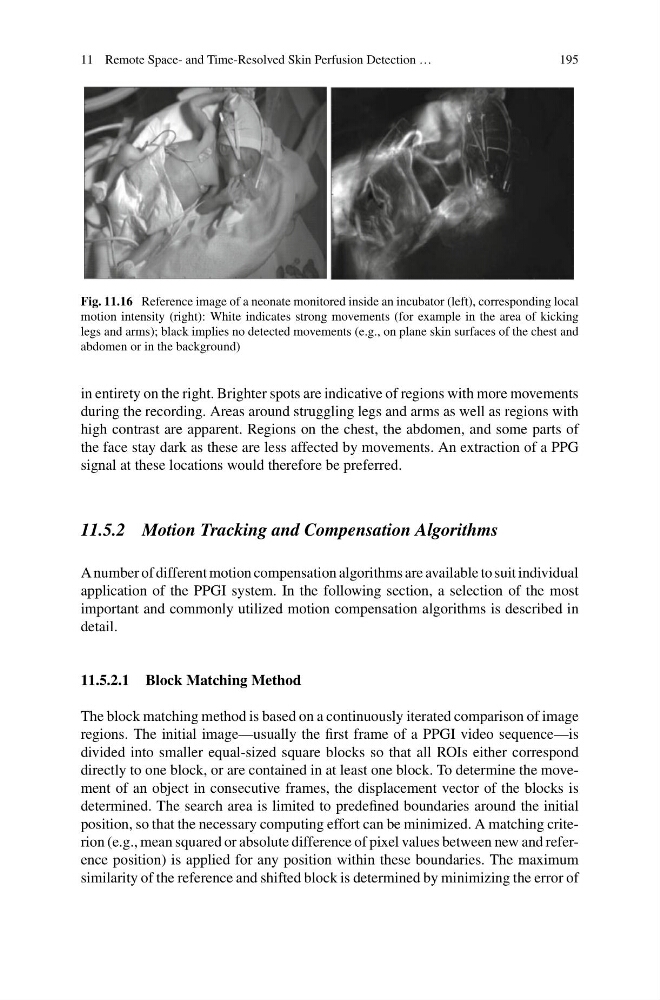
Fig. 11.16 Reference image of a neonate monitored inside an incubator (left), corresponding local
motion intensity (right): White indicates strong movements (for example in the area of kicking
legs and arms); black implies no detected movements (e.g., on plane skin surfaces of the chest and
abdomen or in the background)
in entirety on the right. Brighter spots are indicative of regions with more movements
during the recording. Areas around struggling legs and arms as well as regions with
high contrast are apparent. Regions on the chest, the abdomen, and some parts of
the face stay dark as these are less affected by movements. An extraction of a PPG
signal at these locations would therefore be preferred.
11.5.2 Motion Tracking and Compensation Algorithms
A number of different motion compensation algorithms are available to suit individual
application of the PPGI system. In the following section, a selection of the most
important and commonly utilized motion compensation algorithms is described in
detail.
11.5.2.1 Block Matching Method
The block matching method is based on a continuously iterated comparison of image
regions. The initial image—usually the first frame of a PPGI video sequence—is
divided into smaller equal-sized square blocks so that all ROIs either correspond
directly to one block, or are contained in at least one block. To determine the movement of an object in consecutive frames, the displacement vector of the blocks is
determined. The search area is limited to predefined boundaries around the initial
position, so that the necessary computing effort can be minimized. A matching criterion (e.g., mean squared or absolute difference of pixel values between new and reference position) is applied for any position within these boundaries. The maximum
similarity of the reference and shifted block is determined by minimizing the error of
195
Fig. 11.16 Reference image of a neonate monitored inside an incubator (left), corresponding local
motion intensity (right): White indicates strong movements (for example in the area of kicking
legs and arms); black implies no detected movements (e.g., on plane skin surfaces of the chest and
abdomen or in the background)
in entirety on the right. Brighter spots are indicative of regions with more movements
during the recording. Areas around struggling legs and arms as well as regions with
high contrast are apparent. Regions on the chest, the abdomen, and some parts of
the face stay dark as these are less affected by movements. An extraction of a PPG
signal at these locations would therefore be preferred.
11.5.2 Motion Tracking and Compensation Algorithms
A number of different motion compensation algorithms are available to suit individual
application of the PPGI system. In the following section, a selection of the most
important and commonly utilized motion compensation algorithms is described in
detail.
11.5.2.1 Block Matching Method
The block matching method is based on a continuously iterated comparison of image
regions. The initial image—usually the first frame of a PPGI video sequence—is
divided into smaller equal-sized square blocks so that all ROIs either correspond
directly to one block, or are contained in at least one block. To determine the movement of an object in consecutive frames, the displacement vector of the blocks is
determined. The search area is limited to predefined boundaries around the initial
position, so that the necessary computing effort can be minimized. A matching criterion (e.g., mean squared or absolute difference of pixel values between new and reference position) is applied for any position within these boundaries. The maximum
similarity of the reference and shifted block is determined by minimizing the error of