

8 A Self-Organized Rhythm in Peripheral Effectors: The Intermediary …
143
Fig. 8.1 a–e: a Original PPG recording showing typical patterns of waxing and waning: emerging
and submerging of large so-called beat oscillations result in spindle-shaped envelopes, taking turns
with unmodulated sections. b The Time Frequency Distribution analysis of the PPG original time
series gives an overview of the two dominating frequency bands: the ca 1.2 Hz band representing
sinus node activity (detailed in Fig. 8.1c), and the 0.15 Hz rhythm band representing the dynamics
of fluctuating central lower brainstem activity (Fig. 8.1d). The interaction between both bands is
governed by a set of surprising yet fundamental physiological features. The dynamics of the ca
1.2 Hz band activity is inversely related to amplitude modulations contained in spindles: the power
of 1.2 Hz activity decreases as spindles peak, and vice versa. This is paralleled by a pattern of
frequency modulation in the ca 0.15 Hz band activity: during each unmodulated section the 0.15 Hz
band activity reaches a minimum; during the 480th and the 540th s this activity completely vanishes.
As shown during this episode, the 1.2 Hz band is powerful, yet oscillating around its mean frequency.
Extending an interpretation initially proposed by Winfree who referred to these incoherent activities
as “black holes”, we label these episodes “white holes". Figure 8.1e shows the respiration rhythm
at ca. 0.3 Hz which is at a 2:1 coupling ratio with the 0.15 Hz rhythm band in the PPG signal
8.3 Results
A „representative “example for a plethora of similar recordings are given in Fig. 8.1a:
a rhythm which envelopes the 0.15 Hz beat reappears (with great variation) and
subsequently disappears about once every 100 s (i.e. exhibits a 0.0 l Hz band activity).
Magnification displays that.
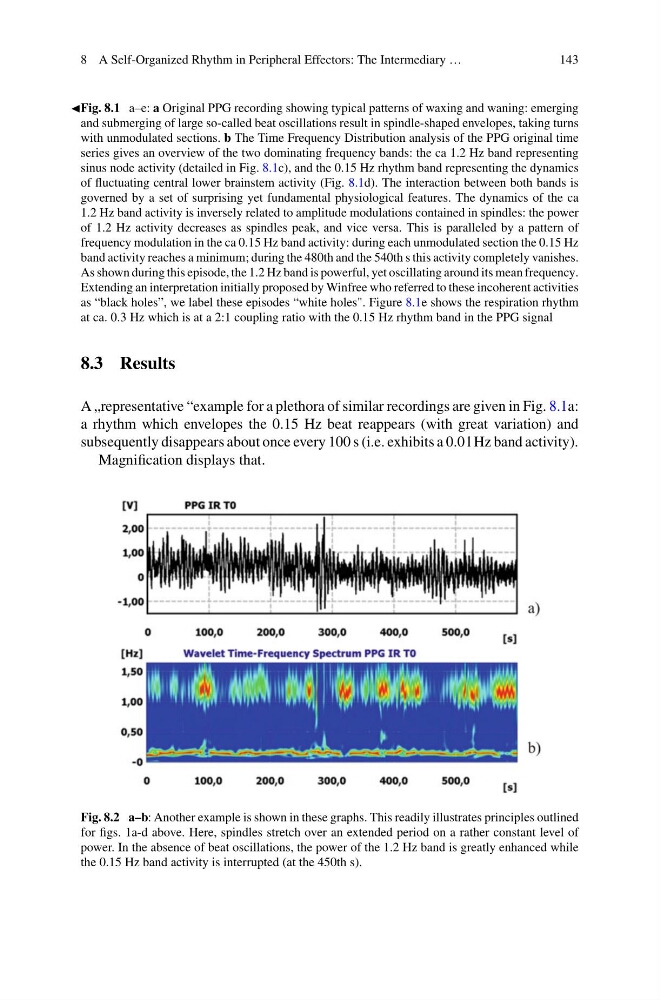
Fig. 8.2 a–b: Another example is shown in these graphs. This readily illustrates principles outlined
for figs. 1a-d above. Here, spindles stretch over an extended period on a rather constant level of
power. In the absence of beat oscillations, the power of the 1.2 Hz band is greatly enhanced while
the 0.15 Hz band activity is interrupted (at the 450th s).
143
Fig. 8.1 a–e: a Original PPG recording showing typical patterns of waxing and waning: emerging
and submerging of large so-called beat oscillations result in spindle-shaped envelopes, taking turns
with unmodulated sections. b The Time Frequency Distribution analysis of the PPG original time
series gives an overview of the two dominating frequency bands: the ca 1.2 Hz band representing
sinus node activity (detailed in Fig. 8.1c), and the 0.15 Hz rhythm band representing the dynamics
of fluctuating central lower brainstem activity (Fig. 8.1d). The interaction between both bands is
governed by a set of surprising yet fundamental physiological features. The dynamics of the ca
1.2 Hz band activity is inversely related to amplitude modulations contained in spindles: the power
of 1.2 Hz activity decreases as spindles peak, and vice versa. This is paralleled by a pattern of
frequency modulation in the ca 0.15 Hz band activity: during each unmodulated section the 0.15 Hz
band activity reaches a minimum; during the 480th and the 540th s this activity completely vanishes.
As shown during this episode, the 1.2 Hz band is powerful, yet oscillating around its mean frequency.
Extending an interpretation initially proposed by Winfree who referred to these incoherent activities
as “black holes”, we label these episodes “white holes". Figure 8.1e shows the respiration rhythm
at ca. 0.3 Hz which is at a 2:1 coupling ratio with the 0.15 Hz rhythm band in the PPG signal
8.3 Results
A „representative “example for a plethora of similar recordings are given in Fig. 8.1a:
a rhythm which envelopes the 0.15 Hz beat reappears (with great variation) and
subsequently disappears about once every 100 s (i.e. exhibits a 0.0 l Hz band activity).
Magnification displays that.
Fig. 8.2 a–b: Another example is shown in these graphs. This readily illustrates principles outlined
for figs. 1a-d above. Here, spindles stretch over an extended period on a rather constant level of
power. In the absence of beat oscillations, the power of the 1.2 Hz band is greatly enhanced while
the 0.15 Hz band activity is interrupted (at the 450th s).