

1.2.5 Human Nutrition
The high growth rate, protein content, and success in a variety of animal feed trials naturally
beg the question of whether duckweeds could be
a healthy and environmentally friendly food for
humans? As previously stated, the Wolffia genus
of the duckweed family has been traditional
cuisine in Thailand, Burma, and Laos for centuries, since they lack the kidney stone forming
calcium oxalate crystals found in the other genera. At the time of writing, there are three large
companies producing Wolffia or Lemna for
human consumption, namely Hinoman with
greenhouse precision agriculture cultivation,
Parabel with open pond Lemna cultivation and
protein extraction, and Green Onyx, which has
developed robotic farming systems that can dispense Wolffia on demand. Due to their successful
scale-up since their founding in 2010, and
abundant public information, we will focus on
the Israeli company Hinoman here. They currently grow Wolffia (aka Mankai
TM ) on formulated, clean water media in greenhouses with
automated energy-efficient climate control and
harvesting systems operated by their cultivation
algorithm. Through this system, they are able to
grow a pesticide- and herbicide-free vegetable
year-round, with a fraction of the water used in
cultivation of soy, spinach, or kale, (http://www.
hinoman.biz/what-we-do/). Their product is
stable with approximately 25% carbohydrate
content, 45% protein content, and a complete and
bioavailable amino acid profile such as egg or
soy, with a higher PDCAAS than soy. They have
currently conducted three publicly visible clinical
trials demonstrating the protein and iron
bioavailability, as well as the mitigating effect on
Glycemic Index of their Wolffia, and posted
multiple recipes for their product, which will
soon be made available to consumers.
Furthermore, compared to kale Wolffia is more
abundant in most minerals and vitamins A, B2,
B12, and E, which survive the gentle drying process. An extensive academic investigation of the
species Wolffia microscopica confirmed the high
mineral content and that the protein (*25% of dry
weight) exceeded WHO recommendations, while
finding abundant antioxidants and a high omega-3
content (X6/X3 ratio is 0.61) for the relatively
scarce lipids (Appenroth et al. 2017, 2018). Fresh,
or dry powdered Wolffia, with a neutral taste, can
be juiced, consumed fresh, or incorporated into
breads, pastas, and sports nutrition products
(Fig. 1.4). With supporting data from academic
laboratories, records of historical consumption,
and thorough testing of their product for harmful
metals and oxalates, Hinoman and Green Onyx
were able to achieve the generally recognized as
safe (GRAS) status for the Wolffia species arrhiza
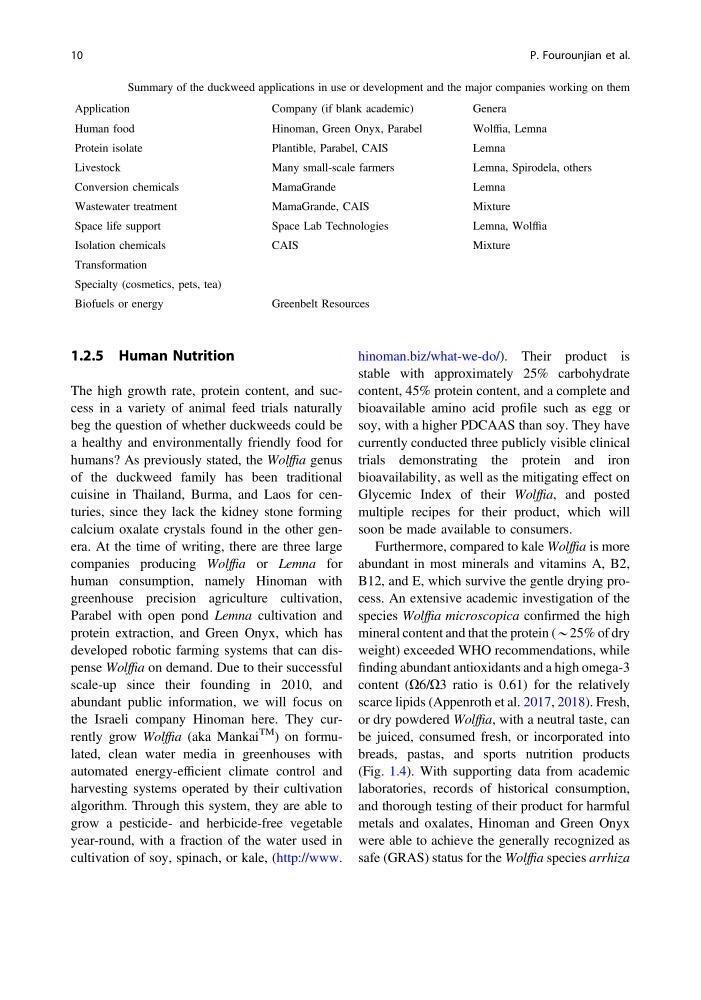
Table 1.1 Summary of the duckweed applications in use or development and the major companies working on them
Application
Company (if blank academic)
Genera
Human food
Hinoman, Green Onyx, Parabel
Wolffia, Lemna
Protein isolate
Plantible, Parabel, CAIS
Lemna
Livestock
Many small-scale farmers
Lemna, Spirodela, others
Conversion chemicals
MamaGrande
Lemna
Wastewater treatment
MamaGrande, CAIS
Mixture
Space life support
Space Lab Technologies
Lemna, Wolffia
Isolation chemicals
CAIS
Mixture
Transformation
Specialty (cosmetics, pets, tea)
Biofuels or energy
Greenbelt Resources
10
P. Fourounjian et al.
The high growth rate, protein content, and success in a variety of animal feed trials naturally
beg the question of whether duckweeds could be
a healthy and environmentally friendly food for
humans? As previously stated, the Wolffia genus
of the duckweed family has been traditional
cuisine in Thailand, Burma, and Laos for centuries, since they lack the kidney stone forming
calcium oxalate crystals found in the other genera. At the time of writing, there are three large
companies producing Wolffia or Lemna for
human consumption, namely Hinoman with
greenhouse precision agriculture cultivation,
Parabel with open pond Lemna cultivation and
protein extraction, and Green Onyx, which has
developed robotic farming systems that can dispense Wolffia on demand. Due to their successful
scale-up since their founding in 2010, and
abundant public information, we will focus on
the Israeli company Hinoman here. They currently grow Wolffia (aka Mankai
TM ) on formulated, clean water media in greenhouses with
automated energy-efficient climate control and
harvesting systems operated by their cultivation
algorithm. Through this system, they are able to
grow a pesticide- and herbicide-free vegetable
year-round, with a fraction of the water used in
cultivation of soy, spinach, or kale, (http://www.
hinoman.biz/what-we-do/). Their product is
stable with approximately 25% carbohydrate
content, 45% protein content, and a complete and
bioavailable amino acid profile such as egg or
soy, with a higher PDCAAS than soy. They have
currently conducted three publicly visible clinical
trials demonstrating the protein and iron
bioavailability, as well as the mitigating effect on
Glycemic Index of their Wolffia, and posted
multiple recipes for their product, which will
soon be made available to consumers.
Furthermore, compared to kale Wolffia is more
abundant in most minerals and vitamins A, B2,
B12, and E, which survive the gentle drying process. An extensive academic investigation of the
species Wolffia microscopica confirmed the high
mineral content and that the protein (*25% of dry
weight) exceeded WHO recommendations, while
finding abundant antioxidants and a high omega-3
content (X6/X3 ratio is 0.61) for the relatively
scarce lipids (Appenroth et al. 2017, 2018). Fresh,
or dry powdered Wolffia, with a neutral taste, can
be juiced, consumed fresh, or incorporated into
breads, pastas, and sports nutrition products
(Fig. 1.4). With supporting data from academic
laboratories, records of historical consumption,
and thorough testing of their product for harmful
metals and oxalates, Hinoman and Green Onyx
were able to achieve the generally recognized as
safe (GRAS) status for the Wolffia species arrhiza
Table 1.1 Summary of the duckweed applications in use or development and the major companies working on them
Application
Company (if blank academic)
Genera
Human food
Hinoman, Green Onyx, Parabel
Wolffia, Lemna
Protein isolate
Plantible, Parabel, CAIS
Lemna
Livestock
Many small-scale farmers
Lemna, Spirodela, others
Conversion chemicals
MamaGrande
Lemna
Wastewater treatment
MamaGrande, CAIS
Mixture
Space life support
Space Lab Technologies
Lemna, Wolffia
Isolation chemicals
CAIS
Mixture
Transformation
Specialty (cosmetics, pets, tea)
Biofuels or energy
Greenbelt Resources
10
P. Fourounjian et al.