

Duckweed as a food and livestock feed source
is likely the oldest human application and an easy
one to project into the future. Due to rising
incomes and rising populations, global demand
for non-fish animal protein, particularly poultry
is expected to increase at 1.3% per year till 2050,
with the largest growth of 4.2% in South Asia,
(Alexandratos and Bruinsma 2012; OECD/FAO
2017). Additionally, the largest increase in animal protein supply will be aquaculture, which
grew largely in Asia between 4 and 10% per year
since 1990 and is forecasted to exceed the global
catch in 2020 (OECD/FAO 2017). Considering
that the duckweed species can clean wastewater
from agricultural operations, provide a feed for
fish, chicken, pigs, goats, and other livestock,
generally as *20% of their diet, grow year
round in the tropics and subtropics, and raise
farmer income (reviewed in Cao et al. 2018),
duckweed seems wonderfully positioned to clean
wastewaters from and provide feed to livestock,
especially fish and poultry in the tropics where
the largest growth in the livestock sector will
occur. In terms of human nutrition, Hinoman and
GreenOnyx were able to achieve the GRAS
(generally recognized as safe) status for the
Wolffia species arrhiza and globosa in the USA
in 2015 and 2016, respectively, thanks to supporting data from academic laboratories, records
of historical consumption, and thorough testing
of their product for harmful metals and oxalates.
Thanks to this breakthrough, the recent legal
recognition of select Wolffia species as food in
Israel and traditional consumption in Thailand,
Laos, and Cambodia the duckweed production as
a food crop is set to expand. Likewise, the whole
US market in plant-based protein has been
growing at 12%/year and is expected to grow at
6.7% for the near future (Henchion et al. 2017).
There will also be an expansion of duckweed
food options in the future as traditional cuisine
recipes are expanded upon, and whole vegetables
or isolates enter the processed foods market.
Another sector where duckweed species will
likely play an expanding role is supplying clean
water. In 2018, the Duckweed Forum issue 22
described 23 companies in 9 countries, with four
each working in water quality testing and water
treatment (Shoham 2018). Provided the perpetual
rise of water pollution and increased testing, and
the roughly 50% lower capital and operating
costs of duckweed (Skillicorn 2013) and constructed wetlands (Zhang et al. 2014) treatment
systems compared to their bacterial counterparts
these industries are expected to grow, likely more
so in developing countries. Sadly, 14 years of
satellite observations reveal decreasing water
availability in heavily populated areas like California, The Middle East, Northern India, and
Northern China where groundwater is being
depleted (Rodell et al. 2018). Duckweed treatment systems to reclaim water, as well as water
efficient duckweed crops, with many other measures, might be utilized in these and other regions
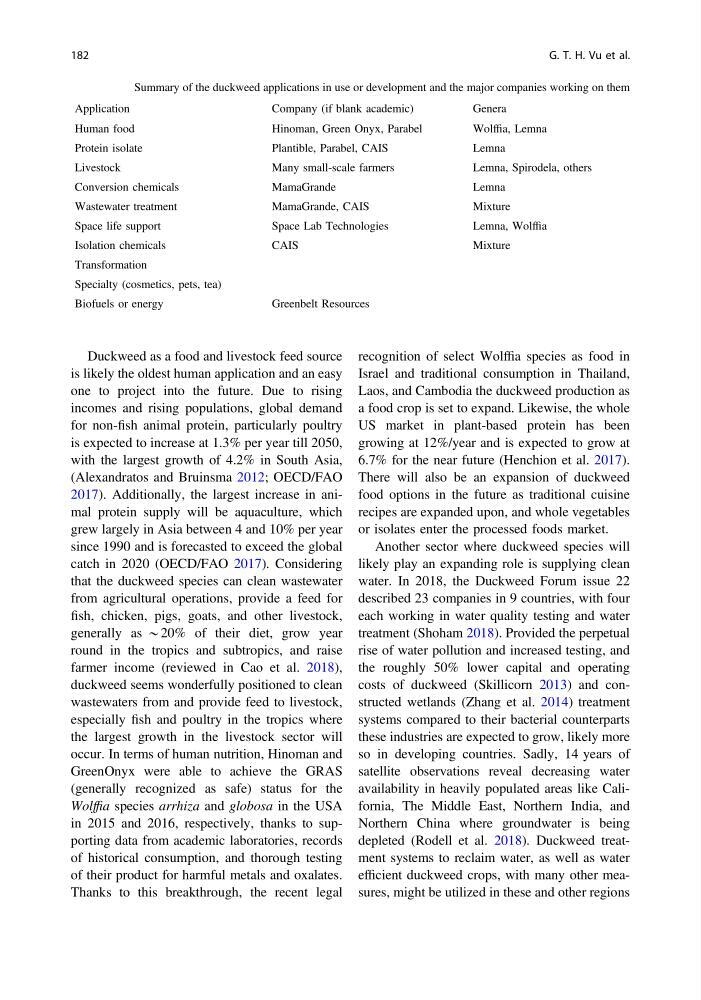
Table 18.1 Summary of the duckweed applications in use or development and the major companies working on them
Application
Company (if blank academic)
Genera
Human food
Hinoman, Green Onyx, Parabel
Wolffia, Lemna
Protein isolate
Plantible, Parabel, CAIS
Lemna
Livestock
Many small-scale farmers
Lemna, Spirodela, others
Conversion chemicals
MamaGrande
Lemna
Wastewater treatment
MamaGrande, CAIS
Mixture
Space life support
Space Lab Technologies
Lemna, Wolffia
Isolation chemicals
CAIS
Mixture
Transformation
Specialty (cosmetics, pets, tea)
Biofuels or energy
Greenbelt Resources
182
G. T. H. Vu et al.
is likely the oldest human application and an easy
one to project into the future. Due to rising
incomes and rising populations, global demand
for non-fish animal protein, particularly poultry
is expected to increase at 1.3% per year till 2050,
with the largest growth of 4.2% in South Asia,
(Alexandratos and Bruinsma 2012; OECD/FAO
2017). Additionally, the largest increase in animal protein supply will be aquaculture, which
grew largely in Asia between 4 and 10% per year
since 1990 and is forecasted to exceed the global
catch in 2020 (OECD/FAO 2017). Considering
that the duckweed species can clean wastewater
from agricultural operations, provide a feed for
fish, chicken, pigs, goats, and other livestock,
generally as *20% of their diet, grow year
round in the tropics and subtropics, and raise
farmer income (reviewed in Cao et al. 2018),
duckweed seems wonderfully positioned to clean
wastewaters from and provide feed to livestock,
especially fish and poultry in the tropics where
the largest growth in the livestock sector will
occur. In terms of human nutrition, Hinoman and
GreenOnyx were able to achieve the GRAS
(generally recognized as safe) status for the
Wolffia species arrhiza and globosa in the USA
in 2015 and 2016, respectively, thanks to supporting data from academic laboratories, records
of historical consumption, and thorough testing
of their product for harmful metals and oxalates.
Thanks to this breakthrough, the recent legal
recognition of select Wolffia species as food in
Israel and traditional consumption in Thailand,
Laos, and Cambodia the duckweed production as
a food crop is set to expand. Likewise, the whole
US market in plant-based protein has been
growing at 12%/year and is expected to grow at
6.7% for the near future (Henchion et al. 2017).
There will also be an expansion of duckweed
food options in the future as traditional cuisine
recipes are expanded upon, and whole vegetables
or isolates enter the processed foods market.
Another sector where duckweed species will
likely play an expanding role is supplying clean
water. In 2018, the Duckweed Forum issue 22
described 23 companies in 9 countries, with four
each working in water quality testing and water
treatment (Shoham 2018). Provided the perpetual
rise of water pollution and increased testing, and
the roughly 50% lower capital and operating
costs of duckweed (Skillicorn 2013) and constructed wetlands (Zhang et al. 2014) treatment
systems compared to their bacterial counterparts
these industries are expected to grow, likely more
so in developing countries. Sadly, 14 years of
satellite observations reveal decreasing water
availability in heavily populated areas like California, The Middle East, Northern India, and
Northern China where groundwater is being
depleted (Rodell et al. 2018). Duckweed treatment systems to reclaim water, as well as water
efficient duckweed crops, with many other measures, might be utilized in these and other regions
Table 18.1 Summary of the duckweed applications in use or development and the major companies working on them
Application
Company (if blank academic)
Genera
Human food
Hinoman, Green Onyx, Parabel
Wolffia, Lemna
Protein isolate
Plantible, Parabel, CAIS
Lemna
Livestock
Many small-scale farmers
Lemna, Spirodela, others
Conversion chemicals
MamaGrande
Lemna
Wastewater treatment
MamaGrande, CAIS
Mixture
Space life support
Space Lab Technologies
Lemna, Wolffia
Isolation chemicals
CAIS
Mixture
Transformation
Specialty (cosmetics, pets, tea)
Biofuels or energy
Greenbelt Resources
182
G. T. H. Vu et al.