

17.3 The Draft Genome
of W. australiana
Because our final goal was the genome editing of
W. australiana, we considered it appropriate to
sequence its genome, in order to identify suitable
target sequences after we established the transient transformation protocol.
The genome sizes of different species of the
genus Wolffia differ almost fivefold (Wang et al.
2011). Compared to the other members of the
genus, W. australiana has by far the smallest
genome (375 Mbp measured by flow cytometry
(Wang et al. 2011) to 385 Mbp, our data analyzed by k-mer 17 analysis), which has made it
the preferred species for a genome sequencing
approach. Thoroughly annotated duckweed genomes from other genera were already available,
such as of L. minor (Van Hoeck et al. 2015) with
an approximately equal genome size, as well as
of Spirodela polyrhiza (Wang et al. 2014; Cao
et al. 2016; Michael et al. 2017), with a genome
half the size of that of W. australiana.
Table 17.3 Detailed parameter for the transformation of W. australiana
Step
Procedure
Step 1
A. tumefaciens for the transformation of W. australiana were grown in YEB medium pH 7.2 containing
20 µM acetosyringone for preculture overnight
Step 2
100 µl of this preculture were used for the inoculation of the 50 ml main culture, growing on YEB
medium with a pH 5.6 and 200 µM acetosyringone up to an OD 600 1.0–1.5
Step 3
W. australiana plants, cultivated as described above from 2 to 3 weeks of cultures, were added to the
50 ml bacterial culture
The following two steps are repeated three times:
Step 4
Ultrasonic water bath for 30 s at 40–60% intensity
Step 5
Vacuum infiltration (850 mbar) for 6 min
Step 6
Only those plants, which sank down over the course of the treatment, were transferred to solid SH
medium supplemented with 200 µM acetosyringone. Following this treatment, the plants were kept at
20 °C and a 16-h day photoperiod (intensity about 6080 µmol/sm
2
) for culturing
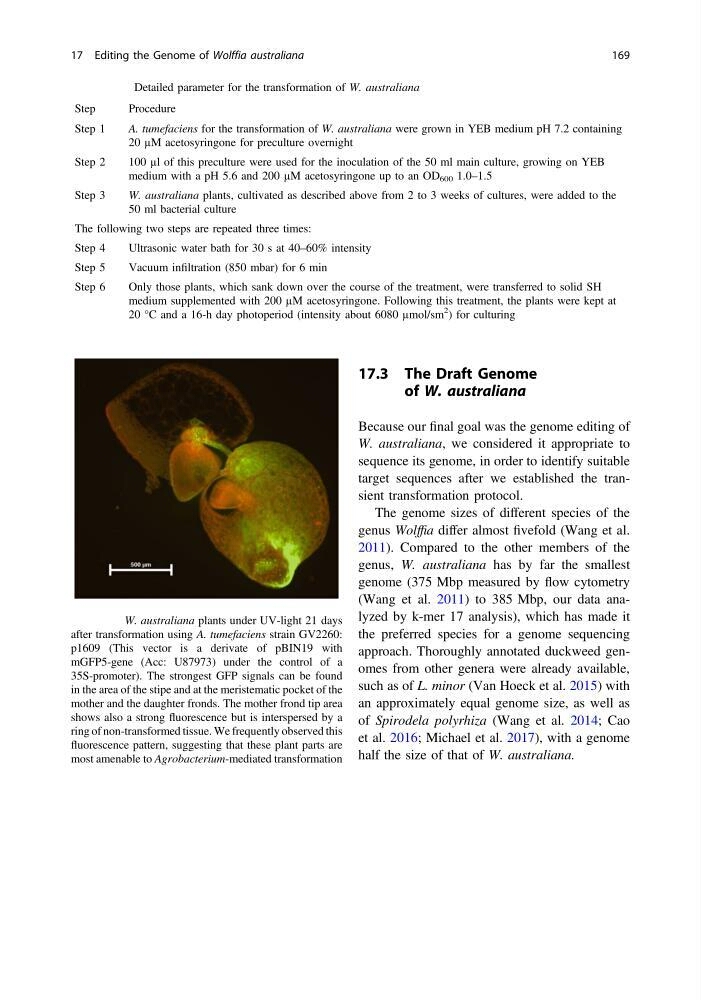
Fig. 17.2 W. australiana plants under UV-light 21 days
after transformation using A. tumefaciens strain GV2260:
p1609 (This vector is a derivate of pBIN19 with
mGFP5-gene (Acc: U87973) under the control of a
35S-promoter). The strongest GFP signals can be found
in the area of the stipe and at the meristematic pocket of the
mother and the daughter fronds. The mother frond tip area
shows also a strong fluorescence but is interspersed by a
ring of non-transformed tissue. We frequently observed this
fluorescence pattern, suggesting that these plant parts are
most amenable to Agrobacterium-mediated transformation
17 Editing the Genome of Wolffia australiana
169
of W. australiana
Because our final goal was the genome editing of
W. australiana, we considered it appropriate to
sequence its genome, in order to identify suitable
target sequences after we established the transient transformation protocol.
The genome sizes of different species of the
genus Wolffia differ almost fivefold (Wang et al.
2011). Compared to the other members of the
genus, W. australiana has by far the smallest
genome (375 Mbp measured by flow cytometry
(Wang et al. 2011) to 385 Mbp, our data analyzed by k-mer 17 analysis), which has made it
the preferred species for a genome sequencing
approach. Thoroughly annotated duckweed genomes from other genera were already available,
such as of L. minor (Van Hoeck et al. 2015) with
an approximately equal genome size, as well as
of Spirodela polyrhiza (Wang et al. 2014; Cao
et al. 2016; Michael et al. 2017), with a genome
half the size of that of W. australiana.
Table 17.3 Detailed parameter for the transformation of W. australiana
Step
Procedure
Step 1
A. tumefaciens for the transformation of W. australiana were grown in YEB medium pH 7.2 containing
20 µM acetosyringone for preculture overnight
Step 2
100 µl of this preculture were used for the inoculation of the 50 ml main culture, growing on YEB
medium with a pH 5.6 and 200 µM acetosyringone up to an OD 600 1.0–1.5
Step 3
W. australiana plants, cultivated as described above from 2 to 3 weeks of cultures, were added to the
50 ml bacterial culture
The following two steps are repeated three times:
Step 4
Ultrasonic water bath for 30 s at 40–60% intensity
Step 5
Vacuum infiltration (850 mbar) for 6 min
Step 6
Only those plants, which sank down over the course of the treatment, were transferred to solid SH
medium supplemented with 200 µM acetosyringone. Following this treatment, the plants were kept at
20 °C and a 16-h day photoperiod (intensity about 6080 µmol/sm
2
) for culturing
Fig. 17.2 W. australiana plants under UV-light 21 days
after transformation using A. tumefaciens strain GV2260:
p1609 (This vector is a derivate of pBIN19 with
mGFP5-gene (Acc: U87973) under the control of a
35S-promoter). The strongest GFP signals can be found
in the area of the stipe and at the meristematic pocket of the
mother and the daughter fronds. The mother frond tip area
shows also a strong fluorescence but is interspersed by a
ring of non-transformed tissue. We frequently observed this
fluorescence pattern, suggesting that these plant parts are
most amenable to Agrobacterium-mediated transformation
17 Editing the Genome of Wolffia australiana
169