

183
focus on fine-tuning the optimal morphological features and to design macro- and
microarchitecture that mimics the native matrix and environment. In addition,
these materials would be best as an injectable therapy to increase their likelihood
of clinical translation in the future and also provide a physical support with
mechanical properties similar to brain tissue. Furthermore, long-term studies are
needed to fully understand the biological effect of the hydrogels and their degradation over time. Finally, further investigation on dual therapies combining proangiogenic and immunomodulator properties is needed to determine the role of
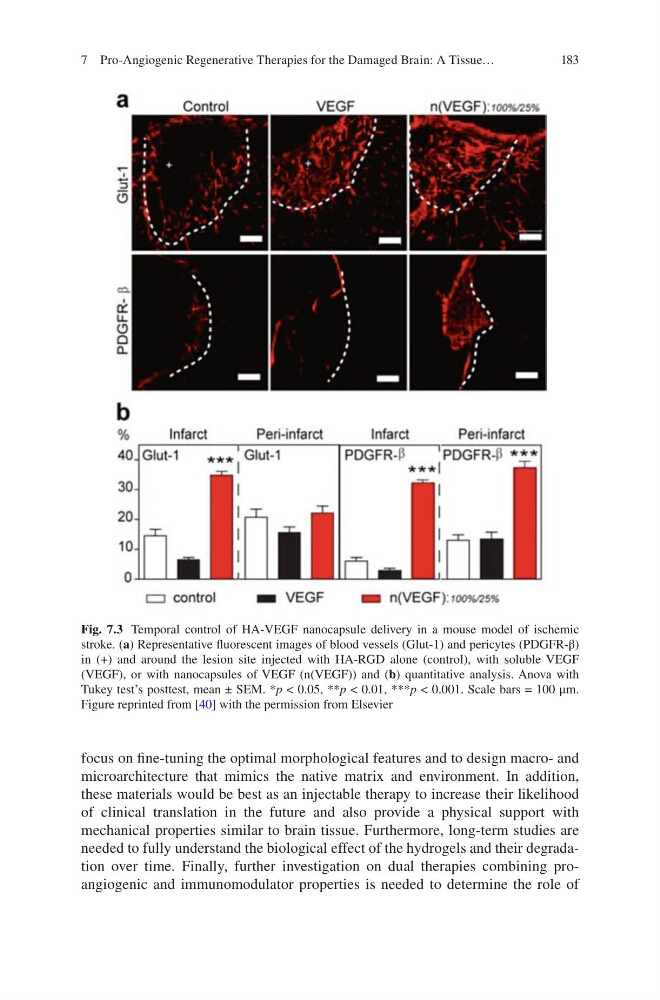
Fig. 7.3 Temporal control of HA-VEGF nanocapsule delivery in a mouse model of ischemic
stroke. (a) Representative fluorescent images of blood vessels (Glut-1) and pericytes (PDGFR-β)
in (+) and around the lesion site injected with HA-RGD alone (control), with soluble VEGF
(VEGF), or with nanocapsules of VEGF (n(VEGF)) and (b) quantitative analysis. Anova with
Tukey test’s posttest, mean ± SEM. *p < 0.05, **p < 0.01, ***p < 0.001. Scale bars = 100 μm.
Figure reprinted from [40] with the permission from Elsevier
7 Pro-Angiogenic Regenerative Therapies for the Damaged Brain: A Tissue…
focus on fine-tuning the optimal morphological features and to design macro- and
microarchitecture that mimics the native matrix and environment. In addition,
these materials would be best as an injectable therapy to increase their likelihood
of clinical translation in the future and also provide a physical support with
mechanical properties similar to brain tissue. Furthermore, long-term studies are
needed to fully understand the biological effect of the hydrogels and their degradation over time. Finally, further investigation on dual therapies combining proangiogenic and immunomodulator properties is needed to determine the role of
Fig. 7.3 Temporal control of HA-VEGF nanocapsule delivery in a mouse model of ischemic
stroke. (a) Representative fluorescent images of blood vessels (Glut-1) and pericytes (PDGFR-β)
in (+) and around the lesion site injected with HA-RGD alone (control), with soluble VEGF
(VEGF), or with nanocapsules of VEGF (n(VEGF)) and (b) quantitative analysis. Anova with
Tukey test’s posttest, mean ± SEM. *p < 0.05, **p < 0.01, ***p < 0.001. Scale bars = 100 μm.
Figure reprinted from [40] with the permission from Elsevier
7 Pro-Angiogenic Regenerative Therapies for the Damaged Brain: A Tissue…