

153
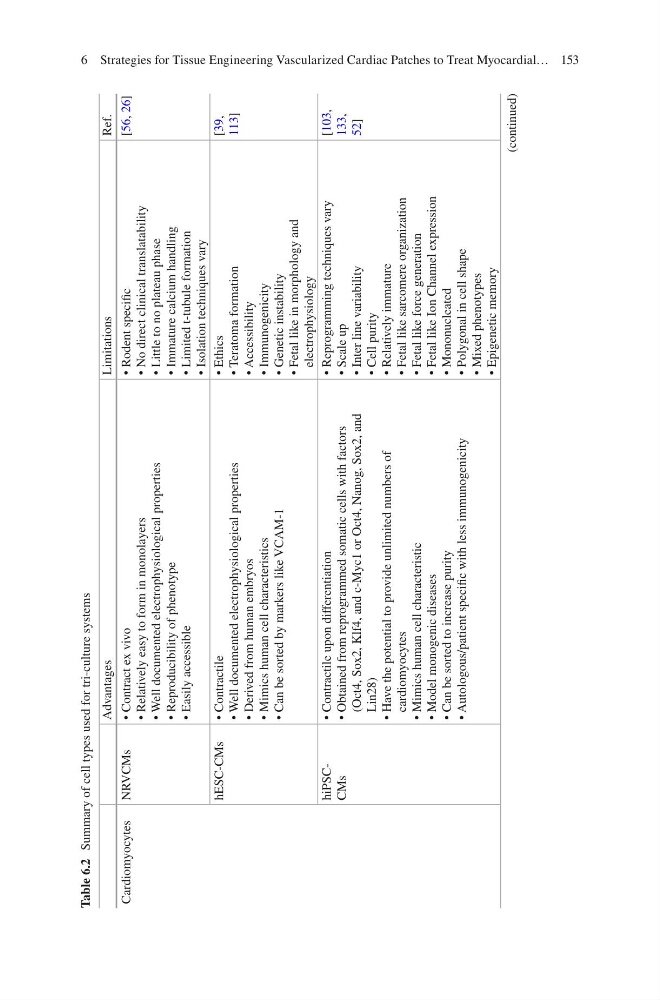
Table 6.2 Summary of cell types used for tri-culture systems
Advantages
Limitations
Ref.
Cardiomyocytes
NRVCMs
• Contract ex vivo
• Relatively easy to form in monolayers
• Well documented electrophysiological properties
• Reproducibility of phenotype
• Easily accessible
• Rodent specific
• No direct clinical translatability
• Little to no plateau phase
• Immature calcium handling
• Limited t-tubule formation
• Isolation techniques vary
[56, 26]
hESC-CMs
• Contractile
• Well documented electrophysiological properties
• Derived from human embryos
• Mimics human cell characteristics
• Can be sorted by markers like VCAM-1
• Ethics
• Teratoma formation
• Accessibility
• Immunogenicity
• Genetic instability
• Fetal like in morphology and
electrophysiology
[39,
113]
hiPSCCMs
• Contractile upon differentiation
• Obtained from reprogrammed somatic cells with factors
(Oct4, Sox2, Klf4, and c-Myc1 or Oct4, Nanog, Sox2, and
Lin28)
• Have the potential to provide unlimited numbers of
cardiomyocytes
• Mimics human cell characteristic
• Model monogenic diseases
• Can be sorted to increase purity
• Autologous/patient specific with less immunogenicity
• Reprogramming techniques vary
• Scale up
• Inter line variability
• Cell purity
• Relatively immature
• Fetal like sarcomere organization
• Fetal like force generation
• Fetal like Ion Channel expression
• Mononucleated
• Polygonal in cell shape
• Mixed phenotypes
• Epigenetic memory
[103,
133,
52]
(continued)
6 Strategies for Tissue Engineering Vascularized Cardiac Patches to Treat Myocardial…
Table 6.2 Summary of cell types used for tri-culture systems
Advantages
Limitations
Ref.
Cardiomyocytes
NRVCMs
• Contract ex vivo
• Relatively easy to form in monolayers
• Well documented electrophysiological properties
• Reproducibility of phenotype
• Easily accessible
• Rodent specific
• No direct clinical translatability
• Little to no plateau phase
• Immature calcium handling
• Limited t-tubule formation
• Isolation techniques vary
[56, 26]
hESC-CMs
• Contractile
• Well documented electrophysiological properties
• Derived from human embryos
• Mimics human cell characteristics
• Can be sorted by markers like VCAM-1
• Ethics
• Teratoma formation
• Accessibility
• Immunogenicity
• Genetic instability
• Fetal like in morphology and
electrophysiology
[39,
113]
hiPSCCMs
• Contractile upon differentiation
• Obtained from reprogrammed somatic cells with factors
(Oct4, Sox2, Klf4, and c-Myc1 or Oct4, Nanog, Sox2, and
Lin28)
• Have the potential to provide unlimited numbers of
cardiomyocytes
• Mimics human cell characteristic
• Model monogenic diseases
• Can be sorted to increase purity
• Autologous/patient specific with less immunogenicity
• Reprogramming techniques vary
• Scale up
• Inter line variability
• Cell purity
• Relatively immature
• Fetal like sarcomere organization
• Fetal like force generation
• Fetal like Ion Channel expression
• Mononucleated
• Polygonal in cell shape
• Mixed phenotypes
• Epigenetic memory
[103,
133,
52]
(continued)
6 Strategies for Tissue Engineering Vascularized Cardiac Patches to Treat Myocardial…