

therefore inelastic scattering is concentrated within much smaller angles than elastic
scattering.
2 The characteristic angle for an elastic scattering event h 0 is increasing
with Z but is on the order of 10 mrad, while the characteristic angle h E is typically
of the order 0.1 mrad. For STEM tomography, this means that unscattered and
inelastically scattered electrons will be collected by the BF disc detector (Fig. 2.1).
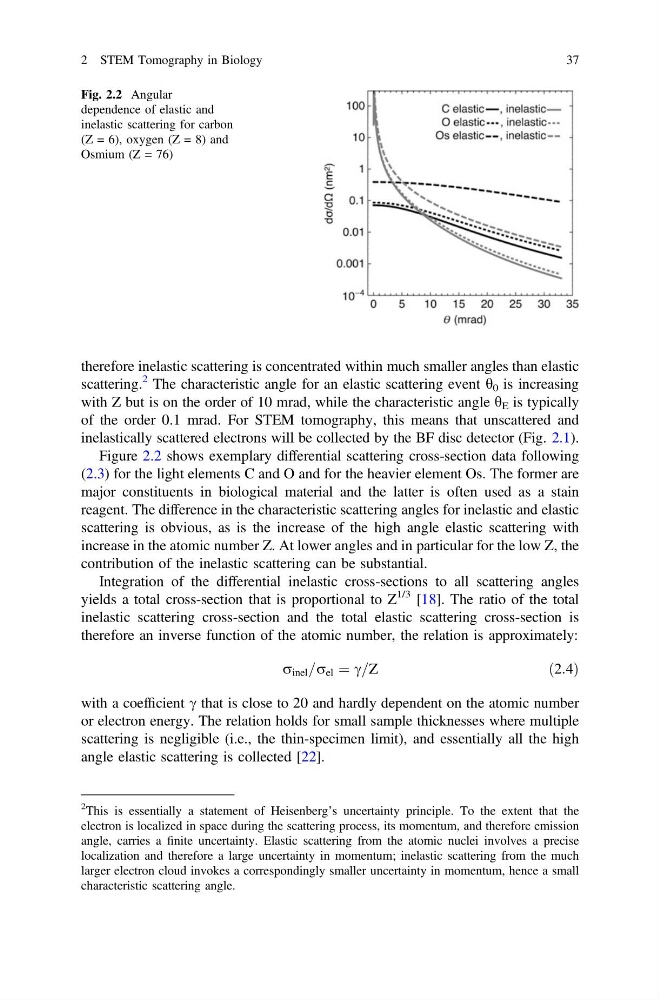
Figure 2.2 shows exemplary differential scattering cross-section data following
(2.3) for the light elements C and O and for the heavier element Os. The former are
major constituents in biological material and the latter is often used as a stain
reagent. The difference in the characteristic scattering angles for inelastic and elastic
scattering is obvious, as is the increase of the high angle elastic scattering with
increase in the atomic number Z. At lower angles and in particular for the low Z, the
contribution of the inelastic scattering can be substantial.
Integration of the differential inelastic cross-sections to all scattering angles
yields a total cross-section that is proportional to Z
1/3 [18]. The ratio of the total
inelastic scattering cross-section and the total elastic scattering cross-section is
therefore an inverse function of the atomic number, the relation is approximately:
r inel =r el ¼ c=Z
ð2:4Þ
with a coefficient c that is close to 20 and hardly dependent on the atomic number
or electron energy. The relation holds for small sample thicknesses where multiple
scattering is negligible (i.e., the thin-specimen limit), and essentially all the high
angle elastic scattering is collected [22].
Fig. 2.2 Angular
dependence of elastic and
inelastic scattering for carbon
(Z = 6), oxygen (Z = 8) and
Osmium (Z = 76)
2
This is essentially a statement of Heisenberg’s uncertainty principle. To the extent that the
electron is localized in space during the scattering process, its momentum, and therefore emission
angle, carries a finite uncertainty. Elastic scattering from the atomic nuclei involves a precise
localization and therefore a large uncertainty in momentum; inelastic scattering from the much
larger electron cloud invokes a correspondingly smaller uncertainty in momentum, hence a small
characteristic scattering angle.
2 STEM Tomography in Biology
37
scattering.
2 The characteristic angle for an elastic scattering event h 0 is increasing
with Z but is on the order of 10 mrad, while the characteristic angle h E is typically
of the order 0.1 mrad. For STEM tomography, this means that unscattered and
inelastically scattered electrons will be collected by the BF disc detector (Fig. 2.1).
Figure 2.2 shows exemplary differential scattering cross-section data following
(2.3) for the light elements C and O and for the heavier element Os. The former are
major constituents in biological material and the latter is often used as a stain
reagent. The difference in the characteristic scattering angles for inelastic and elastic
scattering is obvious, as is the increase of the high angle elastic scattering with
increase in the atomic number Z. At lower angles and in particular for the low Z, the
contribution of the inelastic scattering can be substantial.
Integration of the differential inelastic cross-sections to all scattering angles
yields a total cross-section that is proportional to Z
1/3 [18]. The ratio of the total
inelastic scattering cross-section and the total elastic scattering cross-section is
therefore an inverse function of the atomic number, the relation is approximately:
r inel =r el ¼ c=Z
ð2:4Þ
with a coefficient c that is close to 20 and hardly dependent on the atomic number
or electron energy. The relation holds for small sample thicknesses where multiple
scattering is negligible (i.e., the thin-specimen limit), and essentially all the high
angle elastic scattering is collected [22].
Fig. 2.2 Angular
dependence of elastic and
inelastic scattering for carbon
(Z = 6), oxygen (Z = 8) and
Osmium (Z = 76)
2
This is essentially a statement of Heisenberg’s uncertainty principle. To the extent that the
electron is localized in space during the scattering process, its momentum, and therefore emission
angle, carries a finite uncertainty. Elastic scattering from the atomic nuclei involves a precise
localization and therefore a large uncertainty in momentum; inelastic scattering from the much
larger electron cloud invokes a correspondingly smaller uncertainty in momentum, hence a small
characteristic scattering angle.
2 STEM Tomography in Biology
37