

1.10.2 Template matching
A special subset of segmentation is ‘motif search’ or ‘template matching’, a form of
pattern recognition. This is the basis for ‘visual proteomics’ [53]. Like subtomogram
averaging, it can only be performed on cryo datasets because these faithfully represent the native structure. Briefly, a tomogram of a cell contains densities corresponding to the expressed portion of the genome, the proteome. If a template
structure generated by an independent technique is modified to suit the characteristics of the tomogram (CTF, resolution), then the tomogram can be searched
exhaustively using this structure as a template, and cross-correlation peaks indicate
the spatial coordinates of the ‘hits’ as well as the statistical likelihood of it being true
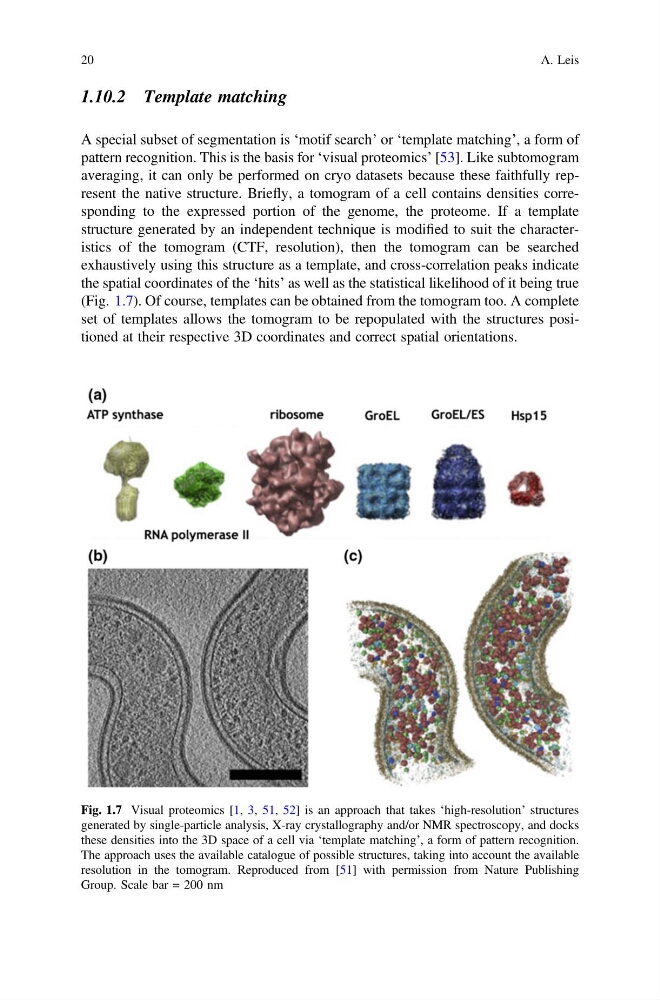
(Fig. 1.7). Of course, templates can be obtained from the tomogram too. A complete
set of templates allows the tomogram to be repopulated with the structures positioned at their respective 3D coordinates and correct spatial orientations.
Fig. 1.7 Visual proteomics [1, 3, 51, 52] is an approach that takes ‘high-resolution’ structures
generated by single-particle analysis, X-ray crystallography and/or NMR spectroscopy, and docks
these densities into the 3D space of a cell via ‘template matching’, a form of pattern recognition.
The approach uses the available catalogue of possible structures, taking into account the available
resolution in the tomogram. Reproduced from [51] with permission from Nature Publishing
Group. Scale bar = 200 nm
20
A. Leis
A special subset of segmentation is ‘motif search’ or ‘template matching’, a form of
pattern recognition. This is the basis for ‘visual proteomics’ [53]. Like subtomogram
averaging, it can only be performed on cryo datasets because these faithfully represent the native structure. Briefly, a tomogram of a cell contains densities corresponding to the expressed portion of the genome, the proteome. If a template
structure generated by an independent technique is modified to suit the characteristics of the tomogram (CTF, resolution), then the tomogram can be searched
exhaustively using this structure as a template, and cross-correlation peaks indicate
the spatial coordinates of the ‘hits’ as well as the statistical likelihood of it being true
(Fig. 1.7). Of course, templates can be obtained from the tomogram too. A complete
set of templates allows the tomogram to be repopulated with the structures positioned at their respective 3D coordinates and correct spatial orientations.
Fig. 1.7 Visual proteomics [1, 3, 51, 52] is an approach that takes ‘high-resolution’ structures
generated by single-particle analysis, X-ray crystallography and/or NMR spectroscopy, and docks
these densities into the 3D space of a cell via ‘template matching’, a form of pattern recognition.
The approach uses the available catalogue of possible structures, taking into account the available
resolution in the tomogram. Reproduced from [51] with permission from Nature Publishing
Group. Scale bar = 200 nm
20
A. Leis