

In Sect. 11.3.1 we examine the median filter. In Sect. 11.3.2 we discuss signal
optimization based on diffusion. In Sect. 11.3.3 we examine the case of non-linear
diffusion filters. In Sect. 11.3.4 we discuss the Edge Enhancing Diffusion
(EED) filter. In Sect. 11.3.5 we discuss the bilateral filter.
11.3.1 Median Filter
The median filter is a non-linear filter for noise reduction. In its classical implementation, each single pixel is replaced with the median value of its neighbouring
pixels. The median filter is particularly useful for removing impulse-type real space
noise (for example, “salt and pepper” noise). Furthermore, it is easy to use, as the
only parameter choice required is the neighbourhood size.
The median filter itself does not have any mechanism for identifying edges, in
contrast to the approaches described in the next sections. However, directional
weighted median computations may aid edge preservation [8]. Also, iterative
application of the median filter has been found useful in the denoising of electron
tomogrography volumes [22].
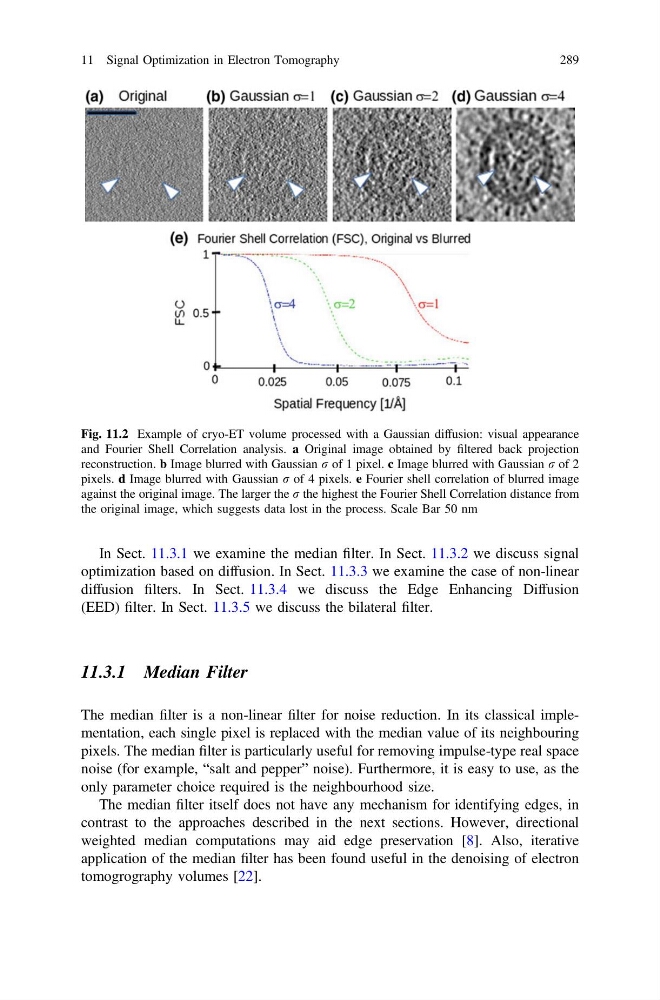
Fig. 11.2 Example of cryo-ET volume processed with a Gaussian diffusion: visual appearance
and Fourier Shell Correlation analysis. a Original image obtained by filtered back projection
reconstruction. b Image blurred with Gaussian r of 1 pixel. c Image blurred with Gaussian r of 2
pixels. d Image blurred with Gaussian r of 4 pixels. e Fourier shell correlation of blurred image
against the original image. The larger the r the highest the Fourier Shell Correlation distance from
the original image, which suggests data lost in the process. Scale Bar 50 nm
11 Signal Optimization in Electron Tomography
289
optimization based on diffusion. In Sect. 11.3.3 we examine the case of non-linear
diffusion filters. In Sect. 11.3.4 we discuss the Edge Enhancing Diffusion
(EED) filter. In Sect. 11.3.5 we discuss the bilateral filter.
11.3.1 Median Filter
The median filter is a non-linear filter for noise reduction. In its classical implementation, each single pixel is replaced with the median value of its neighbouring
pixels. The median filter is particularly useful for removing impulse-type real space
noise (for example, “salt and pepper” noise). Furthermore, it is easy to use, as the
only parameter choice required is the neighbourhood size.
The median filter itself does not have any mechanism for identifying edges, in
contrast to the approaches described in the next sections. However, directional
weighted median computations may aid edge preservation [8]. Also, iterative
application of the median filter has been found useful in the denoising of electron
tomogrography volumes [22].
Fig. 11.2 Example of cryo-ET volume processed with a Gaussian diffusion: visual appearance
and Fourier Shell Correlation analysis. a Original image obtained by filtered back projection
reconstruction. b Image blurred with Gaussian r of 1 pixel. c Image blurred with Gaussian r of 2
pixels. d Image blurred with Gaussian r of 4 pixels. e Fourier shell correlation of blurred image
against the original image. The larger the r the highest the Fourier Shell Correlation distance from
the original image, which suggests data lost in the process. Scale Bar 50 nm
11 Signal Optimization in Electron Tomography
289