

5.3.2 Photoswitching of Wettability
Photoswitching of surface properties of layered material films [426] by
functionalization with photochromic compounds is expected owing to polarity
change with photoisomerizations. Photoswitching of wettability of a layered double
hydroxide film (ZnAl-NO 3 -LDH film) was reported by functionalization with a
trifluoromethyl-substituted anionic azobenzene (CF 3 AZC 5 COO
À in Scheme 16)
[427]. The film was synthesized by putting a porous anodic alumina/aluminum
(PAO/Al) substrate into the solution containing zinc nitrate and ammonium nitrate
[428] and the subsequent intercalation of CF 3 AZC 5 COO
À
. The morphology of the
film of the LDH crystal seemed to have a curved hexagonal sheet structure
(Fig. 17a). A water contact angle of the film was 151 Æ 1
, while the contact
angle decreased to 73 Æ 1
by 365 nm UV irradiation (Fig. 17b, c). The contact
angle was returned to the initial value by subsequent visible light (420 nm) irradiation. The cis-isomer of azobenzene has larger polarity owing to the bending
structure, indicating that the surface of the film with the cis-isomer had higher
polarity than that with the trans-isomer. An advantage of this system is thought to
be an easy preparation method of ion exchange method [35, 36, 283], which is
expected to make a film with a large area compared to other films that showed
photoswitching of wettability [429, 430].
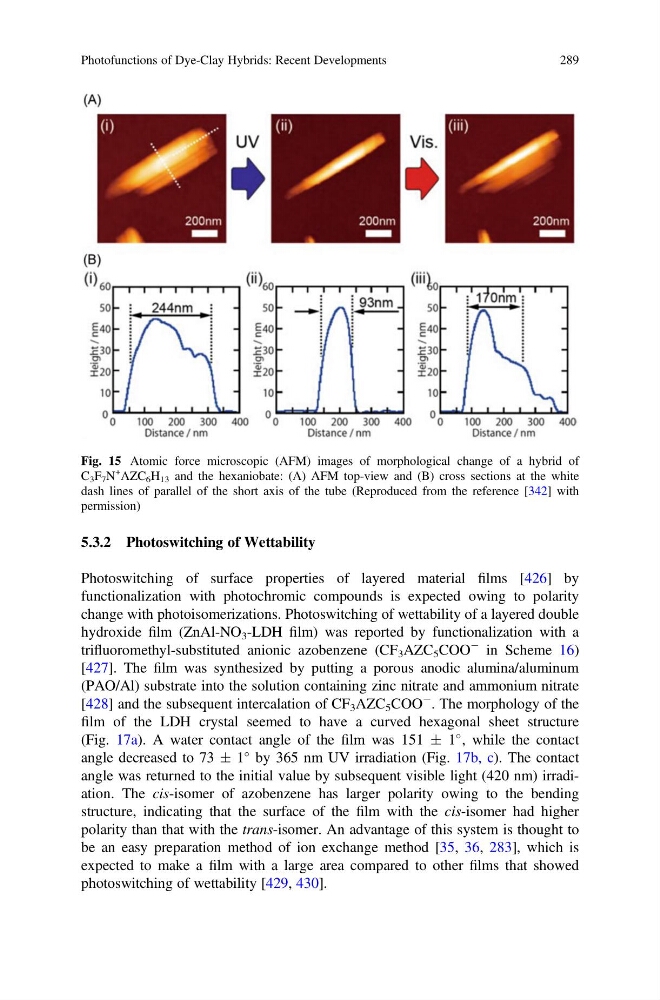
Fig. 15 Atomic force microscopic (AFM) images of morphological change of a hybrid of
C 3 F 7 N
+ AZC 6 H 13 and the hexaniobate: (A) AFM top-view and (B) cross sections at the white
dash lines of parallel of the short axis of the tube (Reproduced from the reference [342] with
permission)
Photofunctions of Dye-Clay Hybrids: Recent Developments
289
Photoswitching of surface properties of layered material films [426] by
functionalization with photochromic compounds is expected owing to polarity
change with photoisomerizations. Photoswitching of wettability of a layered double
hydroxide film (ZnAl-NO 3 -LDH film) was reported by functionalization with a
trifluoromethyl-substituted anionic azobenzene (CF 3 AZC 5 COO
À in Scheme 16)
[427]. The film was synthesized by putting a porous anodic alumina/aluminum
(PAO/Al) substrate into the solution containing zinc nitrate and ammonium nitrate
[428] and the subsequent intercalation of CF 3 AZC 5 COO
À
. The morphology of the
film of the LDH crystal seemed to have a curved hexagonal sheet structure
(Fig. 17a). A water contact angle of the film was 151 Æ 1
, while the contact
angle decreased to 73 Æ 1
by 365 nm UV irradiation (Fig. 17b, c). The contact
angle was returned to the initial value by subsequent visible light (420 nm) irradiation. The cis-isomer of azobenzene has larger polarity owing to the bending
structure, indicating that the surface of the film with the cis-isomer had higher
polarity than that with the trans-isomer. An advantage of this system is thought to
be an easy preparation method of ion exchange method [35, 36, 283], which is
expected to make a film with a large area compared to other films that showed
photoswitching of wettability [429, 430].
Fig. 15 Atomic force microscopic (AFM) images of morphological change of a hybrid of
C 3 F 7 N
+ AZC 6 H 13 and the hexaniobate: (A) AFM top-view and (B) cross sections at the white
dash lines of parallel of the short axis of the tube (Reproduced from the reference [342] with
permission)
Photofunctions of Dye-Clay Hybrids: Recent Developments
289