

molecules are located at the interface between the interior of a ZL crystal and the
surroundings, they can be considered as mediators for communication between dye
molecules located inside of the nanochannels and objects outside of the crystals.
Luminescent stopcocks can be used, e.g., to extract or inject electronic excitation
energy into or from the ZL crystals by means of FRET. Stopcock molecules can also
prevent penetration of small molecules such as oxygen and water or hinder encapsulated molecules, cluster, and cations from leaving the channels. The dye molecules
BTRX and B493/503 (Table 4) were used in the first successful demonstration of the
stopcock principle. Their head consists of a BODIPY fluorophore, and their label is a
succinimidyl ester. Key to success was the choice of appropriate reaction conditions.
The molecules can be dissolved in small amounts in cyclohexane which promotes
the succinimidyl ester to slip into the ZL channels where it is stabilized. This led to
the first known antenna system which allowed extracting excitation energy from
donors located inside of the channels by means of FRET and also injecting electronic
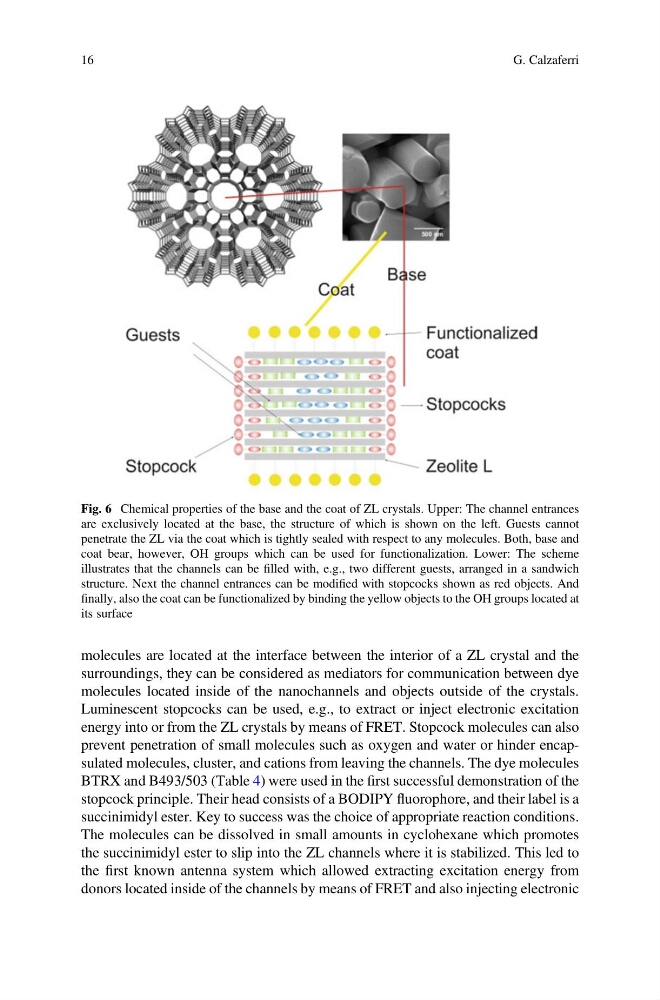
Fig. 6 Chemical properties of the base and the coat of ZL crystals. Upper: The channel entrances
are exclusively located at the base, the structure of which is shown on the left. Guests cannot
penetrate the ZL via the coat which is tightly sealed with respect to any molecules. Both, base and
coat bear, however, OH groups which can be used for functionalization. Lower: The scheme
illustrates that the channels can be filled with, e.g., two different guests, arranged in a sandwich
structure. Next the channel entrances can be modified with stopcocks shown as red objects. And
finally, also the coat can be functionalized by binding the yellow objects to the OH groups located at
its surface
16
G. Calzaferri
surroundings, they can be considered as mediators for communication between dye
molecules located inside of the nanochannels and objects outside of the crystals.
Luminescent stopcocks can be used, e.g., to extract or inject electronic excitation
energy into or from the ZL crystals by means of FRET. Stopcock molecules can also
prevent penetration of small molecules such as oxygen and water or hinder encapsulated molecules, cluster, and cations from leaving the channels. The dye molecules
BTRX and B493/503 (Table 4) were used in the first successful demonstration of the
stopcock principle. Their head consists of a BODIPY fluorophore, and their label is a
succinimidyl ester. Key to success was the choice of appropriate reaction conditions.
The molecules can be dissolved in small amounts in cyclohexane which promotes
the succinimidyl ester to slip into the ZL channels where it is stabilized. This led to
the first known antenna system which allowed extracting excitation energy from
donors located inside of the channels by means of FRET and also injecting electronic
Fig. 6 Chemical properties of the base and the coat of ZL crystals. Upper: The channel entrances
are exclusively located at the base, the structure of which is shown on the left. Guests cannot
penetrate the ZL via the coat which is tightly sealed with respect to any molecules. Both, base and
coat bear, however, OH groups which can be used for functionalization. Lower: The scheme
illustrates that the channels can be filled with, e.g., two different guests, arranged in a sandwich
structure. Next the channel entrances can be modified with stopcocks shown as red objects. And
finally, also the coat can be functionalized by binding the yellow objects to the OH groups located at
its surface
16
G. Calzaferri