

2 Synthesis of Zeolite L
An important property of ZL is that samples can be synthesized in a large variety of
sizes and morphologies, spanning a volume range of eight orders of magnitude, all of
them with the same hexagonal structure consisting of linear 1 nm channels. Only
technical grade ZL is commercially available. This is an unfortunate limitation
because many interesting experiments and applications depend critically on the
size, the morphology, and the chemical purity of the crystals. The synthesis of
laboratory amounts of ZL crystals in a large size range and different morphology
from disc-shaped, barrel, and elongated crystals is relatively easy, however, and can
be performed in poly(tetrafluoroethylene) (PTFE) bottles placed in a tight PTFE
pressure vessel that supports temperature of up to about 180
C and pressures up to
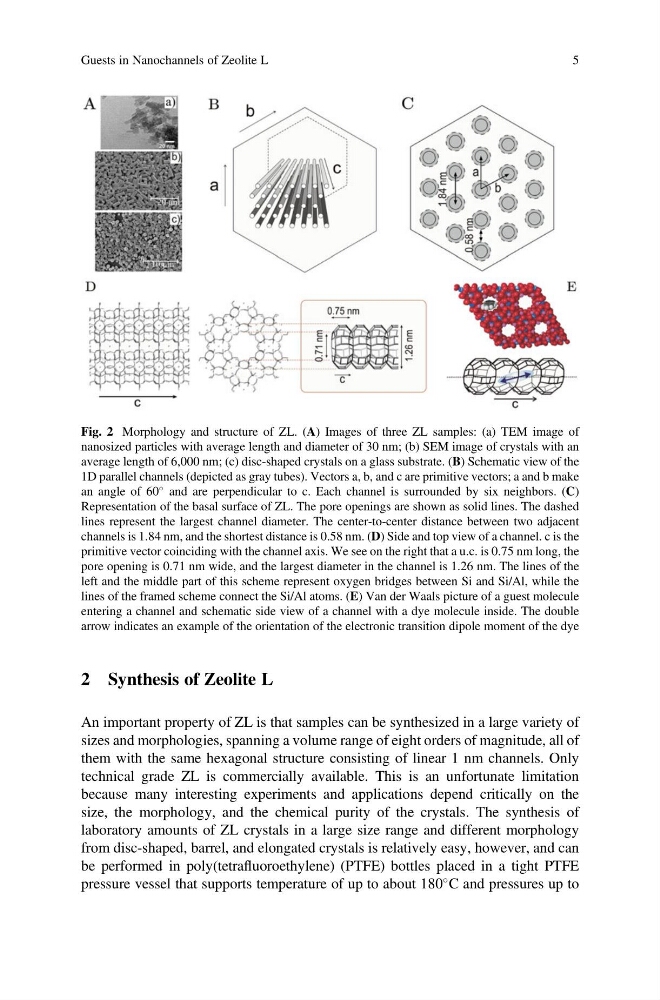
Fig. 2 Morphology and structure of ZL. (A) Images of three ZL samples: (a) TEM image of
nanosized particles with average length and diameter of 30 nm; (b) SEM image of crystals with an
average length of 6,000 nm; (c) disc-shaped crystals on a glass substrate. (B) Schematic view of the
1D parallel channels (depicted as gray tubes). Vectors a, b, and c are primitive vectors; a and b make
an angle of 60
and are perpendicular to c. Each channel is surrounded by six neighbors. (C)
Representation of the basal surface of ZL. The pore openings are shown as solid lines. The dashed
lines represent the largest channel diameter. The center-to-center distance between two adjacent
channels is 1.84 nm, and the shortest distance is 0.58 nm. (D) Side and top view of a channel. c is the
primitive vector coinciding with the channel axis. We see on the right that a u.c. is 0.75 nm long, the
pore opening is 0.71 nm wide, and the largest diameter in the channel is 1.26 nm. The lines of the
left and the middle part of this scheme represent oxygen bridges between Si and Si/Al, while the
lines of the framed scheme connect the Si/Al atoms. (E) Van der Waals picture of a guest molecule
entering a channel and schematic side view of a channel with a dye molecule inside. The double
arrow indicates an example of the orientation of the electronic transition dipole moment of the dye
Guests in Nanochannels of Zeolite L
5
An important property of ZL is that samples can be synthesized in a large variety of
sizes and morphologies, spanning a volume range of eight orders of magnitude, all of
them with the same hexagonal structure consisting of linear 1 nm channels. Only
technical grade ZL is commercially available. This is an unfortunate limitation
because many interesting experiments and applications depend critically on the
size, the morphology, and the chemical purity of the crystals. The synthesis of
laboratory amounts of ZL crystals in a large size range and different morphology
from disc-shaped, barrel, and elongated crystals is relatively easy, however, and can
be performed in poly(tetrafluoroethylene) (PTFE) bottles placed in a tight PTFE
pressure vessel that supports temperature of up to about 180
C and pressures up to
Fig. 2 Morphology and structure of ZL. (A) Images of three ZL samples: (a) TEM image of
nanosized particles with average length and diameter of 30 nm; (b) SEM image of crystals with an
average length of 6,000 nm; (c) disc-shaped crystals on a glass substrate. (B) Schematic view of the
1D parallel channels (depicted as gray tubes). Vectors a, b, and c are primitive vectors; a and b make
an angle of 60
and are perpendicular to c. Each channel is surrounded by six neighbors. (C)
Representation of the basal surface of ZL. The pore openings are shown as solid lines. The dashed
lines represent the largest channel diameter. The center-to-center distance between two adjacent
channels is 1.84 nm, and the shortest distance is 0.58 nm. (D) Side and top view of a channel. c is the
primitive vector coinciding with the channel axis. We see on the right that a u.c. is 0.75 nm long, the
pore opening is 0.71 nm wide, and the largest diameter in the channel is 1.26 nm. The lines of the
left and the middle part of this scheme represent oxygen bridges between Si and Si/Al, while the
lines of the framed scheme connect the Si/Al atoms. (E) Van der Waals picture of a guest molecule
entering a channel and schematic side view of a channel with a dye molecule inside. The double
arrow indicates an example of the orientation of the electronic transition dipole moment of the dye
Guests in Nanochannels of Zeolite L
5