

graphene layer with a diameter of around 1 nm and a length from 1 to 100 μm. There
are three common ways to prepare SWNT, the carbon arc-discharge technique, the
laser-ablation technique, and the chemical vapor deposition technique [113].
SWNTs are known to be good quenchers of fluorescence. Furthermore they can
quench the activity of photosensitizers. This characteristic enables SWNTs for the
following example application. Aptamer-coupled photosensitizers can be bound to
SWNTs non-covalently by π-stacking interactions between the aptamer and
the surface of the SWNTs when no target is bound by the aptamer (see Fig. 9).
The close proximity of the SWNT quenches the cytotoxic effects of the photosensitizer. Upon target binding, the structure of the aptamer changes and the aptamer is
released from the SWNT. Therefore the photosensitizer is no longer quenched by the
SWNT, and singlet oxygen is produced upon irradiation [8].
3.3 Other Therapeutic Applications of Aptamer-Modified
Nanoparticles
The following section presents selected special applications of aptamer-modified
nanoparticles that can be used for therapeutic applications.
Aptamer-Modified Superparamagnetic Nanoparticles as Nanosurgeons
Superparamagnetic nanoparticles are based on magnetite (Fe 3 O 4 ) and therefore can
be controlled by external magnetic fields [114, 115]. They have sizes between a few
nanometers and 180 nm. Their half-life in the blood circulation is dependent on size
and modification [115]. Some formulations of superparamagnetic nanoparticles are
approved for magnetic resonance imaging, but they are moreover a promising tool
for usage in nanosurgery [114, 115]. They can be transported to the target tissue by
usage of a three-dimensional magnetic field generator [114, 116]. The surface of
these magnetic nanoparticles can easily be modified and aptamers can be coupled. If
aptamers are chosen which bind, e.g., to cancer cells, they selectively can be
separated from healthy cells (see Fig. 10). For example, Nair et al. were able to
separate targeted cells from non-targeted cells; furthermore a large extend of the
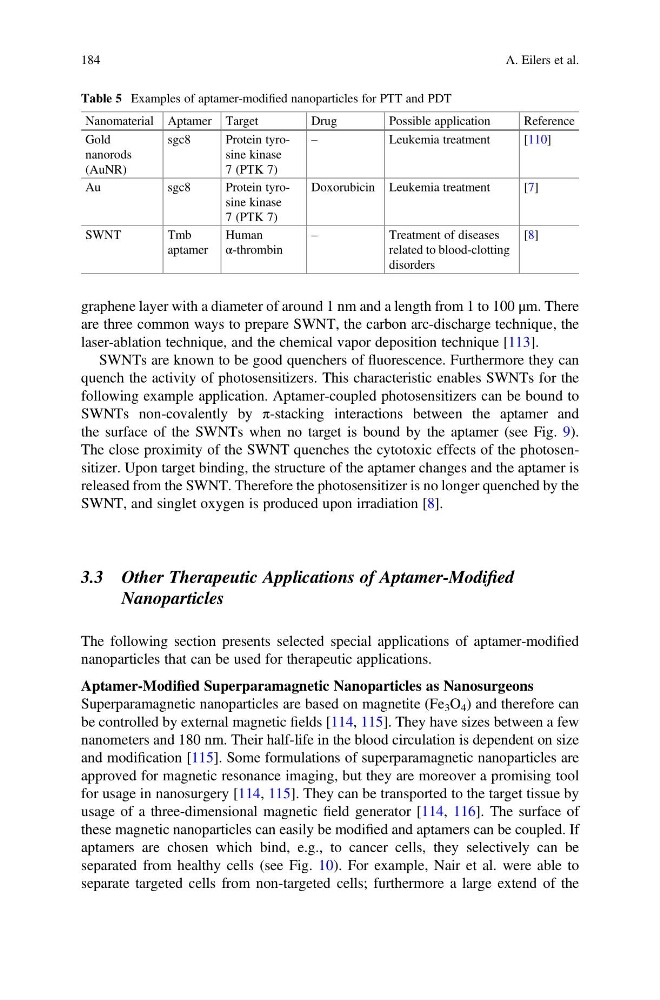
Table 5 Examples of aptamer-modified nanoparticles for PTT and PDT
Nanomaterial Aptamer Target
Drug
Possible application
Reference
Gold
nanorods
(AuNR)
sgc8
Protein tyrosine kinase
7 (PTK 7)
–
Leukemia treatment
[110]
Au
sgc8
Protein tyrosine kinase
7 (PTK 7)
Doxorubicin Leukemia treatment
[7]
SWNT
Tmb
aptamer
Human
α-thrombin
–
Treatment of diseases
related to blood-clotting
disorders
[8]
184
A. Eilers et al.
are three common ways to prepare SWNT, the carbon arc-discharge technique, the
laser-ablation technique, and the chemical vapor deposition technique [113].
SWNTs are known to be good quenchers of fluorescence. Furthermore they can
quench the activity of photosensitizers. This characteristic enables SWNTs for the
following example application. Aptamer-coupled photosensitizers can be bound to
SWNTs non-covalently by π-stacking interactions between the aptamer and
the surface of the SWNTs when no target is bound by the aptamer (see Fig. 9).
The close proximity of the SWNT quenches the cytotoxic effects of the photosensitizer. Upon target binding, the structure of the aptamer changes and the aptamer is
released from the SWNT. Therefore the photosensitizer is no longer quenched by the
SWNT, and singlet oxygen is produced upon irradiation [8].
3.3 Other Therapeutic Applications of Aptamer-Modified
Nanoparticles
The following section presents selected special applications of aptamer-modified
nanoparticles that can be used for therapeutic applications.
Aptamer-Modified Superparamagnetic Nanoparticles as Nanosurgeons
Superparamagnetic nanoparticles are based on magnetite (Fe 3 O 4 ) and therefore can
be controlled by external magnetic fields [114, 115]. They have sizes between a few
nanometers and 180 nm. Their half-life in the blood circulation is dependent on size
and modification [115]. Some formulations of superparamagnetic nanoparticles are
approved for magnetic resonance imaging, but they are moreover a promising tool
for usage in nanosurgery [114, 115]. They can be transported to the target tissue by
usage of a three-dimensional magnetic field generator [114, 116]. The surface of
these magnetic nanoparticles can easily be modified and aptamers can be coupled. If
aptamers are chosen which bind, e.g., to cancer cells, they selectively can be
separated from healthy cells (see Fig. 10). For example, Nair et al. were able to
separate targeted cells from non-targeted cells; furthermore a large extend of the
Table 5 Examples of aptamer-modified nanoparticles for PTT and PDT
Nanomaterial Aptamer Target
Drug
Possible application
Reference
Gold
nanorods
(AuNR)
sgc8
Protein tyrosine kinase
7 (PTK 7)
–
Leukemia treatment
[110]
Au
sgc8
Protein tyrosine kinase
7 (PTK 7)
Doxorubicin Leukemia treatment
[7]
SWNT
Tmb
aptamer
Human
α-thrombin
–
Treatment of diseases
related to blood-clotting
disorders
[8]
184
A. Eilers et al.