

phenolics, and noxious compounds (Moneke et al. 2010; Castillo et al. 2011). The
commonly used microorganisms for the pesticide bioremediation belong to the
species of Agrobacterium, Azospirillum, Bacillus, Burkholderia, Flavobacterium,
Klebsiella, Mycobacterium, Methylococcus, Pandoraea, Pseudomonas, and Streptomyces (Nakkeeran et al. 2005; Glazer and Nikaido 2007; Rani and Dhania 2014;
Parte et al. 2017; Kumar et al. 2018b). Some fungi that degrade pesticides include
Aspergillus, Candida, Lecanicillum, Penicillium, Rhizopus, Trichoderma, and
Phanerochaete chrysosporium (Mateen et al. 1994; Pimentel 2002; Martins et al.
2017). Bacteria that degrade certain pesticides have not only survived in stressful
conditions of pesticides but have also shown biocontrol activity (Castillo et al. 2011;
Chennappa et al. 2014). For example, the pesticide (methomyl)-degrading bacterial
strains, i.e., Disha A and Disha B isolated from pesticide-infested rhizospheric soil,
were recognized as Bacillus cereus and Bacillus safensis, respectively (Roy and Das
2017). Recent awareness about human health and concern about food safety has
necessitated the characterization of efficient bioremediation agents from soil/
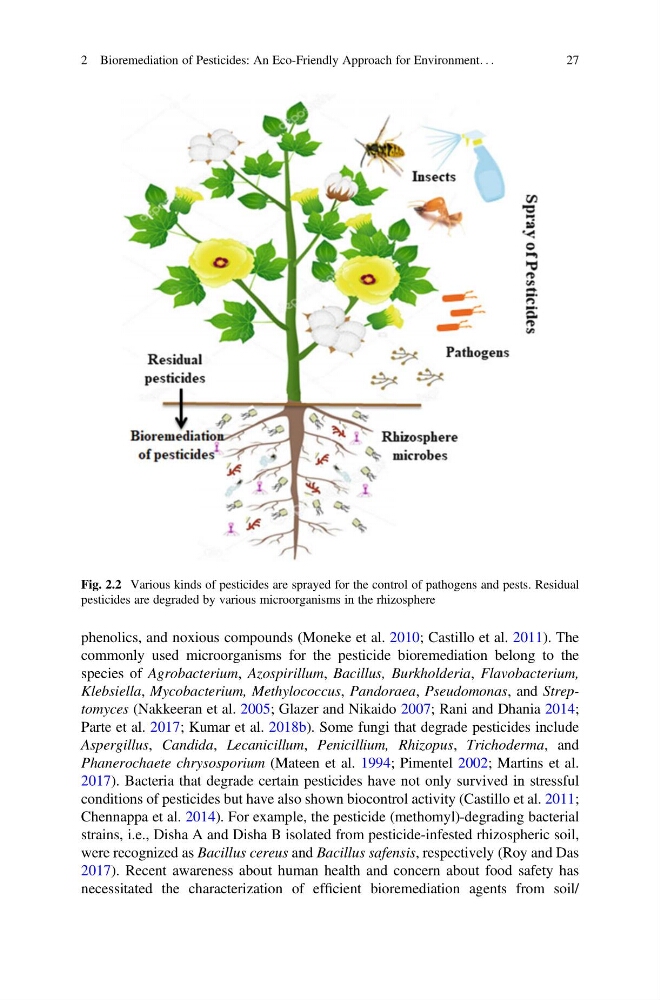
Fig. 2.2 Various kinds of pesticides are sprayed for the control of pathogens and pests. Residual
pesticides are degraded by various microorganisms in the rhizosphere
2 Bioremediation of Pesticides: An Eco-Friendly Approach for Environment. . .
27
commonly used microorganisms for the pesticide bioremediation belong to the
species of Agrobacterium, Azospirillum, Bacillus, Burkholderia, Flavobacterium,
Klebsiella, Mycobacterium, Methylococcus, Pandoraea, Pseudomonas, and Streptomyces (Nakkeeran et al. 2005; Glazer and Nikaido 2007; Rani and Dhania 2014;
Parte et al. 2017; Kumar et al. 2018b). Some fungi that degrade pesticides include
Aspergillus, Candida, Lecanicillum, Penicillium, Rhizopus, Trichoderma, and
Phanerochaete chrysosporium (Mateen et al. 1994; Pimentel 2002; Martins et al.
2017). Bacteria that degrade certain pesticides have not only survived in stressful
conditions of pesticides but have also shown biocontrol activity (Castillo et al. 2011;
Chennappa et al. 2014). For example, the pesticide (methomyl)-degrading bacterial
strains, i.e., Disha A and Disha B isolated from pesticide-infested rhizospheric soil,
were recognized as Bacillus cereus and Bacillus safensis, respectively (Roy and Das
2017). Recent awareness about human health and concern about food safety has
necessitated the characterization of efficient bioremediation agents from soil/
Fig. 2.2 Various kinds of pesticides are sprayed for the control of pathogens and pests. Residual
pesticides are degraded by various microorganisms in the rhizosphere
2 Bioremediation of Pesticides: An Eco-Friendly Approach for Environment. . .
27