

8.7 Role of Plant Growth–Promoting Rhizobacteria
(PGPR) in Bioremediation of Polluted Soil
Plant growth–promoting rhizobacteria (PGPR) are the rhizosphere bacteria that can
facilitate the plant growth under polluted environment by various mechanisms or
they can help in bioremediation of polluted soil (Patel et al. 2016) which can
improve the plant growth by siderophore production (Sayyed et al. 2013), phosphate
solubilization (Ahemad and Khan 2010), biological nitrogen fixation (Yadegari et al.
2010), production of 1-aminocyclopropane-1-carboxylate deaminase (ACC)
(Gontia-Mishra et al. 2017), quorum sensing (Podile et al. 2014) signal interference
and phytohormone production (Cassán et al. 2014), exhibiting antifungal activity
(Ingle and Deshmukh 2010; Shobha and Kumudini 2012), production of volatile
organic compounds (Santoro et al. 2015), induction of systemic resistance
(Annapurna et al. 2013), promoting beneficial plant–microbe symbioses
(Bhattacharyya and Jha 2012), it could detoxify the contaminated environment
sequestration of the metal ions inside the cell (Antony et al. 2011), biotransformation—transformation of toxic metal to less toxic forms (Cheung and Gu 2007;
Shukla et al. 2009), adsorption/desorption of metals, etc. (Mamaril et al. 1997;
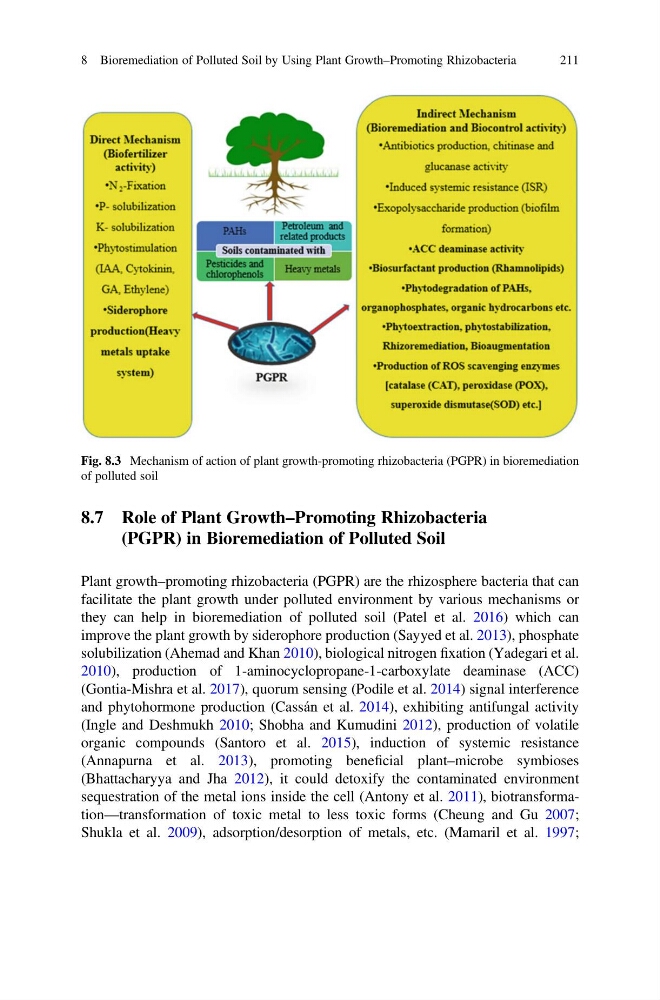
Fig. 8.3 Mechanism of action of plant growth-promoting rhizobacteria (PGPR) in bioremediation
of polluted soil
8 Bioremediation of Polluted Soil by Using Plant Growth–Promoting Rhizobacteria
211
(PGPR) in Bioremediation of Polluted Soil
Plant growth–promoting rhizobacteria (PGPR) are the rhizosphere bacteria that can
facilitate the plant growth under polluted environment by various mechanisms or
they can help in bioremediation of polluted soil (Patel et al. 2016) which can
improve the plant growth by siderophore production (Sayyed et al. 2013), phosphate
solubilization (Ahemad and Khan 2010), biological nitrogen fixation (Yadegari et al.
2010), production of 1-aminocyclopropane-1-carboxylate deaminase (ACC)
(Gontia-Mishra et al. 2017), quorum sensing (Podile et al. 2014) signal interference
and phytohormone production (Cassán et al. 2014), exhibiting antifungal activity
(Ingle and Deshmukh 2010; Shobha and Kumudini 2012), production of volatile
organic compounds (Santoro et al. 2015), induction of systemic resistance
(Annapurna et al. 2013), promoting beneficial plant–microbe symbioses
(Bhattacharyya and Jha 2012), it could detoxify the contaminated environment
sequestration of the metal ions inside the cell (Antony et al. 2011), biotransformation—transformation of toxic metal to less toxic forms (Cheung and Gu 2007;
Shukla et al. 2009), adsorption/desorption of metals, etc. (Mamaril et al. 1997;
Fig. 8.3 Mechanism of action of plant growth-promoting rhizobacteria (PGPR) in bioremediation
of polluted soil
8 Bioremediation of Polluted Soil by Using Plant Growth–Promoting Rhizobacteria
211