

92
R. E. Graff et al.
# of Markers
# of Samples
Time
Discovery
Fine Mapping
Confirmation
e.g., GWAS
e.g., Candidate Gene
e.g., Replication,
Meta-analysis
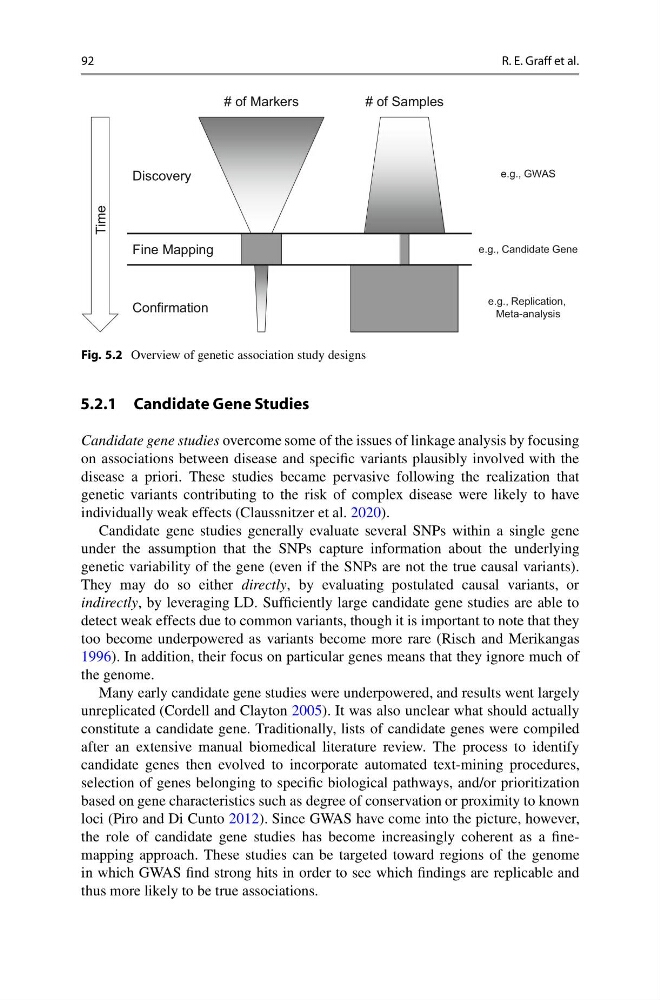
Fig. 5.2 Overview of genetic association study designs
5.2.1 Candidate Gene Studies
Candidate gene studies overcome some of the issues of linkage analysis by focusing
on associations between disease and specific variants plausibly involved with the
disease a priori. These studies became pervasive following the realization that
genetic variants contributing to the risk of complex disease were likely to have
individually weak effects (Claussnitzer et al. 2020).
Candidate gene studies generally evaluate several SNPs within a single gene
under the assumption that the SNPs capture information about the underlying
genetic variability of the gene (even if the SNPs are not the true causal variants).
They may do so either directly, by evaluating postulated causal variants, or
indirectly, by leveraging LD. Sufficiently large candidate gene studies are able to
detect weak effects due to common variants, though it is important to note that they
too become underpowered as variants become more rare (Risch and Merikangas
1996). In addition, their focus on particular genes means that they ignore much of
the genome.
Many early candidate gene studies were underpowered, and results went largely
unreplicated (Cordell and Clayton 2005). It was also unclear what should actually
constitute a candidate gene. Traditionally, lists of candidate genes were compiled
after an extensive manual biomedical literature review. The process to identify
candidate genes then evolved to incorporate automated text-mining procedures,
selection of genes belonging to specific biological pathways, and/or prioritization
based on gene characteristics such as degree of conservation or proximity to known
loci (Piro and Di Cunto 2012). Since GWAS have come into the picture, however,
the role of candidate gene studies has become increasingly coherent as a finemapping approach. These studies can be targeted toward regions of the genome
in which GWAS find strong hits in order to see which findings are replicable and
thus more likely to be true associations.
R. E. Graff et al.
# of Markers
# of Samples
Time
Discovery
Fine Mapping
Confirmation
e.g., GWAS
e.g., Candidate Gene
e.g., Replication,
Meta-analysis
Fig. 5.2 Overview of genetic association study designs
5.2.1 Candidate Gene Studies
Candidate gene studies overcome some of the issues of linkage analysis by focusing
on associations between disease and specific variants plausibly involved with the
disease a priori. These studies became pervasive following the realization that
genetic variants contributing to the risk of complex disease were likely to have
individually weak effects (Claussnitzer et al. 2020).
Candidate gene studies generally evaluate several SNPs within a single gene
under the assumption that the SNPs capture information about the underlying
genetic variability of the gene (even if the SNPs are not the true causal variants).
They may do so either directly, by evaluating postulated causal variants, or
indirectly, by leveraging LD. Sufficiently large candidate gene studies are able to
detect weak effects due to common variants, though it is important to note that they
too become underpowered as variants become more rare (Risch and Merikangas
1996). In addition, their focus on particular genes means that they ignore much of
the genome.
Many early candidate gene studies were underpowered, and results went largely
unreplicated (Cordell and Clayton 2005). It was also unclear what should actually
constitute a candidate gene. Traditionally, lists of candidate genes were compiled
after an extensive manual biomedical literature review. The process to identify
candidate genes then evolved to incorporate automated text-mining procedures,
selection of genes belonging to specific biological pathways, and/or prioritization
based on gene characteristics such as degree of conservation or proximity to known
loci (Piro and Di Cunto 2012). Since GWAS have come into the picture, however,
the role of candidate gene studies has become increasingly coherent as a finemapping approach. These studies can be targeted toward regions of the genome
in which GWAS find strong hits in order to see which findings are replicable and
thus more likely to be true associations.