

5 Methods for Association Studies
91
Cases – Frequency of A Allele: 33%
Controls – Frequency of A Allele: 17%
A
A
A
A
C
C
C
C
C
C
C
C
A
A
C
C
C
C
C
C
C
C
C
C
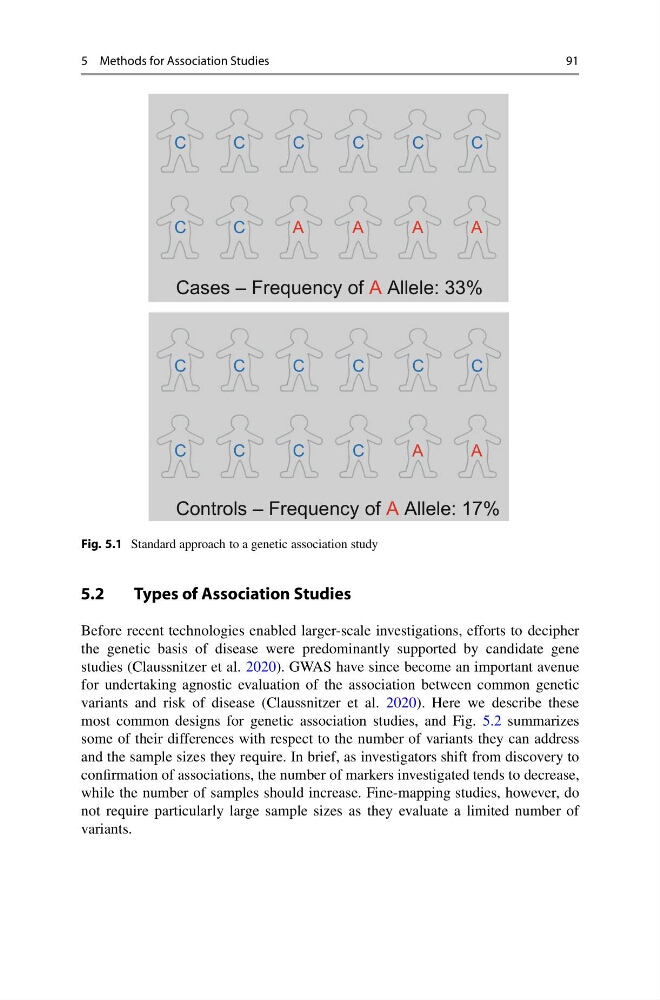
Fig. 5.1 Standard approach to a genetic association study
5.2
Types of Association Studies
Before recent technologies enabled larger-scale investigations, efforts to decipher
the genetic basis of disease were predominantly supported by candidate gene
studies (Claussnitzer et al. 2020). GWAS have since become an important avenue
for undertaking agnostic evaluation of the association between common genetic
variants and risk of disease (Claussnitzer et al. 2020). Here we describe these
most common designs for genetic association studies, and Fig. 5.2 summarizes
some of their differences with respect to the number of variants they can address
and the sample sizes they require. In brief, as investigators shift from discovery to
confirmation of associations, the number of markers investigated tends to decrease,
while the number of samples should increase. Fine-mapping studies, however, do
not require particularly large sample sizes as they evaluate a limited number of
variants.
91
Cases – Frequency of A Allele: 33%
Controls – Frequency of A Allele: 17%
A
A
A
A
C
C
C
C
C
C
C
C
A
A
C
C
C
C
C
C
C
C
C
C
Fig. 5.1 Standard approach to a genetic association study
5.2
Types of Association Studies
Before recent technologies enabled larger-scale investigations, efforts to decipher
the genetic basis of disease were predominantly supported by candidate gene
studies (Claussnitzer et al. 2020). GWAS have since become an important avenue
for undertaking agnostic evaluation of the association between common genetic
variants and risk of disease (Claussnitzer et al. 2020). Here we describe these
most common designs for genetic association studies, and Fig. 5.2 summarizes
some of their differences with respect to the number of variants they can address
and the sample sizes they require. In brief, as investigators shift from discovery to
confirmation of associations, the number of markers investigated tends to decrease,
while the number of samples should increase. Fine-mapping studies, however, do
not require particularly large sample sizes as they evaluate a limited number of
variants.