

The knowledge base of the bioeconomy 197
institutions are potentially useful when investigating sources of knowledge
spill- over.
In this study, access to CV information at the researcher level is constrained by two main considerations. The first is a formal constraint. A
number of researchers were no longer engaged at the partner organisations at
the time of our study (2017–2018) and were therefore not given the chance
to opt out of the study. This led to the exclusion of 27 CVs. The second
constraint is more formalistic. Not all variables (e.g. year of birth, field of
science, degrees) were included in all the individual CVs. This made processing of the information difficult despite the reliance on manual processing.
This constraint led to further exclusion of other CVs.
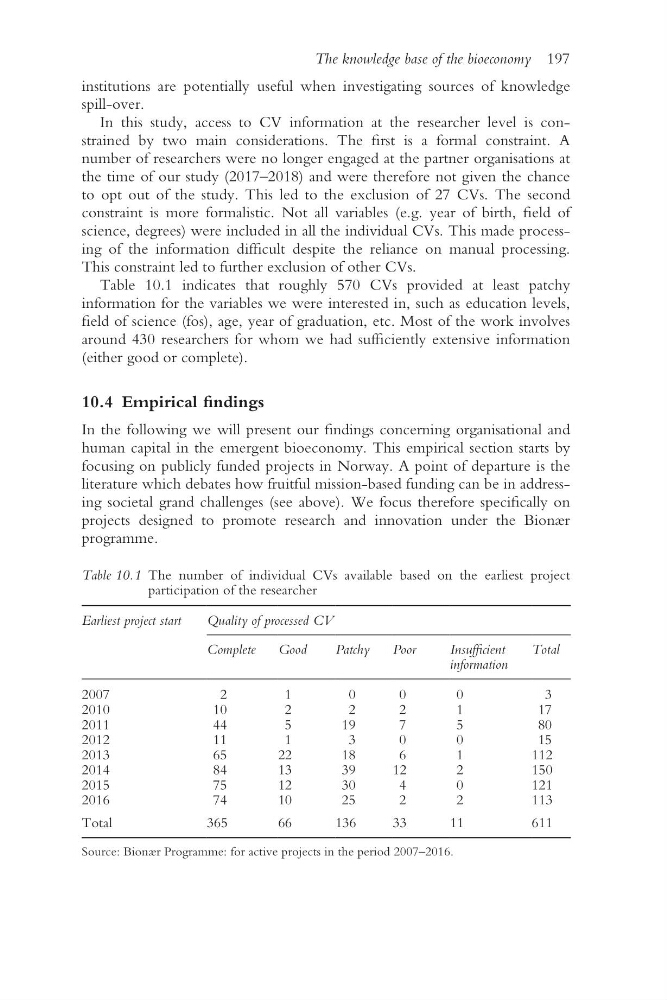
Table 10.1 indicates that roughly 570 CVs provided at least patchy
information for the variables we were interested in, such as education levels,
field of science (fos), age, year of graduation, etc. Most of the work involves
around 430 researchers for whom we had sufficiently extensive information
(either good or complete).
10.4 Empirical findings
In the following we will present our findings concerning organisational and
human capital in the emergent bioeconomy. This empirical section starts by
focusing on publicly funded projects in Norway. A point of departure is the
literature which debates how fruitful mission- based funding can be in addressing societal grand challenges (see above). We focus therefore specifically on
projects designed to promote research and innovation under the Bionær
programme.
Table 10.1 The number of individual CVs available based on the earliest project
participation of the researcher
Earliest project start
Quality of processed CV
Complete
Good
Patchy
Poor
Insufficient
information
Total
2007
2
1
0
0
0
3
2010
10
2
2
2
1
17
2011
44
5
19
7
5
80
2012
11
1
3
0
0
15
2013
65
22
18
6
1
112
2014
84
13
39
12
2
150
2015
75
12
30
4
0
121
2016
74
10
25
2
2
113
Total
365
66
136
33
11
611
Source: Bionær Programme: for active projects in the period 2007–2016.
institutions are potentially useful when investigating sources of knowledge
spill- over.
In this study, access to CV information at the researcher level is constrained by two main considerations. The first is a formal constraint. A
number of researchers were no longer engaged at the partner organisations at
the time of our study (2017–2018) and were therefore not given the chance
to opt out of the study. This led to the exclusion of 27 CVs. The second
constraint is more formalistic. Not all variables (e.g. year of birth, field of
science, degrees) were included in all the individual CVs. This made processing of the information difficult despite the reliance on manual processing.
This constraint led to further exclusion of other CVs.
Table 10.1 indicates that roughly 570 CVs provided at least patchy
information for the variables we were interested in, such as education levels,
field of science (fos), age, year of graduation, etc. Most of the work involves
around 430 researchers for whom we had sufficiently extensive information
(either good or complete).
10.4 Empirical findings
In the following we will present our findings concerning organisational and
human capital in the emergent bioeconomy. This empirical section starts by
focusing on publicly funded projects in Norway. A point of departure is the
literature which debates how fruitful mission- based funding can be in addressing societal grand challenges (see above). We focus therefore specifically on
projects designed to promote research and innovation under the Bionær
programme.
Table 10.1 The number of individual CVs available based on the earliest project
participation of the researcher
Earliest project start
Quality of processed CV
Complete
Good
Patchy
Poor
Insufficient
information
Total
2007
2
1
0
0
0
3
2010
10
2
2
2
1
17
2011
44
5
19
7
5
80
2012
11
1
3
0
0
15
2013
65
22
18
6
1
112
2014
84
13
39
12
2
150
2015
75
12
30
4
0
121
2016
74
10
25
2
2
113
Total
365
66
136
33
11
611
Source: Bionær Programme: for active projects in the period 2007–2016.