

130 A. N. Tanner and N. Strøm-Andersen
7.3.1 Potential value of ABP
ABPs are materials of animal origin that people do not consume. In the EU,
over 20 million tons of ABPs are generated annually from slaughterhouses,
plants producing food for human consumption, dairies and as fallen stock
from farms (European Commission, 2018). ABPs have an inherently diverse
nature, which offers varied possibilities for utilisation and conversion. ABPs
contain miscellaneous compounds such as gelatine, protein, enzymes, fatty
tissues, collagen and phosphates, which provide manifold possibilities for
value- added products and applications through diverse bioprocessing technologies. For instance, animal protein can deliver a complete protein with a high
biological value based on its amino acid profile (Mullen et al., 2017). Blood
generation often presents a serious environmental issue because of its high
pollutant capacity; however, it has exceptional nutritive value and excellent
functional properties that give the potential to generate high- added-value
food ingredients (Lynch, Mullen, O’Neill & García, 2017). Because of the
diversity and heterogeneous nature of ABPs, technical methods that can be
applied to valorise meat by- products are numerous and include, for example,
ultrafiltration, extrusion, lyophilisation, isoelectric solubilisation- precipitation,
solvent extraction and enzymatic hydrolysis (Aspevik et al., 2017; Galanakis,
2012; Mullen et al., 2017). The final choice of application depends on the
types of the by- product and the local conditions where the raw materials are
generated (Mullen et al., 2017). Local conditions relate, for instance, to the
transportation distance from the slaughterhouses to the processing plant,
which require methods to keep ABPs fresh for longer to ensure the best
quality for further processing. Moreover, the volume of the rest raw materials
at the processing plant level has implications for which processing technique
is most suitable. In other words, it is not profitable to valorise small volumes
of ABPs as this may lead to a negative cost- benefit analysis.
Based on strict regulations, animal by- products are classified into three
categories. Category 1 (CAT1) is classified as high risk, including entire
bodies and all body parts of the animals associated with TSE (transmissible
Animal
Production
Slaughterhouses / Meat
Processors
Further Meat
Processors
Byproducts
Fallen
livestock
Byproducts
Dedicated
ABPprocessors
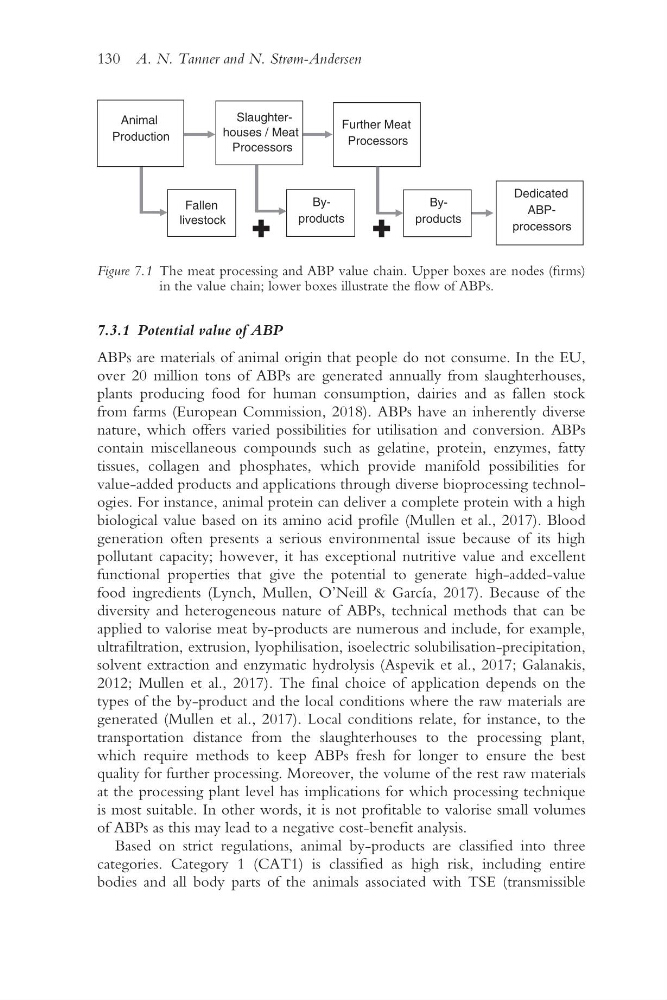
Figure 7.1 The meat processing and ABP value chain. Upper boxes are nodes (firms)
in the value chain; lower boxes illustrate the flow of ABPs.
7.3.1 Potential value of ABP
ABPs are materials of animal origin that people do not consume. In the EU,
over 20 million tons of ABPs are generated annually from slaughterhouses,
plants producing food for human consumption, dairies and as fallen stock
from farms (European Commission, 2018). ABPs have an inherently diverse
nature, which offers varied possibilities for utilisation and conversion. ABPs
contain miscellaneous compounds such as gelatine, protein, enzymes, fatty
tissues, collagen and phosphates, which provide manifold possibilities for
value- added products and applications through diverse bioprocessing technologies. For instance, animal protein can deliver a complete protein with a high
biological value based on its amino acid profile (Mullen et al., 2017). Blood
generation often presents a serious environmental issue because of its high
pollutant capacity; however, it has exceptional nutritive value and excellent
functional properties that give the potential to generate high- added-value
food ingredients (Lynch, Mullen, O’Neill & García, 2017). Because of the
diversity and heterogeneous nature of ABPs, technical methods that can be
applied to valorise meat by- products are numerous and include, for example,
ultrafiltration, extrusion, lyophilisation, isoelectric solubilisation- precipitation,
solvent extraction and enzymatic hydrolysis (Aspevik et al., 2017; Galanakis,
2012; Mullen et al., 2017). The final choice of application depends on the
types of the by- product and the local conditions where the raw materials are
generated (Mullen et al., 2017). Local conditions relate, for instance, to the
transportation distance from the slaughterhouses to the processing plant,
which require methods to keep ABPs fresh for longer to ensure the best
quality for further processing. Moreover, the volume of the rest raw materials
at the processing plant level has implications for which processing technique
is most suitable. In other words, it is not profitable to valorise small volumes
of ABPs as this may lead to a negative cost- benefit analysis.
Based on strict regulations, animal by- products are classified into three
categories. Category 1 (CAT1) is classified as high risk, including entire
bodies and all body parts of the animals associated with TSE (transmissible
Animal
Production
Slaughterhouses / Meat
Processors
Further Meat
Processors
Byproducts
Fallen
livestock
Byproducts
Dedicated
ABPprocessors
Figure 7.1 The meat processing and ABP value chain. Upper boxes are nodes (firms)
in the value chain; lower boxes illustrate the flow of ABPs.