

48 Ground improvement by deep vibratory methods
This depth range also represents the maximum depth for the majority of
applications. Only in particular circumstances—as were prevailing during
the rehabilitation of the derelict open pit brown coal mining areas in Lusatia,
Germany—might deeper compaction, in excess of 50 m, become necessary.
As a result of both the vibrator shape and the much-reduced lateral
soil pressure close to ground level, densification by the vibro compaction
method is generally less effective in the upper 1–2 m below working grade
level. If required by the foundation level, this layer therefore needs additional compaction by standard surface compactors before construction
work commences.
It is the aim of specialized contractors to continuously better the efficiency
of their depth vibrators, not only by improving the compaction characteristics but, equally important, by improving the wear resistance and durability of the equipment, avoiding in this way otherwise expensive overhauls
or equipment breakdowns. These generally occur by ordinary wear and
tear, particularly in abrasive soils, at the vibrator surface, and internally
by excessive heat development in motors and bearings as a result of the
compaction work. Selecting appropriate materials and construction parts
(a)
( b)
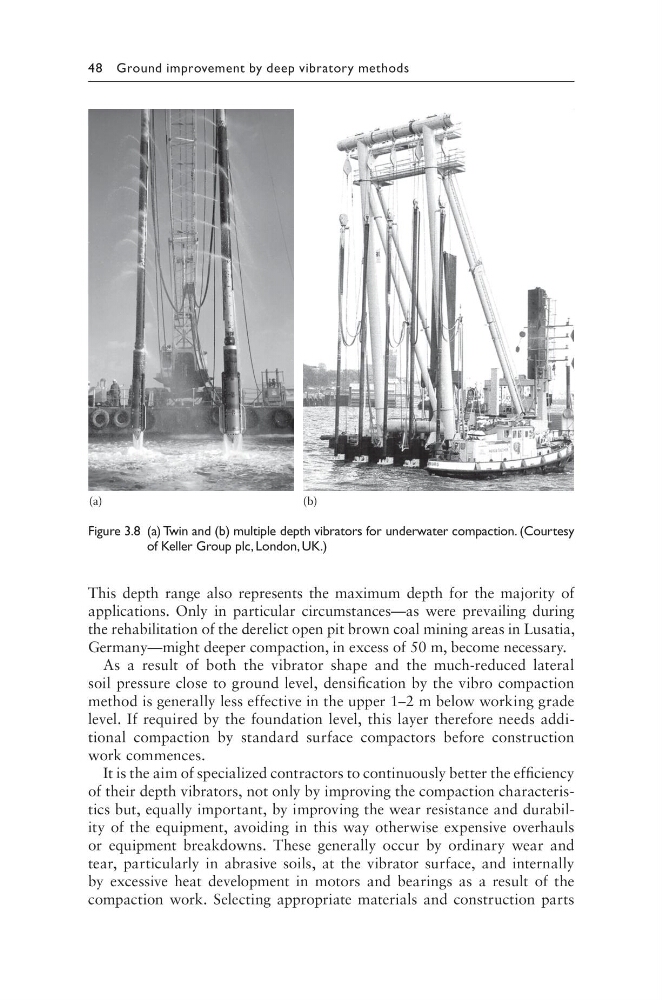
Figure 3.8 (a) Twin and (b) multiple depth vibrators for underwater compaction. (Courtesy
of Keller Group plc, London, UK.)
This depth range also represents the maximum depth for the majority of
applications. Only in particular circumstances—as were prevailing during
the rehabilitation of the derelict open pit brown coal mining areas in Lusatia,
Germany—might deeper compaction, in excess of 50 m, become necessary.
As a result of both the vibrator shape and the much-reduced lateral
soil pressure close to ground level, densification by the vibro compaction
method is generally less effective in the upper 1–2 m below working grade
level. If required by the foundation level, this layer therefore needs additional compaction by standard surface compactors before construction
work commences.
It is the aim of specialized contractors to continuously better the efficiency
of their depth vibrators, not only by improving the compaction characteristics but, equally important, by improving the wear resistance and durability of the equipment, avoiding in this way otherwise expensive overhauls
or equipment breakdowns. These generally occur by ordinary wear and
tear, particularly in abrasive soils, at the vibrator surface, and internally
by excessive heat development in motors and bearings as a result of the
compaction work. Selecting appropriate materials and construction parts
(a)
( b)
Figure 3.8 (a) Twin and (b) multiple depth vibrators for underwater compaction. (Courtesy
of Keller Group plc, London, UK.)