

Vibro compaction of granular soils 43
minimum density cannot be reached even with very large numbers of load
cycles; conversely, with large strain amplitudes, optimal densification may
not be obtained owing to the effects of dilatancy of the sand.
Based on these principles, a three-dimensional finite element model was
recently developed using quartz sand with an initial void ratio of 0.85, a
dry density of 1.43 g/cm 3 , and a particle density of 2.65 g/cm 3 . A diskshaped element, 0.5 m high and with a radius of 15 m, at a depth of 15 m
below surface was modeled. The movement of the vibrators (both a depth
vibrator and a top vibrator or vibratory hammer) were simulated using
boundary conditions at the surface of a cylindrical hole in the center of
the disk. The frequency was chosen as 30 Hz with amplitudes of 7.5 mm,
horizontal for the depth vibrator and vertical for the vibratory hammer.
By observing the evolution of the void ratio with increasing numbers of
strain cycles, three zones were distinguished surrounding both types of
vibrators. In the first zone, immediately surrounding the vibrator—radial
distance r smaller than 0.5 m—compaction was finished after a few cycles
without reaching the minimum void ratio. It is believed that, owing to the
relatively large strain amplitudes prevailing within this zone, dilatancy and
contractancy balance each other, resulting in a relatively small volumetric
Time
Amplitude
+
−
Φ = Slip angle
Δt
Amplitude of vibrator movement
Signal for position of bob weight
T = = 2⋅π⋅ω
f
1
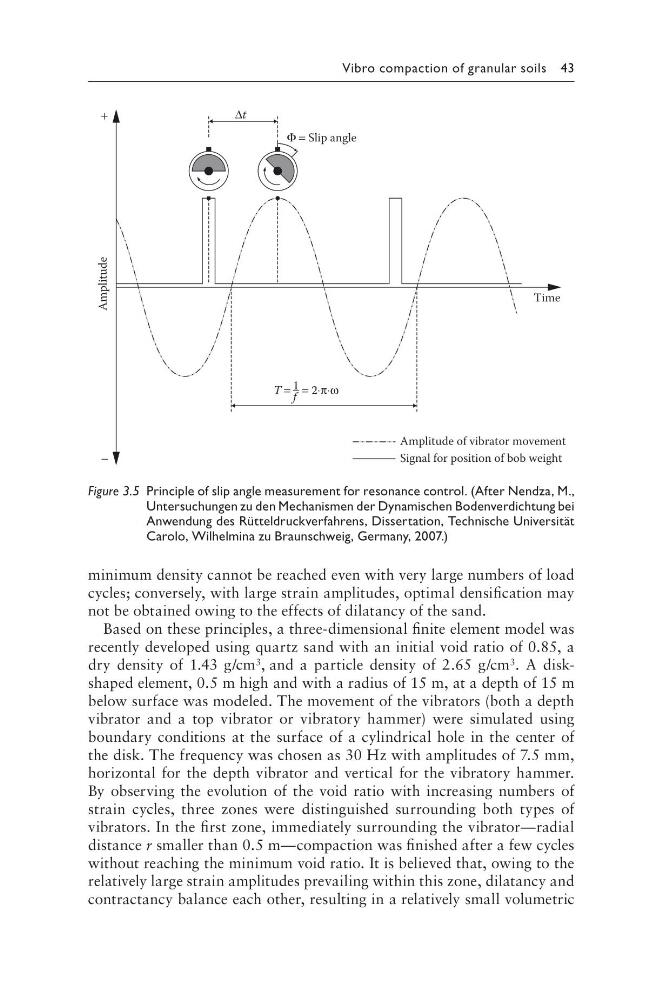
Figure 3.5 Principle of slip angle measurement for resonance control. (After Nendza, M.,
Untersuchungen zu den Mechanismen der Dynamischen Bodenverdichtung bei
Anwendung des Rütteldruckverfahrens, Dissertation, Technische Universität
Carolo, Wilhelmina zu Braunschweig, Germany, 2007.)
minimum density cannot be reached even with very large numbers of load
cycles; conversely, with large strain amplitudes, optimal densification may
not be obtained owing to the effects of dilatancy of the sand.
Based on these principles, a three-dimensional finite element model was
recently developed using quartz sand with an initial void ratio of 0.85, a
dry density of 1.43 g/cm 3 , and a particle density of 2.65 g/cm 3 . A diskshaped element, 0.5 m high and with a radius of 15 m, at a depth of 15 m
below surface was modeled. The movement of the vibrators (both a depth
vibrator and a top vibrator or vibratory hammer) were simulated using
boundary conditions at the surface of a cylindrical hole in the center of
the disk. The frequency was chosen as 30 Hz with amplitudes of 7.5 mm,
horizontal for the depth vibrator and vertical for the vibratory hammer.
By observing the evolution of the void ratio with increasing numbers of
strain cycles, three zones were distinguished surrounding both types of
vibrators. In the first zone, immediately surrounding the vibrator—radial
distance r smaller than 0.5 m—compaction was finished after a few cycles
without reaching the minimum void ratio. It is believed that, owing to the
relatively large strain amplitudes prevailing within this zone, dilatancy and
contractancy balance each other, resulting in a relatively small volumetric
Time
Amplitude
+
−
Φ = Slip angle
Δt
Amplitude of vibrator movement
Signal for position of bob weight
T = = 2⋅π⋅ω
f
1
Figure 3.5 Principle of slip angle measurement for resonance control. (After Nendza, M.,
Untersuchungen zu den Mechanismen der Dynamischen Bodenverdichtung bei
Anwendung des Rütteldruckverfahrens, Dissertation, Technische Universität
Carolo, Wilhelmina zu Braunschweig, Germany, 2007.)