

16 Ground improvement by deep vibratory methods
pass the site surface before compaction, heavy trucks could run over it after
compaction without any difficulties” (Degebo, 1942).
In a relatively short time, the vibro flotation method was acknowledged
as an efficient foundation measure and both execution methods and testing
procedures were continuously improved. However, even long after the war,
slow-moving gantries were still in use that carried the vibrator and could
only be moved on tracks. This and the time-consuming method of adding
sand using wheelbarrows allowed shift productions of just 50 lin.m of compaction probe or 150–250 m 3 of compacted sand.
2.2 VIBRO COMPACTION IN POSTWAR
GERMANY DURING RECONSTRUCTION
By the end of the war, the situation of the German construction industry and
particularly specialist foundation companies was frightful. Developments that
had continued and made progress even during the war came to an abrupt
end. Since all efforts were concentrated now on restoring and maintaining
the necessities of life, construction activity was restricted to repairing major
damage and the restoration of the infrastructure. As the people regained confidence in their future after the currency reform in 1949, and much helped by
the Marshall Plan (European Recovery Program) initiated in 1948, construction work on new buildings slowly developed again. The impressive practical results of the vibro flotation method were, however, not forgotten by
engineers, consultants, the administration, the industry, and the universities.
The method quickly gained increasing importance during the reconstruction
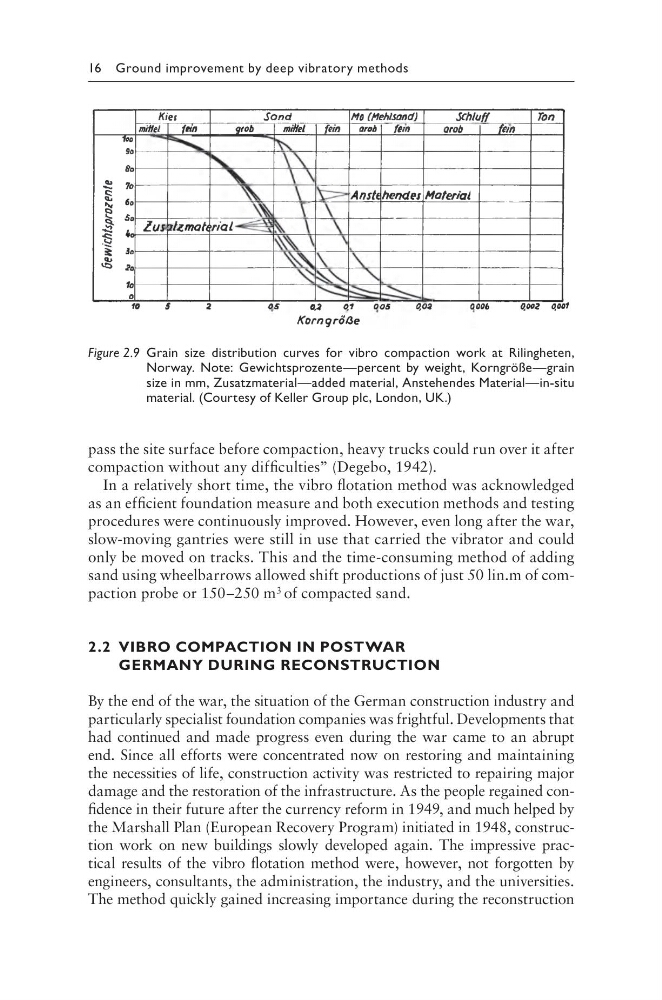
Figure 2.9 Grain size distribution curves for vibro compaction work at Rilingheten,
Norway. Note: Gewichtsprozente—percent by weight, Korngröße—grain
size in mm, Zusatzmaterial—added material, Anstehendes Material—in-situ
material. (Courtesy of Keller Group plc, London, UK.)
Gewichtsprozente
Z u s iU m a ferial
Anstt hendei Material
10
S
3
O S
0.3
0.1
O OS
0.03
0 00 6
0.003
0.001
Korngröße
loo
9o
Bo
7o
6o
S o
bo
So
2o
1 0
o
miffei
fein
Kies
S a n d
grob
mitiel
fein
Mo (Mehlsand)
fern
arob
orob
fern
S ch lu ff
Ton
pass the site surface before compaction, heavy trucks could run over it after
compaction without any difficulties” (Degebo, 1942).
In a relatively short time, the vibro flotation method was acknowledged
as an efficient foundation measure and both execution methods and testing
procedures were continuously improved. However, even long after the war,
slow-moving gantries were still in use that carried the vibrator and could
only be moved on tracks. This and the time-consuming method of adding
sand using wheelbarrows allowed shift productions of just 50 lin.m of compaction probe or 150–250 m 3 of compacted sand.
2.2 VIBRO COMPACTION IN POSTWAR
GERMANY DURING RECONSTRUCTION
By the end of the war, the situation of the German construction industry and
particularly specialist foundation companies was frightful. Developments that
had continued and made progress even during the war came to an abrupt
end. Since all efforts were concentrated now on restoring and maintaining
the necessities of life, construction activity was restricted to repairing major
damage and the restoration of the infrastructure. As the people regained confidence in their future after the currency reform in 1949, and much helped by
the Marshall Plan (European Recovery Program) initiated in 1948, construction work on new buildings slowly developed again. The impressive practical results of the vibro flotation method were, however, not forgotten by
engineers, consultants, the administration, the industry, and the universities.
The method quickly gained increasing importance during the reconstruction
Figure 2.9 Grain size distribution curves for vibro compaction work at Rilingheten,
Norway. Note: Gewichtsprozente—percent by weight, Korngröße—grain
size in mm, Zusatzmaterial—added material, Anstehendes Material—in-situ
material. (Courtesy of Keller Group plc, London, UK.)
Gewichtsprozente
Z u s iU m a ferial
Anstt hendei Material
10
S
3
O S
0.3
0.1
O OS
0.03
0 00 6
0.003
0.001
Korngröße
loo
9o
Bo
7o
6o
S o
bo
So
2o
1 0
o
miffei
fein
Kies
S a n d
grob
mitiel
fein
Mo (Mehlsand)
fern
arob
orob
fern
S ch lu ff
Ton