

A history of vibratory deep compaction 11
The new method attracted much interest among experts, although skepticism prevailed in the early years in spite of convincing test results. Leading
German ground engineering institutes were involved with trial compactions, and on-sites, introducing various methods to check the densification achieved. Not everybody could be convinced of the compaction results
just on the basis of the often surprisingly large amounts of added sand
material. Checking and control measures included all known in-situ testing
methods at the time, such as direct density measurements, deep soundings,
geophysical tests, the exact volumetric measurement of the sand added during compaction, combined with site leveling before and after compaction,
and full-scale load testing. As the number of successful applications of the
method increased, loose sand, even when under water, lost its poor reputation as unsuitable foundation soil.
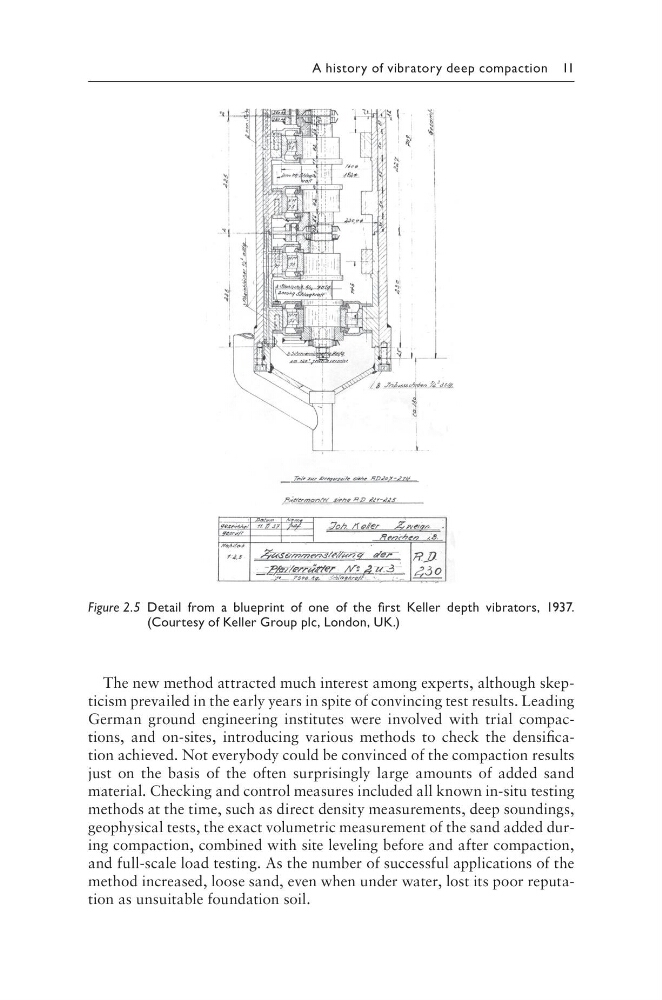
Figure 2.5 Detail from a blueprint of one of the first Keller depth vibrators, 1937.
(Courtesy of Keller Group plc, London, UK.)
The new method attracted much interest among experts, although skepticism prevailed in the early years in spite of convincing test results. Leading
German ground engineering institutes were involved with trial compactions, and on-sites, introducing various methods to check the densification achieved. Not everybody could be convinced of the compaction results
just on the basis of the often surprisingly large amounts of added sand
material. Checking and control measures included all known in-situ testing
methods at the time, such as direct density measurements, deep soundings,
geophysical tests, the exact volumetric measurement of the sand added during compaction, combined with site leveling before and after compaction,
and full-scale load testing. As the number of successful applications of the
method increased, loose sand, even when under water, lost its poor reputation as unsuitable foundation soil.
Figure 2.5 Detail from a blueprint of one of the first Keller depth vibrators, 1937.
(Courtesy of Keller Group plc, London, UK.)