

74
first category forestry site near to Lake Puelo (42° 1′ 50.72″ S; 71° 33′ 12.49″ O;
380 m asl) showed a 95% survival 2 years later, and at the age of 11 years, the trees
reached a mean height of 6.0 m ± 0.3 and a mean DBH of 5.1 cm ± 0.2, without
further reductions in the survival percentage (Urretavizcaya et al. 2018).
3.6 Building a Breeding Strategy for Raulí in Argentina
The promising performance of the initial plantations in Scotland and Wales, with
fast-growing trees of excellent stem form and good self-pruning, promoted in the
1970s the planting of the species more systematically in Great Britain (Mason et al.
2018). A series of provenance trials were established in 1979 at 17 forests across
Britain and included 16 Chilean and 1 Argentine (Lake Quillén basin) provenances
and 2 British seed sources. The effect of the provenance was evident, presenting the
poorer performance those coming from northern sites of Chile. This result was in
agreement with the studies of Murray et al. (1986) who found that the northern
Chilean provenances were the most frost sensitive. Due to the recognized vulnerability of the species to frost and winter cold, the next attempt was carried out with
eight cold hardy Chilean origins from elevations not lower than 1000 m asl (Ortega
and Danby 2000). These new trials were established at the end of the 1990s in
south-west Wales and central Highlands and included a local seed source and an
Argentinean unknown provenance (Mason et al. 2018). Now the survival was
higher, confirming the relevance of choosing the appropriate provenances for a better adaptability, as was also revealed by the phenological studies presented above.
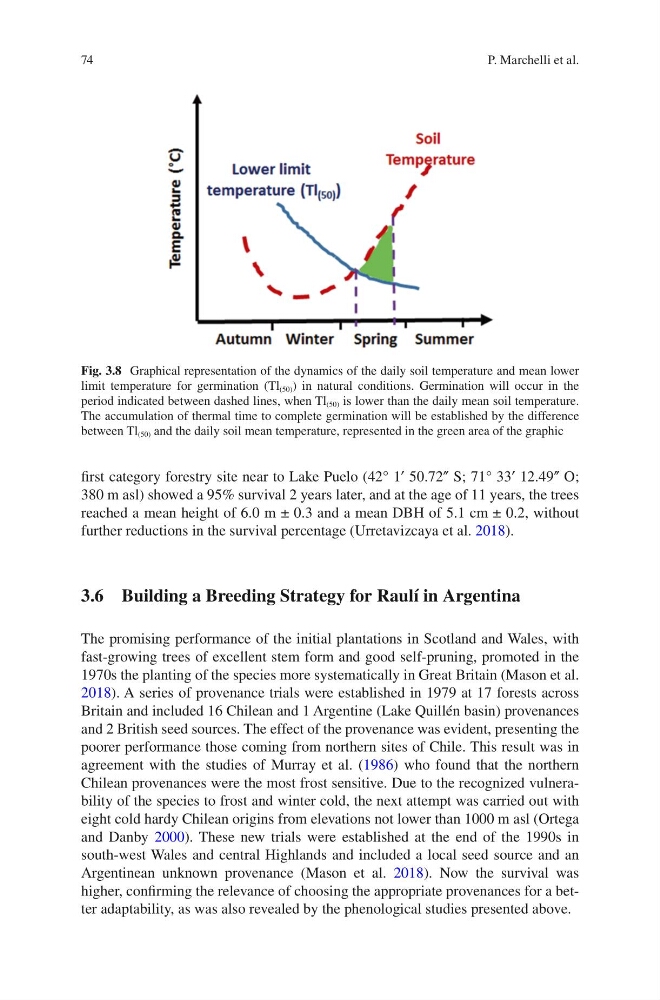
Fig. 3.8 Graphical representation of the dynamics of the daily soil temperature and mean lower
limit temperature for germination (Tl (50) ) in natural conditions. Germination will occur in the
period indicated between dashed lines, when Tl (50) is lower than the daily mean soil temperature.
The accumulation of thermal time to complete germination will be established by the difference
between Tl (50) and the daily soil mean temperature, represented in the green area of the graphic
P. Marchelli et al.
first category forestry site near to Lake Puelo (42° 1′ 50.72″ S; 71° 33′ 12.49″ O;
380 m asl) showed a 95% survival 2 years later, and at the age of 11 years, the trees
reached a mean height of 6.0 m ± 0.3 and a mean DBH of 5.1 cm ± 0.2, without
further reductions in the survival percentage (Urretavizcaya et al. 2018).
3.6 Building a Breeding Strategy for Raulí in Argentina
The promising performance of the initial plantations in Scotland and Wales, with
fast-growing trees of excellent stem form and good self-pruning, promoted in the
1970s the planting of the species more systematically in Great Britain (Mason et al.
2018). A series of provenance trials were established in 1979 at 17 forests across
Britain and included 16 Chilean and 1 Argentine (Lake Quillén basin) provenances
and 2 British seed sources. The effect of the provenance was evident, presenting the
poorer performance those coming from northern sites of Chile. This result was in
agreement with the studies of Murray et al. (1986) who found that the northern
Chilean provenances were the most frost sensitive. Due to the recognized vulnerability of the species to frost and winter cold, the next attempt was carried out with
eight cold hardy Chilean origins from elevations not lower than 1000 m asl (Ortega
and Danby 2000). These new trials were established at the end of the 1990s in
south-west Wales and central Highlands and included a local seed source and an
Argentinean unknown provenance (Mason et al. 2018). Now the survival was
higher, confirming the relevance of choosing the appropriate provenances for a better adaptability, as was also revealed by the phenological studies presented above.
Fig. 3.8 Graphical representation of the dynamics of the daily soil temperature and mean lower
limit temperature for germination (Tl (50) ) in natural conditions. Germination will occur in the
period indicated between dashed lines, when Tl (50) is lower than the daily mean soil temperature.
The accumulation of thermal time to complete germination will be established by the difference
between Tl (50) and the daily soil mean temperature, represented in the green area of the graphic
P. Marchelli et al.