

496
late the phenology of germination across the altitudinal gradient, and this
phenomenon would be dependent on the species and the altitude (Fig. 18.6).
Experiments in field plots along an altitudinal gradient, conducted to test this
hypothesis, were able to validate the thermal models created in the lab and showed
that, in their natural distribution range, germination of all three species temporally
overlapped and was restricted to early and mid-spring. By contrast, there was large
variation in the timing of germination of the different species for seeds buried outside of their natural distribution zone. In particular, the species inhabiting the lower
altitudes showed a delay in germination at higher altitudes, and the opposite pattern
was observed for the species of the higher altitudes, confirming the proposed
hypothesis (Fig. 18.6).
These data suggest that the species-specific responses to temperature affect the
timing of germination, probably contributing to fitness and therefore maintaining
patterns of species distribution along the altitudinal gradient. Given that Nothofagus
spp. do not form persistent seed banks in natural conditions (Cuevas and Arroyo
1999), the described model provides a mechanistic framework for the prediction of
seed behavior in the forest from dispersion to germination.
However, when predicting the dynamics of forest regeneration in a context of
global climate change, it is necessary to note that other factors, in addition to seed
responsiveness to temperature, are also likely to contribute. For example, interactions of Nothofagus with different organisms (Caccia et al. 2006; Kitzberger et al.
2007; Garibaldi et al. 2011), heterogeneity of forest understory (Giordano et al.
2006), and natural gradients in UV radiation (Caldwell 1968; Körner 2007) may
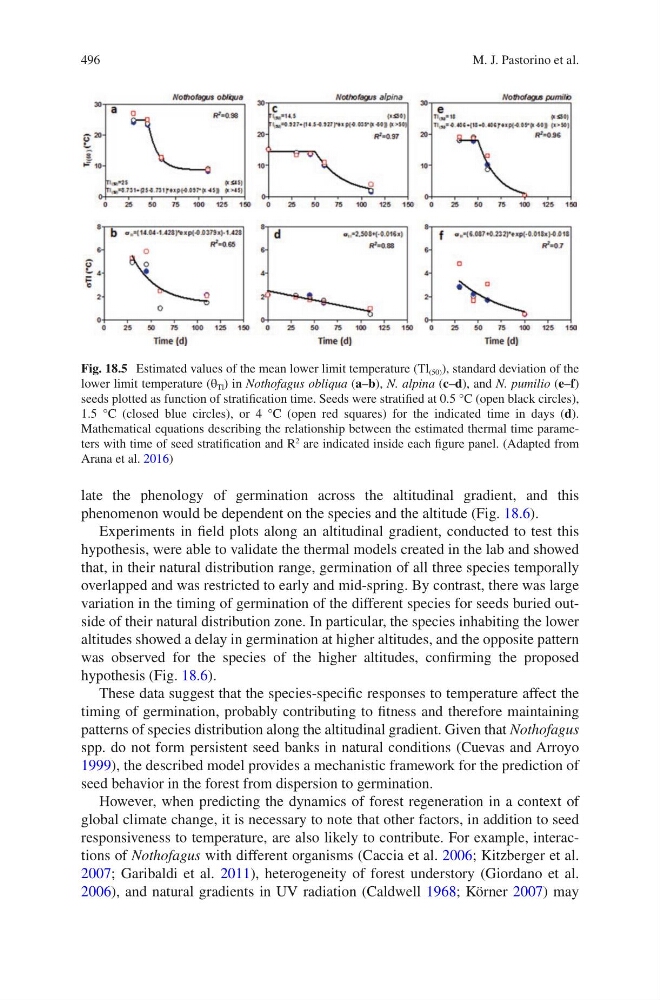
Fig. 18.5 Estimated values of the mean lower limit temperature (Tl (50) ), standard deviation of the
lower limit temperature (θ Tl ) in Nothofagus obliqua (a–b), N. alpina (c–d), and N. pumilio (e–f)
seeds plotted as function of stratification time. Seeds were stratified at 0.5 °C (open black circles),
1.5 °C (closed blue circles), or 4 °C (open red squares) for the indicated time in days (d).
Mathematical equations describing the relationship between the estimated thermal time parameters with time of seed stratification and R
2 are indicated inside each figure panel. (Adapted from
Arana et al. 2016)
M. J. Pastorino et al.
late the phenology of germination across the altitudinal gradient, and this
phenomenon would be dependent on the species and the altitude (Fig. 18.6).
Experiments in field plots along an altitudinal gradient, conducted to test this
hypothesis, were able to validate the thermal models created in the lab and showed
that, in their natural distribution range, germination of all three species temporally
overlapped and was restricted to early and mid-spring. By contrast, there was large
variation in the timing of germination of the different species for seeds buried outside of their natural distribution zone. In particular, the species inhabiting the lower
altitudes showed a delay in germination at higher altitudes, and the opposite pattern
was observed for the species of the higher altitudes, confirming the proposed
hypothesis (Fig. 18.6).
These data suggest that the species-specific responses to temperature affect the
timing of germination, probably contributing to fitness and therefore maintaining
patterns of species distribution along the altitudinal gradient. Given that Nothofagus
spp. do not form persistent seed banks in natural conditions (Cuevas and Arroyo
1999), the described model provides a mechanistic framework for the prediction of
seed behavior in the forest from dispersion to germination.
However, when predicting the dynamics of forest regeneration in a context of
global climate change, it is necessary to note that other factors, in addition to seed
responsiveness to temperature, are also likely to contribute. For example, interactions of Nothofagus with different organisms (Caccia et al. 2006; Kitzberger et al.
2007; Garibaldi et al. 2011), heterogeneity of forest understory (Giordano et al.
2006), and natural gradients in UV radiation (Caldwell 1968; Körner 2007) may
Fig. 18.5 Estimated values of the mean lower limit temperature (Tl (50) ), standard deviation of the
lower limit temperature (θ Tl ) in Nothofagus obliqua (a–b), N. alpina (c–d), and N. pumilio (e–f)
seeds plotted as function of stratification time. Seeds were stratified at 0.5 °C (open black circles),
1.5 °C (closed blue circles), or 4 °C (open red squares) for the indicated time in days (d).
Mathematical equations describing the relationship between the estimated thermal time parameters with time of seed stratification and R
2 are indicated inside each figure panel. (Adapted from
Arana et al. 2016)
M. J. Pastorino et al.