

404
Belgrano Forest Station are relatively smaller (62 ± 7 μm) with a thinner wall
(1.1 μm). In any case, Faegri and Van der Pijl (1979) established that the maximum
grain size for optimum wind dispersal is 60 μm, with an average diameter of
20–30 μm. The larger size and heavier weight of A. angustifolia pollen grains play
a negative role for this type of pollination and aid to explain why they travel a short
distance.
On the other hand, Del Fueyo et al. (2008) observed the formation of broad
depressions when the pollen grains were dehydrated. Niklas (1985) sustains that a
pollen grain deformation by water loss could improve transport. Nonetheless, the
high relative humidity of the subtropical environment in which A. angustifolia naturally grows decrease the probability of water loss. Even more, Latorre and Fassola
(2014) did not observe deformed grains, though they did report broken pollen
grains, with a torn “pac-man”-like exine and ejected cellular content in untreated
samples collected directly from the air. The impact on the collecting surface could
lead to its rupture in its weakest portion (Fig. 15.7c), similar to what happens when
the pollen tube develops once the pollen grain reaches the female cone’s ovule. In
general, the grains found in the air are well hydrated and whole (Fig. 15.7a, b). The
aerodynamic conditions of A. angustifolia pollen grains are not favorable for wind
dispersal and would not be adapted to long-distance aerial travel (Caccavari
et al. 2000).
In fragmented habitats, it is crucial to know the distance that could reach the
pollen during its transport to infer its availability to pollination. The first study on
the dispersal range of A. angustifolia pollen was conducted by Caccavari (2003)
using the “fluxage” Cour method (1974) in the Province of Misiones, Argentina.
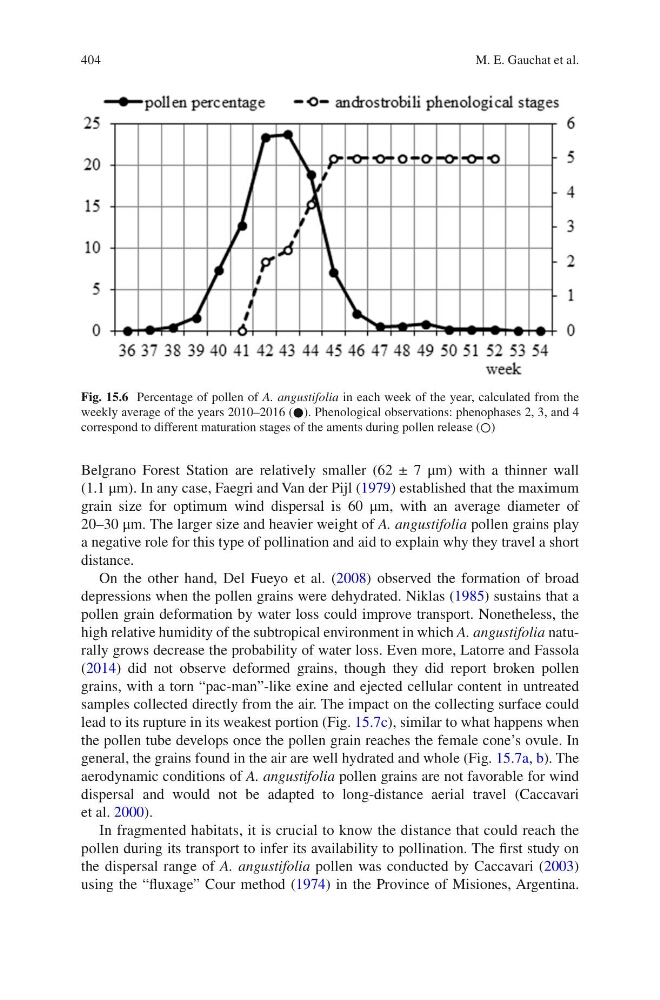
Fig. 15.6 Percentage of pollen of A. angustifolia in each week of the year, calculated from the
weekly average of the years 2010–2016 (●). Phenological observations: phenophases 2, 3, and 4
correspond to different maturation stages of the aments during pollen release (○)
M. E. Gauchat et al.
Belgrano Forest Station are relatively smaller (62 ± 7 μm) with a thinner wall
(1.1 μm). In any case, Faegri and Van der Pijl (1979) established that the maximum
grain size for optimum wind dispersal is 60 μm, with an average diameter of
20–30 μm. The larger size and heavier weight of A. angustifolia pollen grains play
a negative role for this type of pollination and aid to explain why they travel a short
distance.
On the other hand, Del Fueyo et al. (2008) observed the formation of broad
depressions when the pollen grains were dehydrated. Niklas (1985) sustains that a
pollen grain deformation by water loss could improve transport. Nonetheless, the
high relative humidity of the subtropical environment in which A. angustifolia naturally grows decrease the probability of water loss. Even more, Latorre and Fassola
(2014) did not observe deformed grains, though they did report broken pollen
grains, with a torn “pac-man”-like exine and ejected cellular content in untreated
samples collected directly from the air. The impact on the collecting surface could
lead to its rupture in its weakest portion (Fig. 15.7c), similar to what happens when
the pollen tube develops once the pollen grain reaches the female cone’s ovule. In
general, the grains found in the air are well hydrated and whole (Fig. 15.7a, b). The
aerodynamic conditions of A. angustifolia pollen grains are not favorable for wind
dispersal and would not be adapted to long-distance aerial travel (Caccavari
et al. 2000).
In fragmented habitats, it is crucial to know the distance that could reach the
pollen during its transport to infer its availability to pollination. The first study on
the dispersal range of A. angustifolia pollen was conducted by Caccavari (2003)
using the “fluxage” Cour method (1974) in the Province of Misiones, Argentina.
Fig. 15.6 Percentage of pollen of A. angustifolia in each week of the year, calculated from the
weekly average of the years 2010–2016 (●). Phenological observations: phenophases 2, 3, and 4
correspond to different maturation stages of the aments during pollen release (○)
M. E. Gauchat et al.