

397
According to different authors cited by Rau (2005), there would exist 11, six or
five varieties of the species, most of which could be differentiated by the morphology of their mature seeds (Achten 1995). Other authors (Gurgel and Gurgel 1971,
1978; Fahler and Di Lucca 1980) have differentiated A. angustifolia into geographic
races or ecotypes.
There are numerous local names for A. angustifolia, from which the most common ones are Pino de Misiones or Pino Paraná, in Argentina; Pinho Brasileiro or
Pinheiro do Paraná, in Brazil; Kuri’y or Cury in both countries according to the
Guarani indigenous language.
15.2 Uses and Conservation Status of the Natural Forests
of Araucaria angustifolia
At the beginning of the twentieth century, Araucaria angustifolia covered about
200,000 km
2
mainly in Brazil. Nowadays, the species is “critically endangered”
(Thomas 2013) due to overexploitation, which has severely fragmented and reduced
its natural coverage (Auler et al. 2002), particularly in the last 70 years. According
to the last forest inventory carried out in Brazil in 1980 (with data until 1977), in the
south of that country remains only 3% of the original A. angustifolia forests surface
(Machado and Siqueira 1980; Achten 1995).
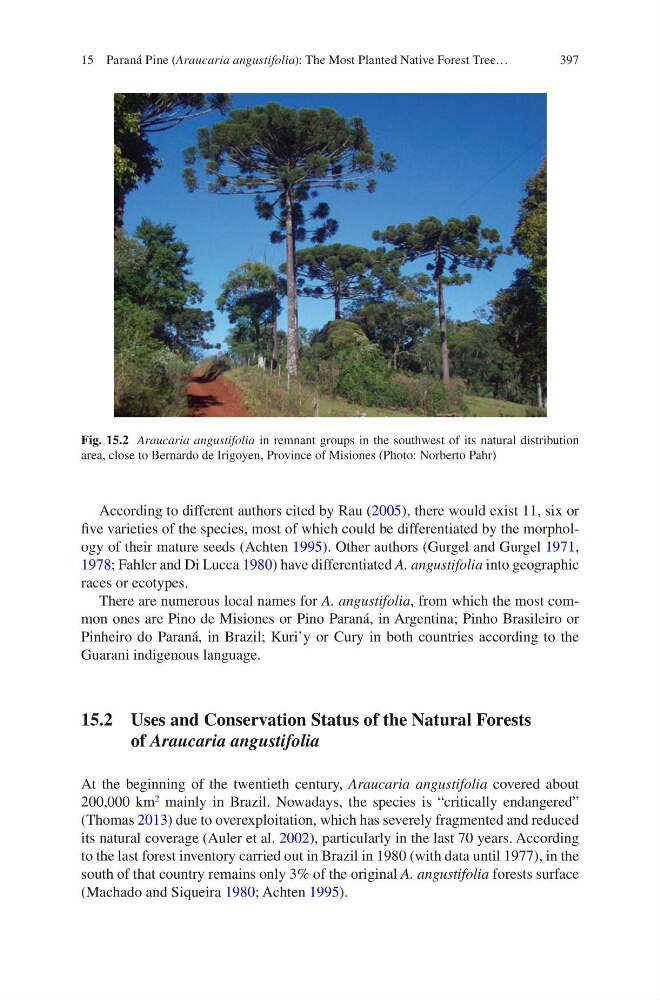
Fig. 15.2 Araucaria angustifolia in remnant groups in the southwest of its natural distribution
area, close to Bernardo de Irigoyen, Province of Misiones (Photo: Norberto Pahr)
15 Paraná Pine (Araucaria angustifolia): The Most Planted Native Forest Tree…
According to different authors cited by Rau (2005), there would exist 11, six or
five varieties of the species, most of which could be differentiated by the morphology of their mature seeds (Achten 1995). Other authors (Gurgel and Gurgel 1971,
1978; Fahler and Di Lucca 1980) have differentiated A. angustifolia into geographic
races or ecotypes.
There are numerous local names for A. angustifolia, from which the most common ones are Pino de Misiones or Pino Paraná, in Argentina; Pinho Brasileiro or
Pinheiro do Paraná, in Brazil; Kuri’y or Cury in both countries according to the
Guarani indigenous language.
15.2 Uses and Conservation Status of the Natural Forests
of Araucaria angustifolia
At the beginning of the twentieth century, Araucaria angustifolia covered about
200,000 km
2
mainly in Brazil. Nowadays, the species is “critically endangered”
(Thomas 2013) due to overexploitation, which has severely fragmented and reduced
its natural coverage (Auler et al. 2002), particularly in the last 70 years. According
to the last forest inventory carried out in Brazil in 1980 (with data until 1977), in the
south of that country remains only 3% of the original A. angustifolia forests surface
(Machado and Siqueira 1980; Achten 1995).
Fig. 15.2 Araucaria angustifolia in remnant groups in the southwest of its natural distribution
area, close to Bernardo de Irigoyen, Province of Misiones (Photo: Norberto Pahr)
15 Paraná Pine (Araucaria angustifolia): The Most Planted Native Forest Tree…