

234
(Santos Júnior et al. 2004; Ferreira da Silva et al. 2011; Jesus et al. 2019; Bevilacqua
Marcuzzo et al. 2020).
The fruit is an indehiscent, rounded, laterally flattened black pod of about 4–7 cm
in length (Slanis 2018). Its ingestion is harmful to cattle, causing abortion and
severe injuries in the skin (Bonel-Raposo et al. 2008; Costa et al. 2009). The seeds
show physical dormancy, and the mechanical and chemical scarification methods
are the most efficient to break dormancy and thus obtain a germination power close
to 100% (Lozano et al. 2016). There are studies on germination and seedling production (de Lima et al. 1997; Malavasi and de Matos 2004; Parra de Araújo and de
Paiva 2011) and works on specific mycorrhizae and rhizobia associated with the
species (de Souza Moreira et al. 2015; Abreu et al. 2018).
Some genomics resources were already developed for this species, and there are
antecedents of studies on genetic variation patterns, the vast majority carried out in
Brazil. Nine SSR microsatellite markers have been transferred and characterized
(Moreira et al. 2012; Niella et al. 2017), previously developed in Enterolobium cyclocarpum (Peters et al. 2008). Population studies have also been carried out using
ISSR fragments (de Abreu et al. 2015) and RAPDs (da Cruz et al. 2008) in order to
select areas potentially important for the conservation of the species in Brazil. In
Argentina, the only antecedent of studies with molecular markers on this species is
the verification of the SSR transfer (Niella et al. 2017). Basic genetic parameters
were calculated from open-pollinated progeny tests in Brazil (Zaffani Sant'Ana
et al. 2013).
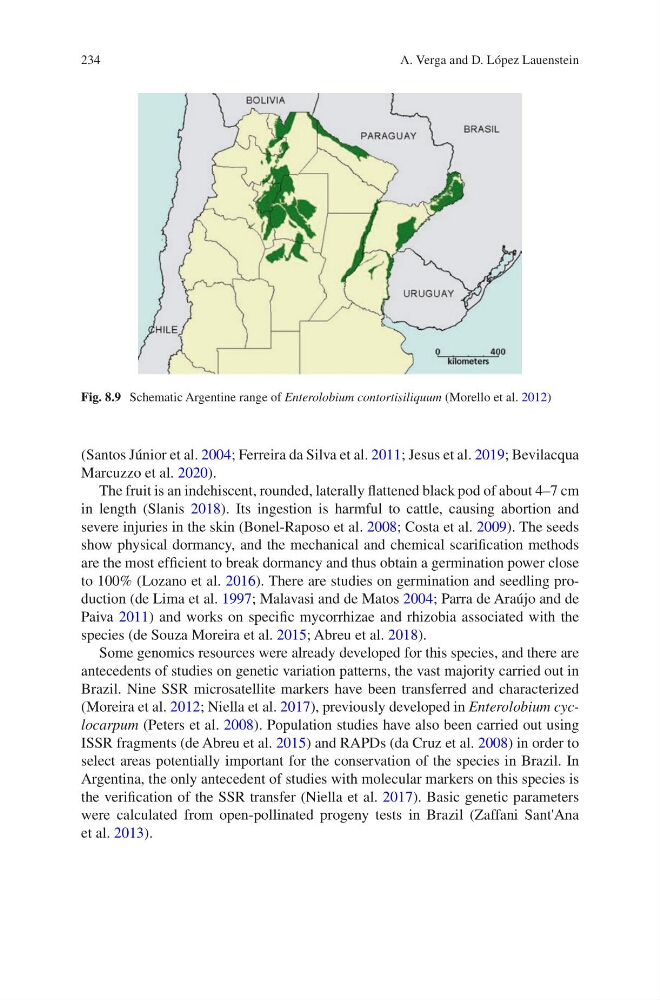
Fig. 8.9 Schematic Argentine range of Enterolobium contortisiliquum (Morello et al. 2012)
A. Verga and D. López Lauenstein
(Santos Júnior et al. 2004; Ferreira da Silva et al. 2011; Jesus et al. 2019; Bevilacqua
Marcuzzo et al. 2020).
The fruit is an indehiscent, rounded, laterally flattened black pod of about 4–7 cm
in length (Slanis 2018). Its ingestion is harmful to cattle, causing abortion and
severe injuries in the skin (Bonel-Raposo et al. 2008; Costa et al. 2009). The seeds
show physical dormancy, and the mechanical and chemical scarification methods
are the most efficient to break dormancy and thus obtain a germination power close
to 100% (Lozano et al. 2016). There are studies on germination and seedling production (de Lima et al. 1997; Malavasi and de Matos 2004; Parra de Araújo and de
Paiva 2011) and works on specific mycorrhizae and rhizobia associated with the
species (de Souza Moreira et al. 2015; Abreu et al. 2018).
Some genomics resources were already developed for this species, and there are
antecedents of studies on genetic variation patterns, the vast majority carried out in
Brazil. Nine SSR microsatellite markers have been transferred and characterized
(Moreira et al. 2012; Niella et al. 2017), previously developed in Enterolobium cyclocarpum (Peters et al. 2008). Population studies have also been carried out using
ISSR fragments (de Abreu et al. 2015) and RAPDs (da Cruz et al. 2008) in order to
select areas potentially important for the conservation of the species in Brazil. In
Argentina, the only antecedent of studies with molecular markers on this species is
the verification of the SSR transfer (Niella et al. 2017). Basic genetic parameters
were calculated from open-pollinated progeny tests in Brazil (Zaffani Sant'Ana
et al. 2013).
Fig. 8.9 Schematic Argentine range of Enterolobium contortisiliquum (Morello et al. 2012)
A. Verga and D. López Lauenstein