

186
With the aim of studying adaptive responses of A. araucana to its environment,
two nursery trials were conducted (Izquierdo 2009). In March 2001, seeds were collected from the ground in 11 natural populations of the species in Argentina
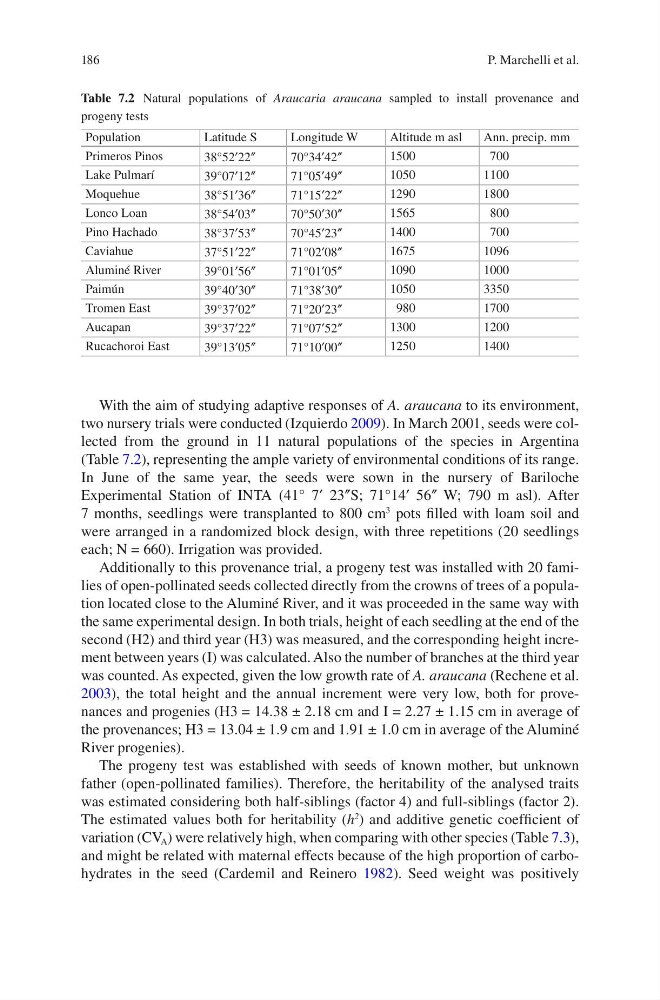
(Table 7.2), representing the ample variety of environmental conditions of its range.
In June of the same year, the seeds were sown in the nursery of Bariloche
Experimental Station of INTA (41° 7′ 23″S; 71°14′ 56″ W; 790 m asl). After
7 months, seedlings were transplanted to 800 cm
3
pots filled with loam soil and
were arranged in a randomized block design, with three repetitions (20 seedlings
each; N = 660). Irrigation was provided.
Additionally to this provenance trial, a progeny test was installed with 20 families of open-pollinated seeds collected directly from the crowns of trees of a population located close to the Aluminé River, and it was proceeded in the same way with
the same experimental design. In both trials, height of each seedling at the end of the
second (H2) and third year (H3) was measured, and the corresponding height increment between years (I) was calculated. Also the number of branches at the third year
was counted. As expected, given the low growth rate of A. araucana (Rechene et al.
2003), the total height and the annual increment were very low, both for provenances and progenies (H3 = 14.38 ± 2.18 cm and I = 2.27 ± 1.15 cm in average of
the provenances; H3 = 13.04 ± 1.9 cm and 1.91 ± 1.0 cm in average of the Aluminé
River progenies).
The progeny test was established with seeds of known mother, but unknown
father (open-pollinated families). Therefore, the heritability of the analysed traits
was estimated considering both half-siblings (factor 4) and full-siblings (factor 2).
The estimated values both for heritability (h
2
) and additive genetic coefficient of
variation (CV A ) were relatively high, when comparing with other species (Table 7.3),
and might be related with maternal effects because of the high proportion of carbohydrates in the seed (Cardemil and Reinero 1982). Seed weight was positively
Table 7.2 Natural populations of Araucaria araucana sampled to install provenance and
progeny tests
Population
Latitude S
Longitude W
Altitude m asl
Ann. precip. mm
Primeros Pinos
38°52′22″
70°34′42″
1500
700
Lake Pulmarí
39°07′12″
71°05′49″
1050
1100
Moquehue
38°51′36″
71°15′22″
1290
1800
Lonco Loan
38°54′03″
70°50′30″
1565
800
Pino Hachado
38°37′53″
70°45′23″
1400
700
Caviahue
37°51′22″
71°02′08″
1675
1096
Aluminé River
39°01′56″
71°01′05″
1090
1000
Paimún
39°40′30″
71°38′30″
1050
3350
Tromen East
39°37′02″
71°20′23″
980
1700
Aucapan
39°37′22″
71°07′52″
1300
1200
Rucachoroi East
39°13′05″
71°10′00″
1250
1400
P. Marchelli et al.
With the aim of studying adaptive responses of A. araucana to its environment,
two nursery trials were conducted (Izquierdo 2009). In March 2001, seeds were collected from the ground in 11 natural populations of the species in Argentina
(Table 7.2), representing the ample variety of environmental conditions of its range.
In June of the same year, the seeds were sown in the nursery of Bariloche
Experimental Station of INTA (41° 7′ 23″S; 71°14′ 56″ W; 790 m asl). After
7 months, seedlings were transplanted to 800 cm
3
pots filled with loam soil and
were arranged in a randomized block design, with three repetitions (20 seedlings
each; N = 660). Irrigation was provided.
Additionally to this provenance trial, a progeny test was installed with 20 families of open-pollinated seeds collected directly from the crowns of trees of a population located close to the Aluminé River, and it was proceeded in the same way with
the same experimental design. In both trials, height of each seedling at the end of the
second (H2) and third year (H3) was measured, and the corresponding height increment between years (I) was calculated. Also the number of branches at the third year
was counted. As expected, given the low growth rate of A. araucana (Rechene et al.
2003), the total height and the annual increment were very low, both for provenances and progenies (H3 = 14.38 ± 2.18 cm and I = 2.27 ± 1.15 cm in average of
the provenances; H3 = 13.04 ± 1.9 cm and 1.91 ± 1.0 cm in average of the Aluminé
River progenies).
The progeny test was established with seeds of known mother, but unknown
father (open-pollinated families). Therefore, the heritability of the analysed traits
was estimated considering both half-siblings (factor 4) and full-siblings (factor 2).
The estimated values both for heritability (h
2
) and additive genetic coefficient of
variation (CV A ) were relatively high, when comparing with other species (Table 7.3),
and might be related with maternal effects because of the high proportion of carbohydrates in the seed (Cardemil and Reinero 1982). Seed weight was positively
Table 7.2 Natural populations of Araucaria araucana sampled to install provenance and
progeny tests
Population
Latitude S
Longitude W
Altitude m asl
Ann. precip. mm
Primeros Pinos
38°52′22″
70°34′42″
1500
700
Lake Pulmarí
39°07′12″
71°05′49″
1050
1100
Moquehue
38°51′36″
71°15′22″
1290
1800
Lonco Loan
38°54′03″
70°50′30″
1565
800
Pino Hachado
38°37′53″
70°45′23″
1400
700
Caviahue
37°51′22″
71°02′08″
1675
1096
Aluminé River
39°01′56″
71°01′05″
1090
1000
Paimún
39°40′30″
71°38′30″
1050
3350
Tromen East
39°37′02″
71°20′23″
980
1700
Aucapan
39°37′22″
71°07′52″
1300
1200
Rucachoroi East
39°13′05″
71°10′00″
1250
1400
P. Marchelli et al.