

151
has not yet been cultivated at an industrial forestry scale, the rotation length estimated from natural stands would be around 80 years. The cypress forests have been
logged since the European settlement in the region at the end of nineteenth century,
mostly without precise silvicultural systems and objectives. The species has been
traditionally used in house building in rural areas and cities of the region, such as
San Carlos de Bariloche, where once almost all the houses were built with cypress
wood. This was due mainly to its moisture-resistant properties. With the passage of
time, the use of cypress was diversified due to its aesthetic characteristics and workability. The wood is white-yellowish, durable, light, and aromatic, and although it is
somewhat knotty, it is suitable for carpentry and furniture (Fig. 6.3). The advances
towards the domestication with breeding purposes of the Patagonian cypress consist
in a detailed proposal of provenance regions, the first for a tree species in Argentina
(Pastorino et al. 2015). This proposal was based on a full distribution range description of the geographical patterns of neutral genetic variation, combined with the
characterization of quantitative variation in juvenile stages of cypress’s life.
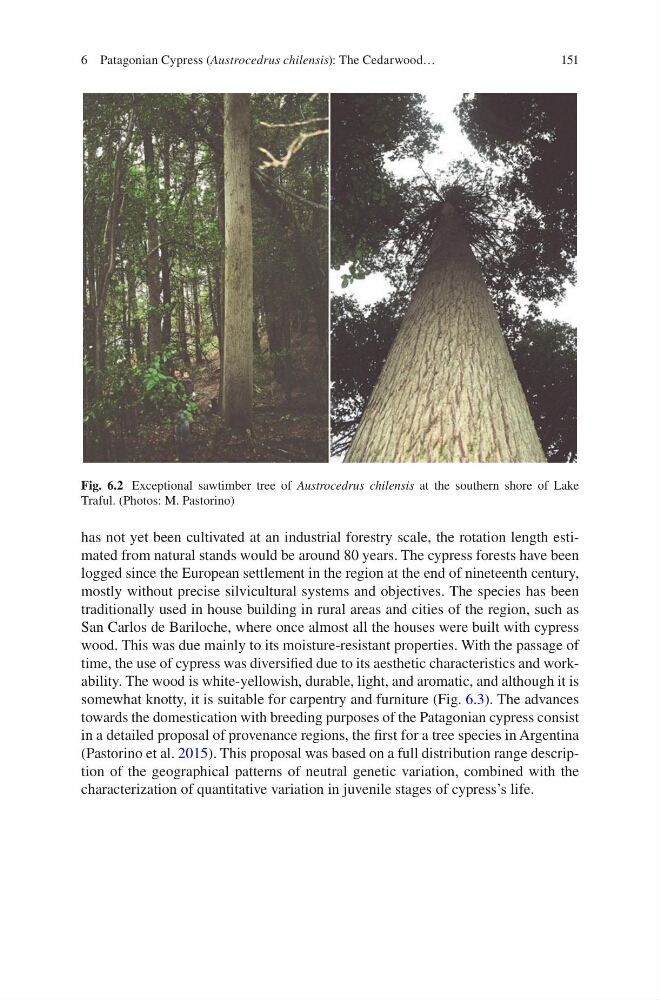
Fig. 6.2 Exceptional sawtimber tree of Austrocedrus chilensis at the southern shore of Lake
Traful. (Photos: M. Pastorino)
6 Patagonian Cypress (Austrocedrus chilensis): The Cedarwood…
has not yet been cultivated at an industrial forestry scale, the rotation length estimated from natural stands would be around 80 years. The cypress forests have been
logged since the European settlement in the region at the end of nineteenth century,
mostly without precise silvicultural systems and objectives. The species has been
traditionally used in house building in rural areas and cities of the region, such as
San Carlos de Bariloche, where once almost all the houses were built with cypress
wood. This was due mainly to its moisture-resistant properties. With the passage of
time, the use of cypress was diversified due to its aesthetic characteristics and workability. The wood is white-yellowish, durable, light, and aromatic, and although it is
somewhat knotty, it is suitable for carpentry and furniture (Fig. 6.3). The advances
towards the domestication with breeding purposes of the Patagonian cypress consist
in a detailed proposal of provenance regions, the first for a tree species in Argentina
(Pastorino et al. 2015). This proposal was based on a full distribution range description of the geographical patterns of neutral genetic variation, combined with the
characterization of quantitative variation in juvenile stages of cypress’s life.
Fig. 6.2 Exceptional sawtimber tree of Austrocedrus chilensis at the southern shore of Lake
Traful. (Photos: M. Pastorino)
6 Patagonian Cypress (Austrocedrus chilensis): The Cedarwood…