

108
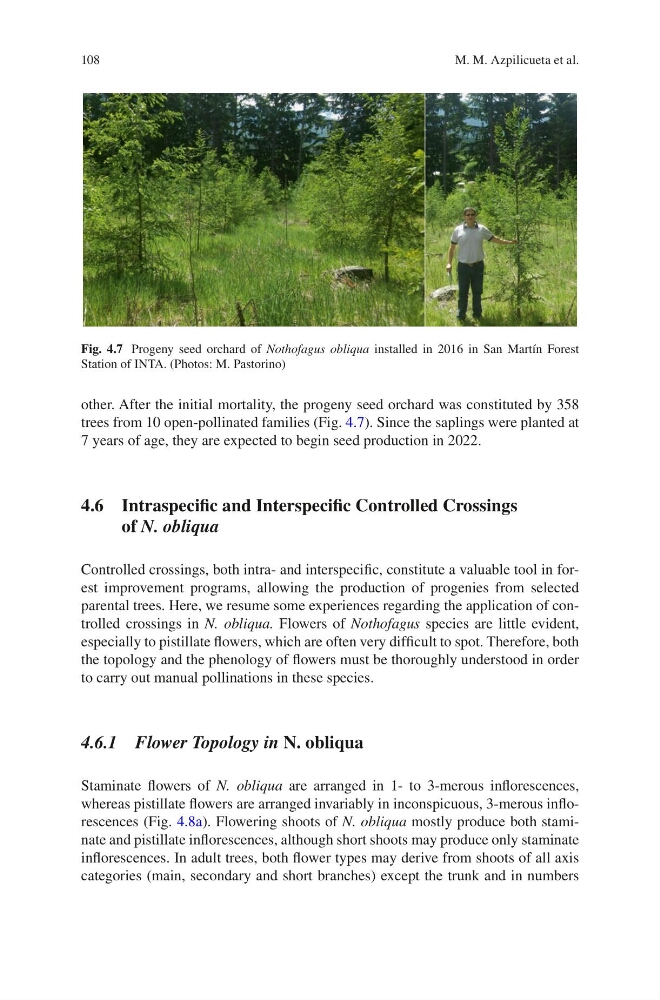
Fig. 4.7 Progeny seed orchard of Nothofagus obliqua installed in 2016 in San Martín Forest
Station of INTA. (Photos: M. Pastorino)
other. After the initial mortality, the progeny seed orchard was constituted by 358
trees from 10 open-pollinated families (Fig. 4.7). Since the saplings were planted at
7 years of age, they are expected to begin seed production in 2022.
4.6 Intraspecific and Interspecific Controlled Crossings
of N. obliqua
Controlled crossings, both intra- and interspecific, constitute a valuable tool in forest improvement programs, allowing the production of progenies from selected
parental trees. Here, we resume some experiences regarding the application of controlled crossings in N. obliqua. Flowers of Nothofagus species are little evident,
especially to pistillate flowers, which are often very difficult to spot. Therefore, both
the topology and the phenology of flowers must be thoroughly understood in order
to carry out manual pollinations in these species.
4.6.1 Flower Topology in N. obliqua
Staminate flowers of N. obliqua are arranged in 1- to 3-merous inflorescences,
whereas pistillate flowers are arranged invariably in inconspicuous, 3-merous inflorescences (Fig. 4.8a). Flowering shoots of N. obliqua mostly produce both staminate and pistillate inflorescences, although short shoots may produce only staminate
inflorescences. In adult trees, both flower types may derive from shoots of all axis
categories (main, secondary and short branches) except the trunk and in numbers
M. M. Azpilicueta et al.
Fig. 4.7 Progeny seed orchard of Nothofagus obliqua installed in 2016 in San Martín Forest
Station of INTA. (Photos: M. Pastorino)
other. After the initial mortality, the progeny seed orchard was constituted by 358
trees from 10 open-pollinated families (Fig. 4.7). Since the saplings were planted at
7 years of age, they are expected to begin seed production in 2022.
4.6 Intraspecific and Interspecific Controlled Crossings
of N. obliqua
Controlled crossings, both intra- and interspecific, constitute a valuable tool in forest improvement programs, allowing the production of progenies from selected
parental trees. Here, we resume some experiences regarding the application of controlled crossings in N. obliqua. Flowers of Nothofagus species are little evident,
especially to pistillate flowers, which are often very difficult to spot. Therefore, both
the topology and the phenology of flowers must be thoroughly understood in order
to carry out manual pollinations in these species.
4.6.1 Flower Topology in N. obliqua
Staminate flowers of N. obliqua are arranged in 1- to 3-merous inflorescences,
whereas pistillate flowers are arranged invariably in inconspicuous, 3-merous inflorescences (Fig. 4.8a). Flowering shoots of N. obliqua mostly produce both staminate and pistillate inflorescences, although short shoots may produce only staminate
inflorescences. In adult trees, both flower types may derive from shoots of all axis
categories (main, secondary and short branches) except the trunk and in numbers
M. M. Azpilicueta et al.