

Water Pollution 163
multiply slowly and often the ammonium in the receiving water becomes
very diluted before they have multiplied to any great degree.
The most important problem created by nutritive salts, usually salts of
phosphorus and nitrogen, is eutrophication, which consists of excessive
development of primary productivity, i.e. mainly of algae. Algae are the
basic productive organisms in an aquatic ecosystem, and their presence is
necessary for it to function. The normal development of algae in an aquatic
ecosystem is a natural phenomenon with no adverse impacts. A serious
environ mental problem is created when there is an excessive proliferation of
algae due to the presence of high concentrations of nutritive salts. It should
be noted that this phenomenon is a normal environmental state in some
shallow lakes or lagoons, where natural eutrophication occurs.
Factors that limit the development of algae may be the intensity of solar
radiation or one of the elements necessary for synthesis (C, N, P, etc.);
among them, the limiting factor is the factor which is proportionally least
available (Chapter 4). In the event that a large quantity of the limiting
factor becomes available in the aquatic ecosystem, primary productivity
(i.e. essentially the algae population) increases explosively, changing the
equilibrium of the ecosystem. There will be a new equilibrium when some
other factor becomes a limiting factor.
Sunlight provides the energy needed for photosynthesis (Chapter 2). For
most species of algae, solar radiation is not the limiting factor if its intensity is
greater than around 2.4 × 10 4 erg/cm 2 /sec. This saturation intensity represents
only a low percentage of the intensity of solar radiation, a fact that reveals the
low degree of utilization of solar energy during photosynthesis.
The limiting factor in aquatic ecosystems is often one of the elements
needed for the synthesis of organic matter, usually nitrogen or phosphorus.
Carbon, in the form of dissolved CO 2 and various carbon radicals, is usually present in abundance due to the constant enrichment of the water with
atmospheric CO 2 .
Phosphorus is usually a limiting factor in freshwater, as is nitrogen in the
sea. The biotic community of the algae may achieve adaptations allowing
the ratio of N:P that is used to range between 1.35:1 and 13.5:1, in terms of
mass. On the other hand, one category of algae, the cyanophyta, are able to
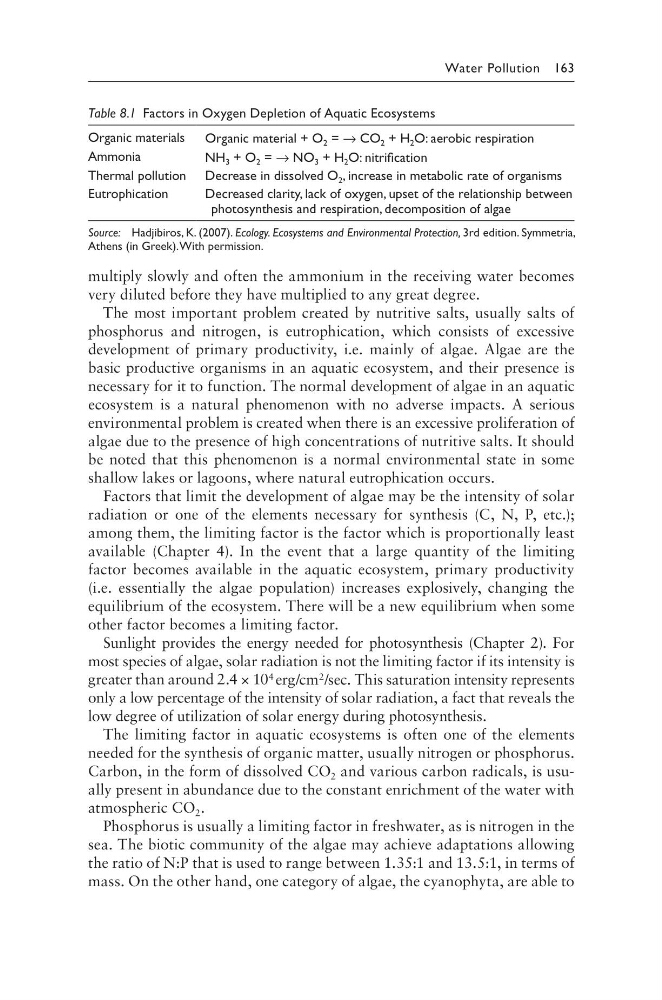
Table 8.1 Factors in Oxygen Depletion of Aquatic Ecosystems
Organic materials
Organic material + O 2 = → CO 2 + H 2 O: aerobic respiration
Ammonia
NH 3 + O 2 = → NO 3 + H 2 O: nitrification
Thermal pollution Decrease in dissolved O 2 , increase in metabolic rate of organisms
Eutrophication
Decreased clarity, lack of oxygen, upset of the relationship between
photosynthesis and respiration, decomposition of algae
Source: Hadjibiros, K. (2007). Ecology. Ecosystems and Environmental Protection, 3rd edition. Symmetria,
Athens (in Greek). With permission.
multiply slowly and often the ammonium in the receiving water becomes
very diluted before they have multiplied to any great degree.
The most important problem created by nutritive salts, usually salts of
phosphorus and nitrogen, is eutrophication, which consists of excessive
development of primary productivity, i.e. mainly of algae. Algae are the
basic productive organisms in an aquatic ecosystem, and their presence is
necessary for it to function. The normal development of algae in an aquatic
ecosystem is a natural phenomenon with no adverse impacts. A serious
environ mental problem is created when there is an excessive proliferation of
algae due to the presence of high concentrations of nutritive salts. It should
be noted that this phenomenon is a normal environmental state in some
shallow lakes or lagoons, where natural eutrophication occurs.
Factors that limit the development of algae may be the intensity of solar
radiation or one of the elements necessary for synthesis (C, N, P, etc.);
among them, the limiting factor is the factor which is proportionally least
available (Chapter 4). In the event that a large quantity of the limiting
factor becomes available in the aquatic ecosystem, primary productivity
(i.e. essentially the algae population) increases explosively, changing the
equilibrium of the ecosystem. There will be a new equilibrium when some
other factor becomes a limiting factor.
Sunlight provides the energy needed for photosynthesis (Chapter 2). For
most species of algae, solar radiation is not the limiting factor if its intensity is
greater than around 2.4 × 10 4 erg/cm 2 /sec. This saturation intensity represents
only a low percentage of the intensity of solar radiation, a fact that reveals the
low degree of utilization of solar energy during photosynthesis.
The limiting factor in aquatic ecosystems is often one of the elements
needed for the synthesis of organic matter, usually nitrogen or phosphorus.
Carbon, in the form of dissolved CO 2 and various carbon radicals, is usually present in abundance due to the constant enrichment of the water with
atmospheric CO 2 .
Phosphorus is usually a limiting factor in freshwater, as is nitrogen in the
sea. The biotic community of the algae may achieve adaptations allowing
the ratio of N:P that is used to range between 1.35:1 and 13.5:1, in terms of
mass. On the other hand, one category of algae, the cyanophyta, are able to
Table 8.1 Factors in Oxygen Depletion of Aquatic Ecosystems
Organic materials
Organic material + O 2 = → CO 2 + H 2 O: aerobic respiration
Ammonia
NH 3 + O 2 = → NO 3 + H 2 O: nitrification
Thermal pollution Decrease in dissolved O 2 , increase in metabolic rate of organisms
Eutrophication
Decreased clarity, lack of oxygen, upset of the relationship between
photosynthesis and respiration, decomposition of algae
Source: Hadjibiros, K. (2007). Ecology. Ecosystems and Environmental Protection, 3rd edition. Symmetria,
Athens (in Greek). With permission.