

110 Ecology and Applied Environmental Science
of ecological variety is mainly associated with the following factors that
characterize the country:
• It is situated in a special geographic position, at the crossroads of three
continents that constitute different biogeographical regions; also, it
encompasses significant migration routes of various migratory birds.
• It presents a wide range of climatic types, from hypo-tropic to continental central-European climate. Moreover, the partial coverage of
its surface by glaciers during the last glacial period created additional
biological diversity.
• It has a complex geological history, and as a result, soils from different rocks are created. There is also a great deal of geomorphological
fragmentation that leads to a multitude of islands, mountains, valleys,
wetlands and lengthy coastal regions.
• The long and turbulent history of the country, with the occasional
abandonment of certain areas by the human population for long periods of time, the extensive destructions caused by wars, the isolation of
areas for military purposes, the preservation of undeveloped areas with
difficult access etc. has also contributed to the environmental variety.
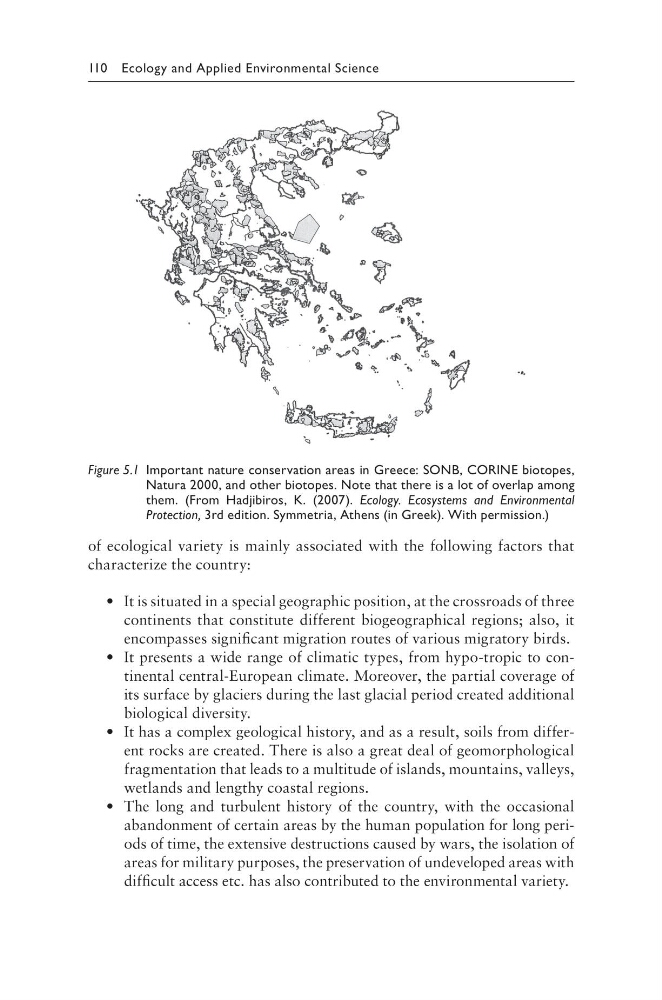
Figure 5.1 Important nature conservation areas in Greece: SONB, CORINE biotopes,
Natura 2000, and other biotopes. Note that there is a lot of overlap among
them. (From Hadjibiros, K. (2007). Ecology. Ecosystems and Environmental
Protection, 3rd edition. Symmetria, Athens (in Greek). With permission.)
of ecological variety is mainly associated with the following factors that
characterize the country:
• It is situated in a special geographic position, at the crossroads of three
continents that constitute different biogeographical regions; also, it
encompasses significant migration routes of various migratory birds.
• It presents a wide range of climatic types, from hypo-tropic to continental central-European climate. Moreover, the partial coverage of
its surface by glaciers during the last glacial period created additional
biological diversity.
• It has a complex geological history, and as a result, soils from different rocks are created. There is also a great deal of geomorphological
fragmentation that leads to a multitude of islands, mountains, valleys,
wetlands and lengthy coastal regions.
• The long and turbulent history of the country, with the occasional
abandonment of certain areas by the human population for long periods of time, the extensive destructions caused by wars, the isolation of
areas for military purposes, the preservation of undeveloped areas with
difficult access etc. has also contributed to the environmental variety.
Figure 5.1 Important nature conservation areas in Greece: SONB, CORINE biotopes,
Natura 2000, and other biotopes. Note that there is a lot of overlap among
them. (From Hadjibiros, K. (2007). Ecology. Ecosystems and Environmental
Protection, 3rd edition. Symmetria, Athens (in Greek). With permission.)