

BCAs in the biocontrol plans of the country. The last part is the general view on the
progress of MCA.
17.2.1 Parasitoids: Trichogramma as the Master Agent
In the 1950s, with the invasion of the rice stem borer, Chilo suppressalis into the
Northern part of the country, two species of Trichogramma from two origins, former
the Soviet Union and Germany were introduced by Firouz Nikkho of the Iranian
Research Institute of Plant Protection (IRIPP). In 1974, without considering the rich
fauna of Trichogrammatidae of the wider Iranian plateau, they were released in the
Northern part of the country after preliminary rearing during 1975–1977. These
activities were developing year by year since 1981 with the identification of important Trichogrammatid species in the central plateau and Northern areas of the
country by researchers of the IRIPP and the Iranian Research Organization for
Science and Technology (IROST) (Shojai et al. 1990; Kharazi-Pakdel et al. 1993;
Shojai et al. 1998). In 1984, by a collaboration of relevant research and executive
organizations, and conducting research projects to study the efficiency, mass production and use of Trichogramma, these agents have been used to control insect
pests, including Chilo suppressalis, Ectomyelois ceratoniae, Ostrinia nubilalis,
Helicoverpa armigera and Cydia pomonella.
Mass production technology of Trichogramma, developed in the public sector
has been transferred to the private sector and more than 40 insectariums have been
active throughout the country. In general, by 2010, the release level of
Trichogramma on seven different crops was occurred on 187,896 ha (Plant
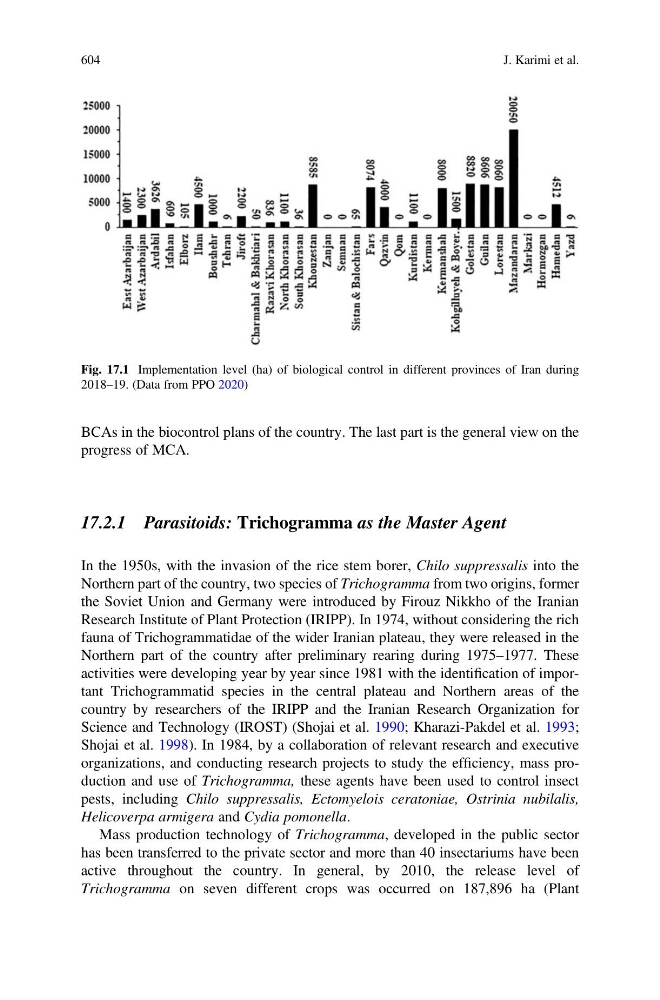
Fig. 17.1 Implementation level (ha) of biological control in different provinces of Iran during
2018–19. (Data from PPO 2020)
604
J. Karimi et al.