

products for control of H. armigera in Europe, Australia and Asia (Moore et al.
2004; Buerger et al. 2007; Sun and Peng 2007).
Despite extensive research on this virus, little attention has been given to
HearNPV in Iran. The response of H. armigera larvae to nuclear polyhedrosis
virus (NPV) was surveyed by Pourmirza (2000). This study estimated that LD 50
values for the first, second, third as well as early and late fourth larval instars were
5, 141, 1226, 5168, and 24,553 polydera per instar, respectively. The fifth instar
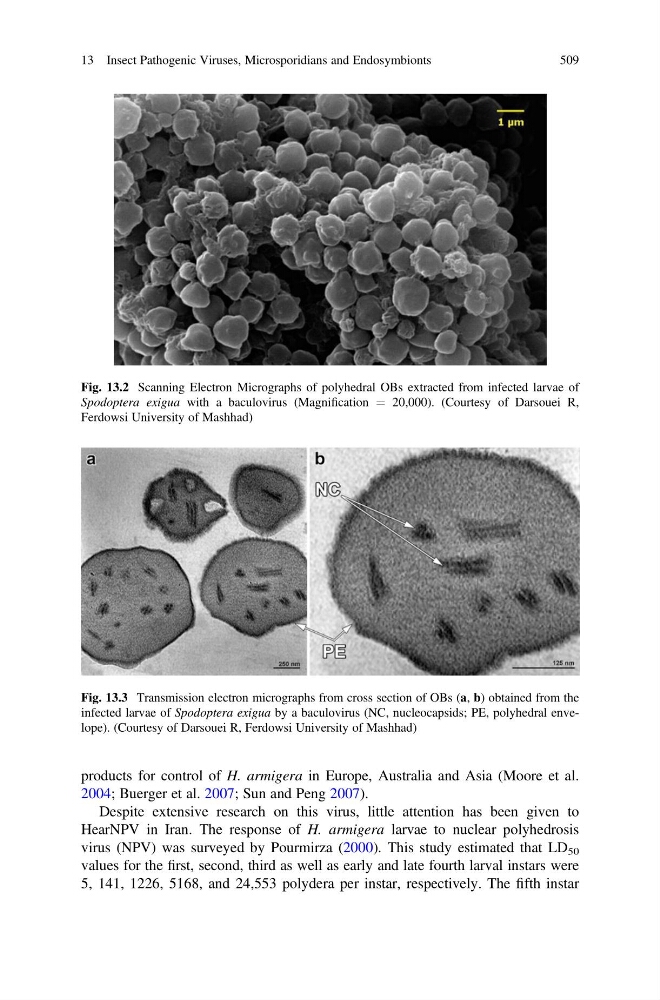
Fig. 13.2 Scanning Electron Micrographs of polyhedral OBs extracted from infected larvae of
Spodoptera exigua with a baculovirus (Magnification ¼ 20,000). (Courtesy of Darsouei R,
Ferdowsi University of Mashhad)
Fig. 13.3 Transmission electron micrographs from cross section of OBs (a, b) obtained from the
infected larvae of Spodoptera exigua by a baculovirus (NC, nucleocapsids; PE, polyhedral envelope). (Courtesy of Darsouei R, Ferdowsi University of Mashhad)
13 Insect Pathogenic Viruses, Microsporidians and Endosymbionts
509
2004; Buerger et al. 2007; Sun and Peng 2007).
Despite extensive research on this virus, little attention has been given to
HearNPV in Iran. The response of H. armigera larvae to nuclear polyhedrosis
virus (NPV) was surveyed by Pourmirza (2000). This study estimated that LD 50
values for the first, second, third as well as early and late fourth larval instars were
5, 141, 1226, 5168, and 24,553 polydera per instar, respectively. The fifth instar
Fig. 13.2 Scanning Electron Micrographs of polyhedral OBs extracted from infected larvae of
Spodoptera exigua with a baculovirus (Magnification ¼ 20,000). (Courtesy of Darsouei R,
Ferdowsi University of Mashhad)
Fig. 13.3 Transmission electron micrographs from cross section of OBs (a, b) obtained from the
infected larvae of Spodoptera exigua by a baculovirus (NC, nucleocapsids; PE, polyhedral envelope). (Courtesy of Darsouei R, Ferdowsi University of Mashhad)
13 Insect Pathogenic Viruses, Microsporidians and Endosymbionts
509