

10.5 Mode of Action of Bt
Different models have been proposed for the mode of action of insecticidal Cry
toxins (Vachon et al. 2012). The commonly accepted mode of action of Bt toxin
(Fig. 10.1) relies on the ingestion of Bt crystal proteins by a susceptible host and
solubilization of the crystals. Bt crystals are solubilized in the alkaline environment
of the insect gut and converted to protoxins. The digestive proteases in the insect gut
cleave the protoxins to the activated toxin as a stable core. The activated toxin
interacts with the receptors on the midgut epithelial cells. This binding leads to toxin
insertion, pore formation, cell lysis and eventually insect death (Bravo et al. 2007).
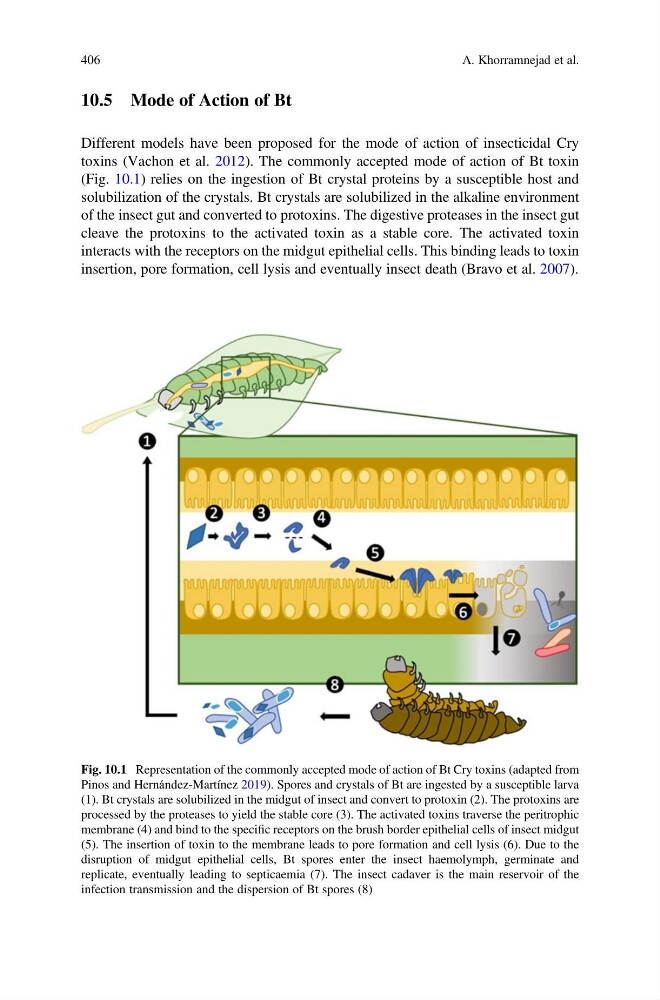
Fig. 10.1 Representation of the commonly accepted mode of action of Bt Cry toxins (adapted from
Pinos and Hernández-Martínez 2019). Spores and crystals of Bt are ingested by a susceptible larva
(1). Bt crystals are solubilized in the midgut of insect and convert to protoxin (2). The protoxins are
processed by the proteases to yield the stable core (3). The activated toxins traverse the peritrophic
membrane (4) and bind to the specific receptors on the brush border epithelial cells of insect midgut
(5). The insertion of toxin to the membrane leads to pore formation and cell lysis (6). Due to the
disruption of midgut epithelial cells, Bt spores enter the insect haemolymph, germinate and
replicate, eventually leading to septicaemia (7). The insect cadaver is the main reservoir of the
infection transmission and the dispersion of Bt spores (8)
406
A. Khorramnejad et al.
Different models have been proposed for the mode of action of insecticidal Cry
toxins (Vachon et al. 2012). The commonly accepted mode of action of Bt toxin
(Fig. 10.1) relies on the ingestion of Bt crystal proteins by a susceptible host and
solubilization of the crystals. Bt crystals are solubilized in the alkaline environment
of the insect gut and converted to protoxins. The digestive proteases in the insect gut
cleave the protoxins to the activated toxin as a stable core. The activated toxin
interacts with the receptors on the midgut epithelial cells. This binding leads to toxin
insertion, pore formation, cell lysis and eventually insect death (Bravo et al. 2007).
Fig. 10.1 Representation of the commonly accepted mode of action of Bt Cry toxins (adapted from
Pinos and Hernández-Martínez 2019). Spores and crystals of Bt are ingested by a susceptible larva
(1). Bt crystals are solubilized in the midgut of insect and convert to protoxin (2). The protoxins are
processed by the proteases to yield the stable core (3). The activated toxins traverse the peritrophic
membrane (4) and bind to the specific receptors on the brush border epithelial cells of insect midgut
(5). The insertion of toxin to the membrane leads to pore formation and cell lysis (6). Due to the
disruption of midgut epithelial cells, Bt spores enter the insect haemolymph, germinate and
replicate, eventually leading to septicaemia (7). The insect cadaver is the main reservoir of the
infection transmission and the dispersion of Bt spores (8)
406
A. Khorramnejad et al.