

6.7.2 Carob moth, Spectrobates ceratoniae Zeller
An overall 8–10 times release of 600 Tricocards (0.01g parasitized eggs each) per
hectare with regular intervals of 10–15 days between any two successive releases
was recommended (Alizadeh et al. 2007). The first round will begin at early June and
the subsequent ones will continue as follow: The 2nd time: late June, The 3rd time:
early July, The 4th time: late July, The 5th time: the mid-August, The 6th time: early
September, The 7th time: mid-September, The 8th time: late September, The 9th
time: early October, The 10th time: mid- October.
Note: The adult emergence of overwintering generation of carob moth is gradual
and occurs in a long horizon of time, with an apparent peak at mid-June when is
considered the best time for the first release. Since the developmental time of carob
moth at the first generation may take 50-55d, sometimes the second release is
delayed and then one or two releases may be removed. Furthermore, in precocious
cultivars and early harvest regions, one additional release also may be excluded.
Release areas of pomegranate orchards have been shown in Fig. 6.4.
6.7.3 Cotton Bollworm, Helicoverpa armigera Hübner
6.7.3.1 Release in Cotton Fields
The first release of Trichogramma spp. is carried out by a rate of 200 Tricocards per
hectare (0.01 g parasitized egg each) when the first moths are trapped by pheromone
traps in cotton fields. An additional release of 3 g (300 Tricocards) is done 5–7 days
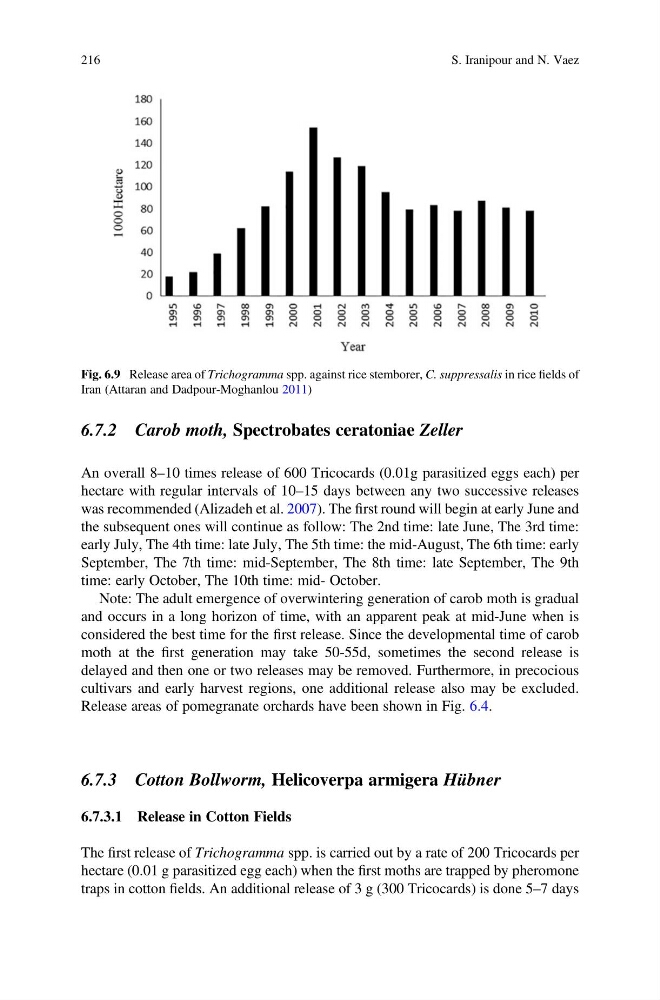
Fig. 6.9 Release area of Trichogramma spp. against rice stemborer, C. suppressalis in rice fields of
Iran (Attaran and Dadpour-Moghanlou 2011)
216
S. Iranipour and N. Vaez
An overall 8–10 times release of 600 Tricocards (0.01g parasitized eggs each) per
hectare with regular intervals of 10–15 days between any two successive releases
was recommended (Alizadeh et al. 2007). The first round will begin at early June and
the subsequent ones will continue as follow: The 2nd time: late June, The 3rd time:
early July, The 4th time: late July, The 5th time: the mid-August, The 6th time: early
September, The 7th time: mid-September, The 8th time: late September, The 9th
time: early October, The 10th time: mid- October.
Note: The adult emergence of overwintering generation of carob moth is gradual
and occurs in a long horizon of time, with an apparent peak at mid-June when is
considered the best time for the first release. Since the developmental time of carob
moth at the first generation may take 50-55d, sometimes the second release is
delayed and then one or two releases may be removed. Furthermore, in precocious
cultivars and early harvest regions, one additional release also may be excluded.
Release areas of pomegranate orchards have been shown in Fig. 6.4.
6.7.3 Cotton Bollworm, Helicoverpa armigera Hübner
6.7.3.1 Release in Cotton Fields
The first release of Trichogramma spp. is carried out by a rate of 200 Tricocards per
hectare (0.01 g parasitized egg each) when the first moths are trapped by pheromone
traps in cotton fields. An additional release of 3 g (300 Tricocards) is done 5–7 days
Fig. 6.9 Release area of Trichogramma spp. against rice stemborer, C. suppressalis in rice fields of
Iran (Attaran and Dadpour-Moghanlou 2011)
216
S. Iranipour and N. Vaez