

Intermediate of the second and the third generations Depending on regional
weather conditions, two additional releases between two generations may be necessary. If adult catches by traps show an increase after the second generation, which
represents overlap with the next generation, one or two releases will be conducted.
The first one 7d after the last release of the previous generation followed by the
second one 7d later, both at the rate of 5g per hectare.
Third generation Three additional releases will be carried out during the third
generation at a rate of 15g per hectare in three stages whether generations overlap or
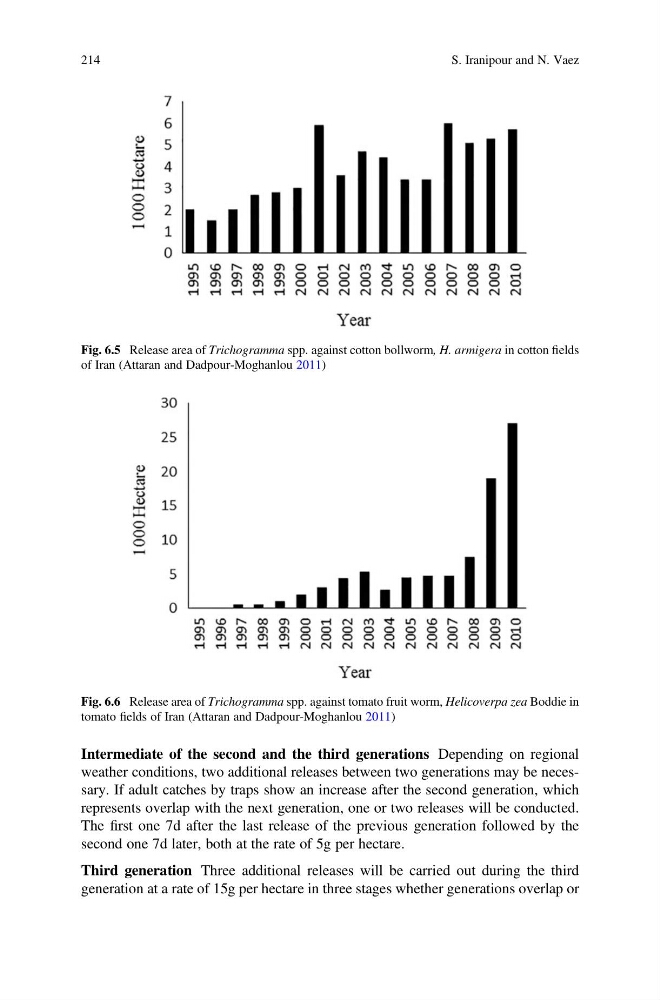
Fig. 6.5 Release area of Trichogramma spp. against cotton bollworm, H. armigera in cotton fields
of Iran (Attaran and Dadpour-Moghanlou 2011)
Fig. 6.6 Release area of Trichogramma spp. against tomato fruit worm, Helicoverpa zea Boddie in
tomato fields of Iran (Attaran and Dadpour-Moghanlou 2011)
214
S. Iranipour and N. Vaez
weather conditions, two additional releases between two generations may be necessary. If adult catches by traps show an increase after the second generation, which
represents overlap with the next generation, one or two releases will be conducted.
The first one 7d after the last release of the previous generation followed by the
second one 7d later, both at the rate of 5g per hectare.
Third generation Three additional releases will be carried out during the third
generation at a rate of 15g per hectare in three stages whether generations overlap or
Fig. 6.5 Release area of Trichogramma spp. against cotton bollworm, H. armigera in cotton fields
of Iran (Attaran and Dadpour-Moghanlou 2011)
Fig. 6.6 Release area of Trichogramma spp. against tomato fruit worm, Helicoverpa zea Boddie in
tomato fields of Iran (Attaran and Dadpour-Moghanlou 2011)
214
S. Iranipour and N. Vaez