

133
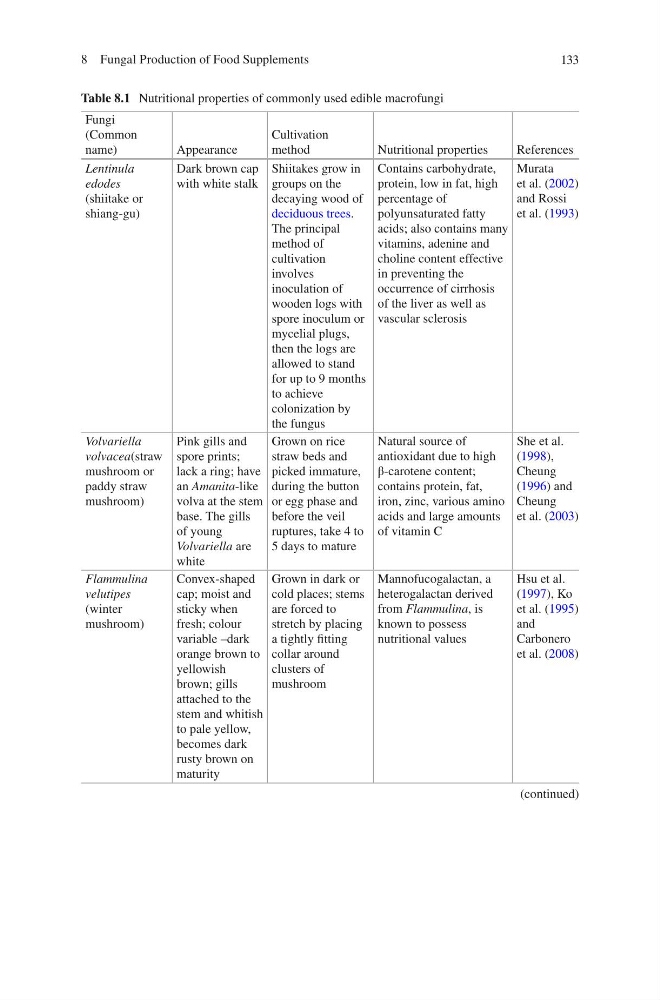
Table 8.1 Nutritional properties of commonly used edible macrofungi
Fungi
(Common
name)
Appearance
Cultivation
method
Nutritional properties
References
Lentinula
edodes
(shiitake or
shiang-gu)
Dark brown cap
with white stalk
Shiitakes grow in
groups on the
decaying wood of
deciduous trees.
The principal
method of
cultivation
involves
inoculation of
wooden logs with
spore inoculum or
mycelial plugs,
then the logs are
allowed to stand
for up to 9 months
to achieve
colonization by
the fungus
Contains carbohydrate,
protein, low in fat, high
percentage of
polyunsaturated fatty
acids; also contains many
vitamins, adenine and
choline content effective
in preventing the
occurrence of cirrhosis
of the liver as well as
vascular sclerosis
Murata
et al. (2002)
and Rossi
et al. (1993)
Volvariella
volvacea(straw
mushroom or
paddy straw
mushroom)
Pink gills and
spore prints;
lack a ring; have
an Amanita-like
volva at the stem
base. The gills
of young
Volvariella are
white
Grown on rice
straw beds and
picked immature,
during the button
or egg phase and
before the veil
ruptures, take 4 to
5 days to mature
Natural source of
antioxidant due to high
β-carotene content;
contains protein, fat,
iron, zinc, various amino
acids and large amounts
of vitamin C
She et al.
(1998),
Cheung
(1996) and
Cheung
et al. (2003)
Flammulina
velutipes
(winter
mushroom)
Convex-shaped
cap; moist and
sticky when
fresh; colour
variable –dark
orange brown to
yellowish
brown; gills
attached to the
stem and whitish
to pale yellow,
becomes dark
rusty brown on
maturity
Grown in dark or
cold places; stems
are forced to
stretch by placing
a tightly fitting
collar around
clusters of
mushroom
Mannofucogalactan, a
heterogalactan derived
from Flammulina, is
known to possess
nutritional values
Hsu et al.
(1997), Ko
et al. (1995)
and
Carbonero
et al. (2008)
(continued)
8 Fungal Production of Food Supplements
Table 8.1 Nutritional properties of commonly used edible macrofungi
Fungi
(Common
name)
Appearance
Cultivation
method
Nutritional properties
References
Lentinula
edodes
(shiitake or
shiang-gu)
Dark brown cap
with white stalk
Shiitakes grow in
groups on the
decaying wood of
deciduous trees.
The principal
method of
cultivation
involves
inoculation of
wooden logs with
spore inoculum or
mycelial plugs,
then the logs are
allowed to stand
for up to 9 months
to achieve
colonization by
the fungus
Contains carbohydrate,
protein, low in fat, high
percentage of
polyunsaturated fatty
acids; also contains many
vitamins, adenine and
choline content effective
in preventing the
occurrence of cirrhosis
of the liver as well as
vascular sclerosis
Murata
et al. (2002)
and Rossi
et al. (1993)
Volvariella
volvacea(straw
mushroom or
paddy straw
mushroom)
Pink gills and
spore prints;
lack a ring; have
an Amanita-like
volva at the stem
base. The gills
of young
Volvariella are
white
Grown on rice
straw beds and
picked immature,
during the button
or egg phase and
before the veil
ruptures, take 4 to
5 days to mature
Natural source of
antioxidant due to high
β-carotene content;
contains protein, fat,
iron, zinc, various amino
acids and large amounts
of vitamin C
She et al.
(1998),
Cheung
(1996) and
Cheung
et al. (2003)
Flammulina
velutipes
(winter
mushroom)
Convex-shaped
cap; moist and
sticky when
fresh; colour
variable –dark
orange brown to
yellowish
brown; gills
attached to the
stem and whitish
to pale yellow,
becomes dark
rusty brown on
maturity
Grown in dark or
cold places; stems
are forced to
stretch by placing
a tightly fitting
collar around
clusters of
mushroom
Mannofucogalactan, a
heterogalactan derived
from Flammulina, is
known to possess
nutritional values
Hsu et al.
(1997), Ko
et al. (1995)
and
Carbonero
et al. (2008)
(continued)
8 Fungal Production of Food Supplements