

221
acid moiety at C-14 or C-16 are more polar than the aliphatic glucuronide carrying
the glucuronic acid moiety at C-7. It has been demonstrated in vitro using steer, pig,
rat, and human hepatic microsomes and human intestinal microsomes that ZEN and
its metabolites are glucuronidated in humans and animals in the intestine and liver,
preferably at the sterically unhindered (da Rocha et al. 2014) hydroxyl group resulting in, e.g., ZEN- (da Rocha et al. 2014) O-glucuronide. Human microsomes presented lower activity than those of other species, and the activity in the liver was
higher than that of the intestine (Frizzell et al. 2015).
12.13 Patulin
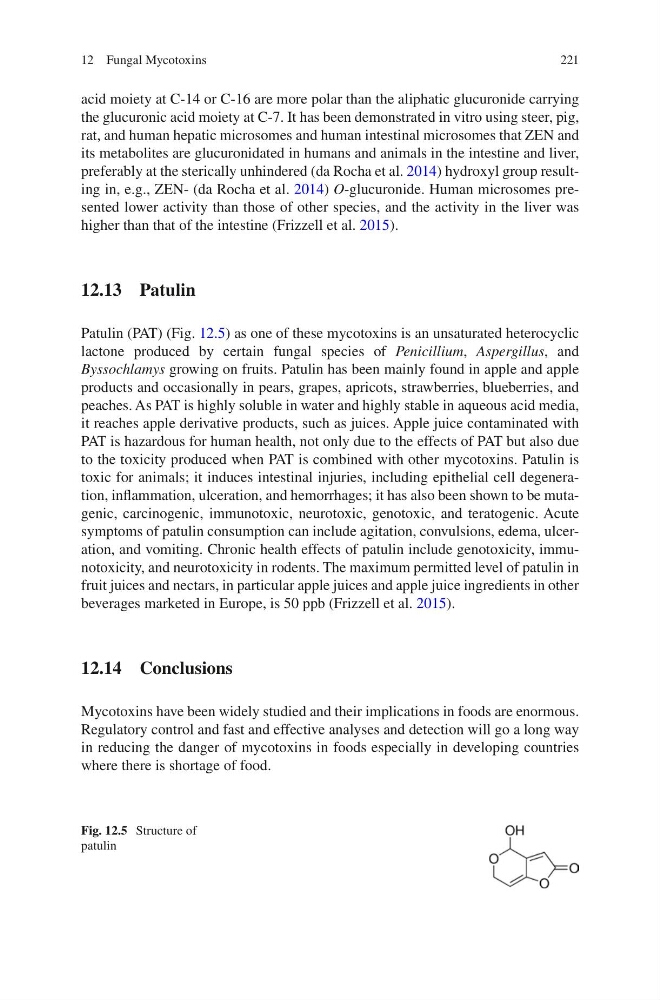
Patulin (PAT) (Fig. 12.5) as one of these mycotoxins is an unsaturated heterocyclic
lactone produced by certain fungal species of Penicillium, Aspergillus, and
Byssochlamys growing on fruits. Patulin has been mainly found in apple and apple
products and occasionally in pears, grapes, apricots, strawberries, blueberries, and
peaches. As PAT is highly soluble in water and highly stable in aqueous acid media,
it reaches apple derivative products, such as juices. Apple juice contaminated with
PAT is hazardous for human health, not only due to the effects of PAT but also due
to the toxicity produced when PAT is combined with other mycotoxins. Patulin is
toxic for animals; it induces intestinal injuries, including epithelial cell degeneration, inflammation, ulceration, and hemorrhages; it has also been shown to be mutagenic, carcinogenic, immunotoxic, neurotoxic, genotoxic, and teratogenic. Acute
symptoms of patulin consumption can include agitation, convulsions, edema, ulceration, and vomiting. Chronic health effects of patulin include genotoxicity, immunotoxicity, and neurotoxicity in rodents. The maximum permitted level of patulin in
fruit juices and nectars, in particular apple juices and apple juice ingredients in other
beverages marketed in Europe, is 50 ppb (Frizzell et al. 2015).
12.14 Conclusions
Mycotoxins have been widely studied and their implications in foods are enormous.
Regulatory control and fast and effective analyses and detection will go a long way
in reducing the danger of mycotoxins in foods especially in developing countries
where there is shortage of food.
Fig. 12.5 Structure of
patulin
12 Fungal Mycotoxins
acid moiety at C-14 or C-16 are more polar than the aliphatic glucuronide carrying
the glucuronic acid moiety at C-7. It has been demonstrated in vitro using steer, pig,
rat, and human hepatic microsomes and human intestinal microsomes that ZEN and
its metabolites are glucuronidated in humans and animals in the intestine and liver,
preferably at the sterically unhindered (da Rocha et al. 2014) hydroxyl group resulting in, e.g., ZEN- (da Rocha et al. 2014) O-glucuronide. Human microsomes presented lower activity than those of other species, and the activity in the liver was
higher than that of the intestine (Frizzell et al. 2015).
12.13 Patulin
Patulin (PAT) (Fig. 12.5) as one of these mycotoxins is an unsaturated heterocyclic
lactone produced by certain fungal species of Penicillium, Aspergillus, and
Byssochlamys growing on fruits. Patulin has been mainly found in apple and apple
products and occasionally in pears, grapes, apricots, strawberries, blueberries, and
peaches. As PAT is highly soluble in water and highly stable in aqueous acid media,
it reaches apple derivative products, such as juices. Apple juice contaminated with
PAT is hazardous for human health, not only due to the effects of PAT but also due
to the toxicity produced when PAT is combined with other mycotoxins. Patulin is
toxic for animals; it induces intestinal injuries, including epithelial cell degeneration, inflammation, ulceration, and hemorrhages; it has also been shown to be mutagenic, carcinogenic, immunotoxic, neurotoxic, genotoxic, and teratogenic. Acute
symptoms of patulin consumption can include agitation, convulsions, edema, ulceration, and vomiting. Chronic health effects of patulin include genotoxicity, immunotoxicity, and neurotoxicity in rodents. The maximum permitted level of patulin in
fruit juices and nectars, in particular apple juices and apple juice ingredients in other
beverages marketed in Europe, is 50 ppb (Frizzell et al. 2015).
12.14 Conclusions
Mycotoxins have been widely studied and their implications in foods are enormous.
Regulatory control and fast and effective analyses and detection will go a long way
in reducing the danger of mycotoxins in foods especially in developing countries
where there is shortage of food.
Fig. 12.5 Structure of
patulin
12 Fungal Mycotoxins