

expression profiles. These regulatory sequences on the DNA are often localized in the
so-called promoter, silencer, or enhancer regions and effect the transcription of nearby
positioned genes [15].
• DNA methylation (methyl-Seq)
Similar to the ChIP-Seq application, the power of NGS gave a boost to the study of
DNA methylation in CpG islands. DNA methylation is an epigenetic modification that
plays an essential role in regulating gene expression and allelic use and, consequently,
influences a wide variety of biological processes and diseases [16].
• Whole genome sequencing
Whole genome sequencing (WGS) is a complete readout of all the information that
makes up all of your DNA. WGS gives you a deep insight into chromosomal alterations,
indels, mutations, etc. [17].
• Whole-exome sequencing
The exome comprises just over 1% of the whole genome and is providing sequence
information for protein-coding regions. This application is widely used to identify
disease-causing mutations [18].
Protein coding genes
2%
introns
26%
miscellaneous
unique sequences
12%
miscellaneous
heterochromatin
8%
segmental
duplications
5%
simple sequence
repeats
3%
DNA transposons
3%
LTR
retrotransposons
8%
SINEs
13%
LINEs
20%
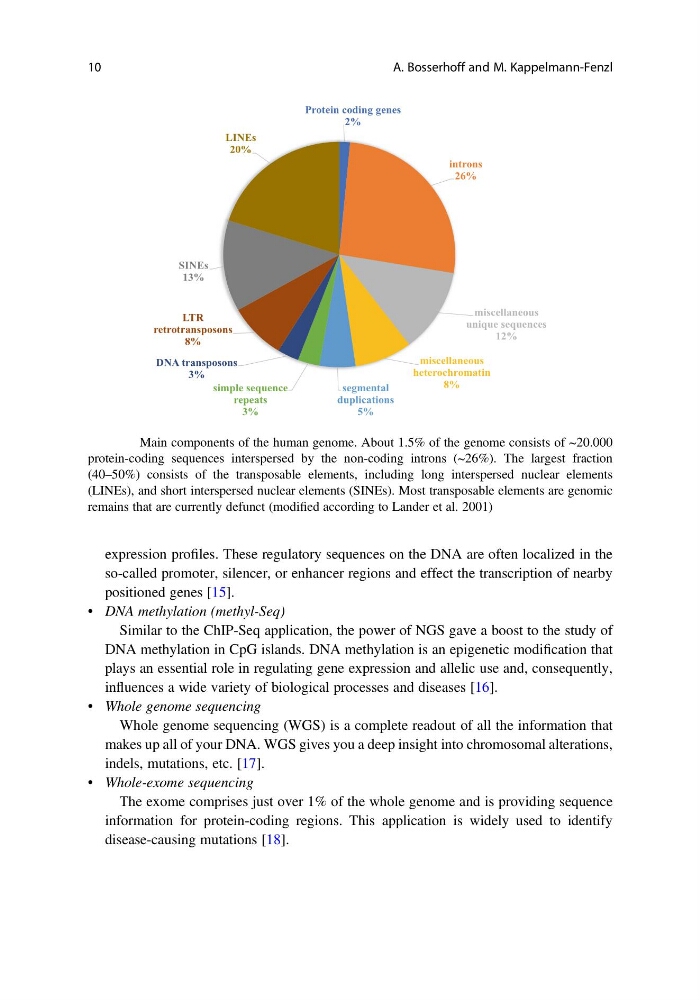
Fig. 1.5 Main components of the human genome. About 1.5% of the genome consists of ~20.000
protein-coding sequences interspersed by the non-coding introns (~26%). The largest fraction
(40–50%) consists of the transposable elements, including long interspersed nuclear elements
(LINEs), and short interspersed nuclear elements (SINEs). Most transposable elements are genomic
remains that are currently defunct (modified according to Lander et al. 2001)
10
A. Bosserhoff and M. Kappelmann-Fenzl
so-called promoter, silencer, or enhancer regions and effect the transcription of nearby
positioned genes [15].
• DNA methylation (methyl-Seq)
Similar to the ChIP-Seq application, the power of NGS gave a boost to the study of
DNA methylation in CpG islands. DNA methylation is an epigenetic modification that
plays an essential role in regulating gene expression and allelic use and, consequently,
influences a wide variety of biological processes and diseases [16].
• Whole genome sequencing
Whole genome sequencing (WGS) is a complete readout of all the information that
makes up all of your DNA. WGS gives you a deep insight into chromosomal alterations,
indels, mutations, etc. [17].
• Whole-exome sequencing
The exome comprises just over 1% of the whole genome and is providing sequence
information for protein-coding regions. This application is widely used to identify
disease-causing mutations [18].
Protein coding genes
2%
introns
26%
miscellaneous
unique sequences
12%
miscellaneous
heterochromatin
8%
segmental
duplications
5%
simple sequence
repeats
3%
DNA transposons
3%
LTR
retrotransposons
8%
SINEs
13%
LINEs
20%
Fig. 1.5 Main components of the human genome. About 1.5% of the genome consists of ~20.000
protein-coding sequences interspersed by the non-coding introns (~26%). The largest fraction
(40–50%) consists of the transposable elements, including long interspersed nuclear elements
(LINEs), and short interspersed nuclear elements (SINEs). Most transposable elements are genomic
remains that are currently defunct (modified according to Lander et al. 2001)
10
A. Bosserhoff and M. Kappelmann-Fenzl