

5994-0249EN_agilent.pdf) (Fig. 12.3). It is recommended using 50 ng of histone ChIP-DNA
and 5 ng of transcription factor and cofactor ChIP-DNA for library construction [4, 5].
The workflow to then achieve a high-quality ChIP-Seq library (see Chap. 3) is provided
in the Appendix section (Table 13.1).
12.3 Quality Check (QC) and Sequencing Pre-processing
After sequencing your ChIP-Seq libraries you can start over with the bioinformatical data
analysis part. A whole example workflow is illustrated in the Flow-Chart (Fig. 12.4).
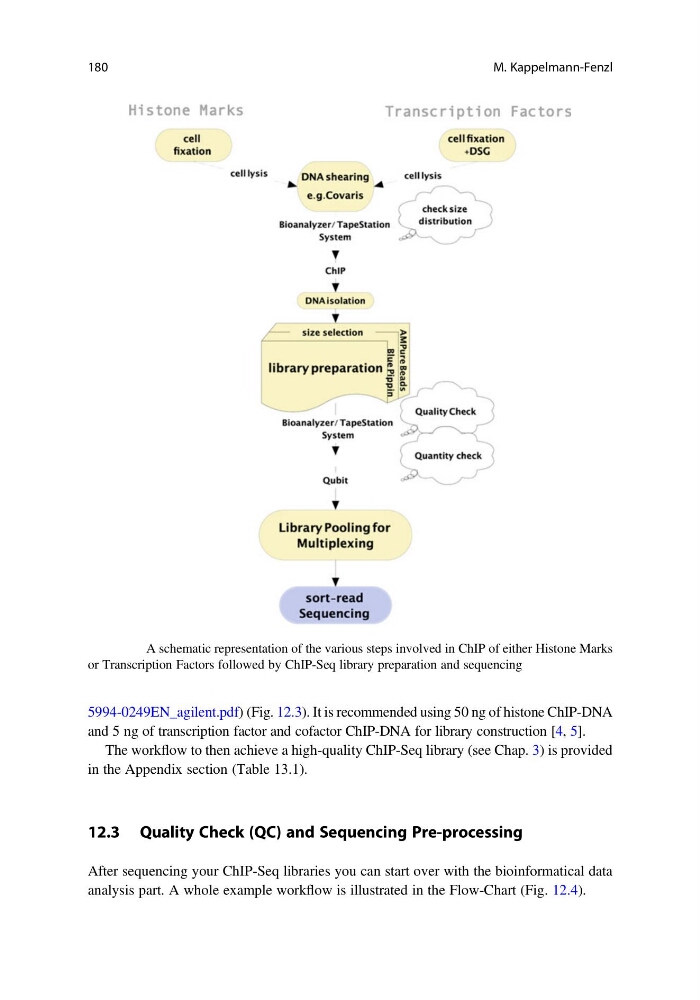
Fig. 12.2 A schematic representation of the various steps involved in ChIP of either Histone Marks
or Transcription Factors followed by ChIP-Seq library preparation and sequencing
180
M. Kappelmann-Fenzl
and 5 ng of transcription factor and cofactor ChIP-DNA for library construction [4, 5].
The workflow to then achieve a high-quality ChIP-Seq library (see Chap. 3) is provided
in the Appendix section (Table 13.1).
12.3 Quality Check (QC) and Sequencing Pre-processing
After sequencing your ChIP-Seq libraries you can start over with the bioinformatical data
analysis part. A whole example workflow is illustrated in the Flow-Chart (Fig. 12.4).
Fig. 12.2 A schematic representation of the various steps involved in ChIP of either Histone Marks
or Transcription Factors followed by ChIP-Seq library preparation and sequencing
180
M. Kappelmann-Fenzl