

is the respective TF or histone). Generating reliable ChIP-Seq data depends on using
antibodies that have been validated for target specificity and acceptable signal-to-noise
ratios to perform the ChIP experiment (Fig. 12.2) [2].
The amount of ChIP-DNA to use when creating a DNA library is influenced by factors
like the amount of DNA obtained from the actual ChIP, the desired library yield, and the
limits of PCR amplification required to minimize duplicate sequencing reads. A typical
histone ChIP experiment using 10 μg of input chromatin DNA per immunoprecipitation
yields approximately 100–1000 ng of ChIP-DNA. In comparison, a transcription factor or
cofactor ChIP experiment yields approximately 5–25 ng of ChIP-DNA. However, the
conventional single-step cross-linking technique does not preserve all protein–DNA
interactions, especially for transcription factors or for coactivator interactions. Thus, for
these cases it is recommended to perform an additional DNA–protein fixation step using
DSG (Disuccinimidyl glutarate) [3]. Finally, the quality and quantity of ChIP-DNA can
be assessed by either Agilent Bioanalyzer or TapeStation systems (https://www.agilent.
com/cs/library/catalogs/public/Catalog-bioanalyzer-tapestation-systems-sw-consumablesinactive Gene
unaccessible
DNA
Histone
TF
TF
Pol II
TSS
A c
A c
A c
A c
Me
Me
Me
Me
active Gene
active Gene
accessible
DNA
accessible
DNA
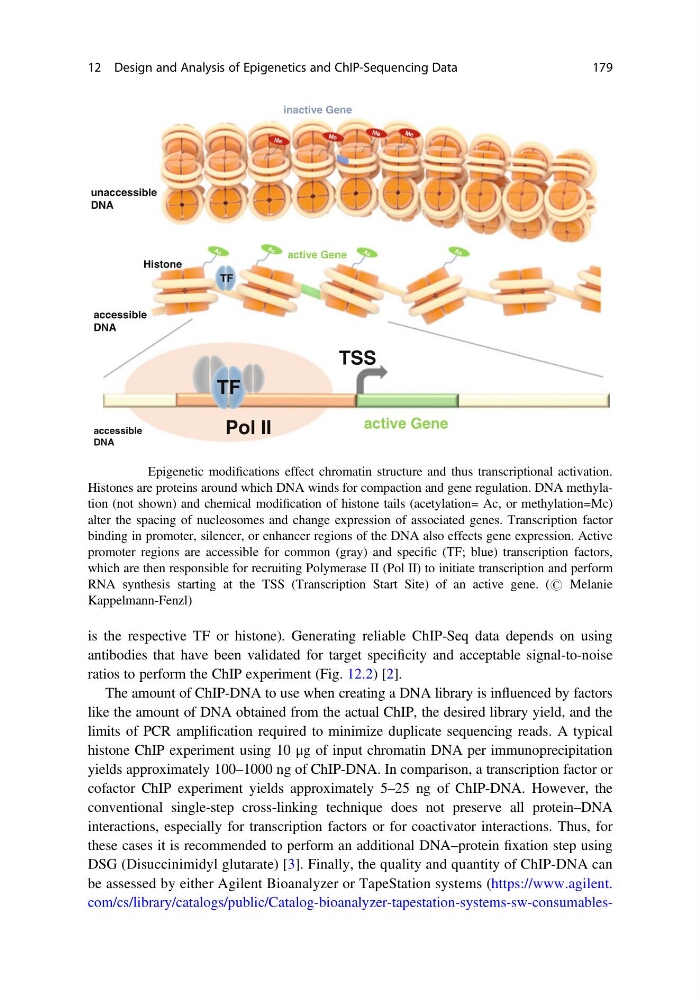
Fig. 12.1 Epigenetic modifications effect chromatin structure and thus transcriptional activation.
Histones are proteins around which DNA winds for compaction and gene regulation. DNA methylation (not shown) and chemical modification of histone tails (acetylation= Ac, or methylation=Mc)
alter the spacing of nucleosomes and change expression of associated genes. Transcription factor
binding in promoter, silencer, or enhancer regions of the DNA also effects gene expression. Active
promoter regions are accessible for common (gray) and specific (TF; blue) transcription factors,
which are then responsible for recruiting Polymerase II (Pol II) to initiate transcription and perform
RNA synthesis starting at the TSS (Transcription Start Site) of an active gene. (# Melanie
Kappelmann-Fenzl)
12 Design and Analysis of Epigenetics and ChIP-Sequencing Data
179
antibodies that have been validated for target specificity and acceptable signal-to-noise
ratios to perform the ChIP experiment (Fig. 12.2) [2].
The amount of ChIP-DNA to use when creating a DNA library is influenced by factors
like the amount of DNA obtained from the actual ChIP, the desired library yield, and the
limits of PCR amplification required to minimize duplicate sequencing reads. A typical
histone ChIP experiment using 10 μg of input chromatin DNA per immunoprecipitation
yields approximately 100–1000 ng of ChIP-DNA. In comparison, a transcription factor or
cofactor ChIP experiment yields approximately 5–25 ng of ChIP-DNA. However, the
conventional single-step cross-linking technique does not preserve all protein–DNA
interactions, especially for transcription factors or for coactivator interactions. Thus, for
these cases it is recommended to perform an additional DNA–protein fixation step using
DSG (Disuccinimidyl glutarate) [3]. Finally, the quality and quantity of ChIP-DNA can
be assessed by either Agilent Bioanalyzer or TapeStation systems (https://www.agilent.
com/cs/library/catalogs/public/Catalog-bioanalyzer-tapestation-systems-sw-consumablesinactive Gene
unaccessible
DNA
Histone
TF
TF
Pol II
TSS
A c
A c
A c
A c
Me
Me
Me
Me
active Gene
active Gene
accessible
DNA
accessible
DNA
Fig. 12.1 Epigenetic modifications effect chromatin structure and thus transcriptional activation.
Histones are proteins around which DNA winds for compaction and gene regulation. DNA methylation (not shown) and chemical modification of histone tails (acetylation= Ac, or methylation=Mc)
alter the spacing of nucleosomes and change expression of associated genes. Transcription factor
binding in promoter, silencer, or enhancer regions of the DNA also effects gene expression. Active
promoter regions are accessible for common (gray) and specific (TF; blue) transcription factors,
which are then responsible for recruiting Polymerase II (Pol II) to initiate transcription and perform
RNA synthesis starting at the TSS (Transcription Start Site) of an active gene. (# Melanie
Kappelmann-Fenzl)
12 Design and Analysis of Epigenetics and ChIP-Sequencing Data
179