

polystyrene A clear glasslike material manufactured by free-radical
polymerization of phenylethene
(styrene) using benzoyl peroxide as
an initiator. It is used as both a thermal and electrical insulator and for
packing and decorative purposes.
polysulphides See sulphides.
polytetraÛuoroethene (PTFE) A
thermosetting plastic with a high
softening point (327°C) prepared
by the polymerization of tetraÛuoroethene under pressure (45–50
atmospheres). The reaction requires
an initiator, ammonium peroxosulphate. The polymer has a low coefÜcient of friction and its ‘anti-stick’
properties are probably due to its helical structure with the Ûuorine
atoms on the surface of an inner ring
of carbon atoms. It is used for coating
cooking utensils and nonlubricated
bearings.
polythene See polyethene.
polythionate A salt of a polythionic acid.
polythionic acids Oxo acids of sulphur with the general formula
HO.SO 2 .S n .SO 2 .OH, where n = 0–4. See
also sulphuric acid.
polyurethane A polymer containing the urethane group –NH.CO.O–,
prepared by reacting di-isocyanates
with appropriate diols or triols. A
wide range of polyurethanes can be
made, and they are used in adhesives, durable paints and varnishes,
plastics, and rubbers. Addition of
water to the polyurethane plastics
turns them into foams.
polyvinylacetate (PVA) A thermoplastic polymer used in adhesives
and coatings. It is made by polymerizing vinyl acetate (CH 2 :CHCOOCH 3 ).
polyvinyl alcohol A water-soluble
polymer made from polyvinylacetate
(PVA) by hydrolysis with sodium hydroxide. It is used for making adhesives that are miscible with water, as
a size for textiles, and for making
synthetic Übres.
polyvinyl chloride See polychloroethene.
polyyne An unsaturated hydrocarbon that contains two or more triple
carbon–carbon bonds in its molecule.
POP See persistent organic pollutant.
population inversion See laser.
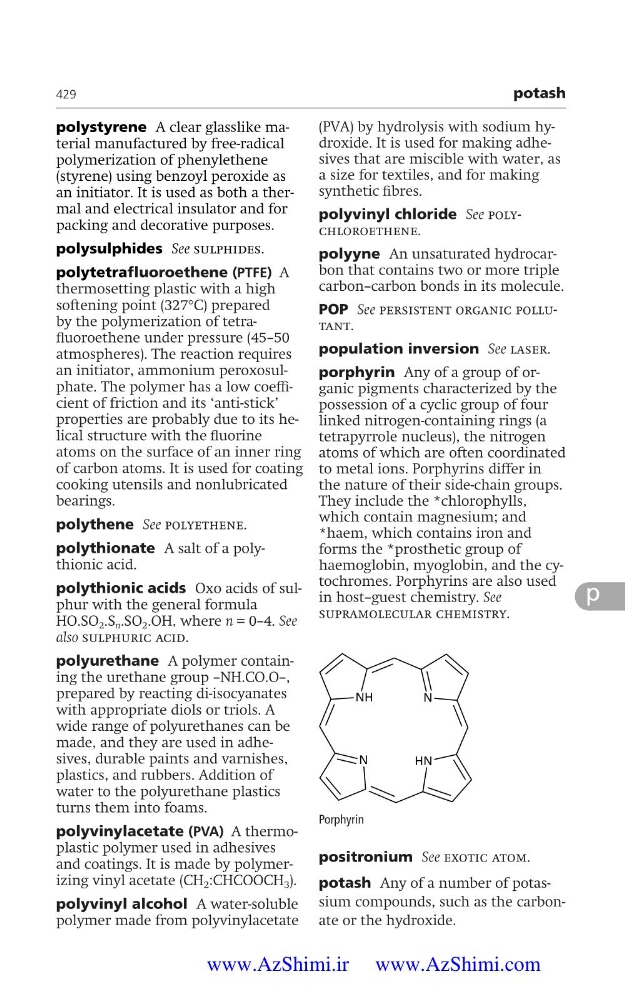
porphyrin Any of a group of organic pigments characterized by the
possession of a cyclic group of four
linked nitrogen-containing rings (a
tetrapyrrole nucleus), the nitrogen
atoms of which are often coordinated
to metal ions. Porphyrins differ in
the nature of their side-chain groups.
They include the *chlorophylls,
which contain magnesium; and
*haem, which contains iron and
forms the *prosthetic group of
haemoglobin, myoglobin, and the cytochromes. Porphyrins are also used
in host–guest chemistry. See
supramolecular chemistry.
429
potash
p
NH
N
N
N
H
Porphyrin
positronium See exotic atom.
potash Any of a number of potassium compounds, such as the carbonate or the hydroxide.
www.AzShimi.ir www.AzShimi.com
polymerization of phenylethene
(styrene) using benzoyl peroxide as
an initiator. It is used as both a thermal and electrical insulator and for
packing and decorative purposes.
polysulphides See sulphides.
polytetraÛuoroethene (PTFE) A
thermosetting plastic with a high
softening point (327°C) prepared
by the polymerization of tetraÛuoroethene under pressure (45–50
atmospheres). The reaction requires
an initiator, ammonium peroxosulphate. The polymer has a low coefÜcient of friction and its ‘anti-stick’
properties are probably due to its helical structure with the Ûuorine
atoms on the surface of an inner ring
of carbon atoms. It is used for coating
cooking utensils and nonlubricated
bearings.
polythene See polyethene.
polythionate A salt of a polythionic acid.
polythionic acids Oxo acids of sulphur with the general formula
HO.SO 2 .S n .SO 2 .OH, where n = 0–4. See
also sulphuric acid.
polyurethane A polymer containing the urethane group –NH.CO.O–,
prepared by reacting di-isocyanates
with appropriate diols or triols. A
wide range of polyurethanes can be
made, and they are used in adhesives, durable paints and varnishes,
plastics, and rubbers. Addition of
water to the polyurethane plastics
turns them into foams.
polyvinylacetate (PVA) A thermoplastic polymer used in adhesives
and coatings. It is made by polymerizing vinyl acetate (CH 2 :CHCOOCH 3 ).
polyvinyl alcohol A water-soluble
polymer made from polyvinylacetate
(PVA) by hydrolysis with sodium hydroxide. It is used for making adhesives that are miscible with water, as
a size for textiles, and for making
synthetic Übres.
polyvinyl chloride See polychloroethene.
polyyne An unsaturated hydrocarbon that contains two or more triple
carbon–carbon bonds in its molecule.
POP See persistent organic pollutant.
population inversion See laser.
porphyrin Any of a group of organic pigments characterized by the
possession of a cyclic group of four
linked nitrogen-containing rings (a
tetrapyrrole nucleus), the nitrogen
atoms of which are often coordinated
to metal ions. Porphyrins differ in
the nature of their side-chain groups.
They include the *chlorophylls,
which contain magnesium; and
*haem, which contains iron and
forms the *prosthetic group of
haemoglobin, myoglobin, and the cytochromes. Porphyrins are also used
in host–guest chemistry. See
supramolecular chemistry.
429
potash
p
NH
N
N
N
H
Porphyrin
positronium See exotic atom.
potash Any of a number of potassium compounds, such as the carbonate or the hydroxide.
www.AzShimi.ir www.AzShimi.com